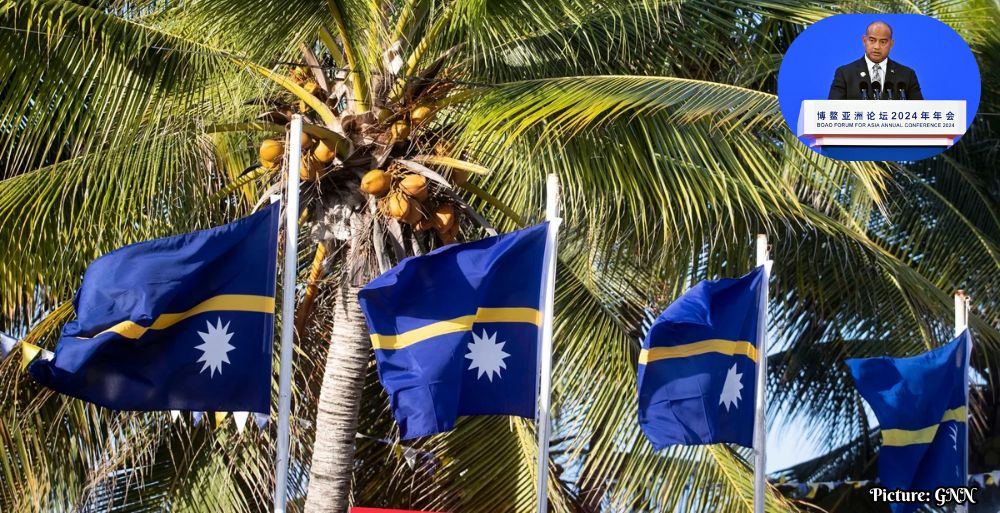
The Republic of Naoero, formerly known as Nauru, reflects a significant cultural shift as the Pacific Island nation reclaims its traditional name, aiming to honor its heritage and identity.
WELLINGTON, New Zealand — The Pacific Island nation of Nauru has officially changed its name to the Republic of Naoero, a decision announced by President David Adeang that aims to align the country’s international identity with its native language and cultural heritage. This transition marks a pivotal moment in Naoero’s history, emphasizing the importance of language and identity in a post-colonial context.
The name change alters the international country code from NRU to NRO and changes the demonym from Nauruan to dei-Naoero. The pronunciation of the new name, “Now-ero,” more accurately reflects the local vernacular, which was previously overshadowed by the anglicized version commonly used abroad.
Historical Context and Cultural Significance
This decision to revert to Naoero is not merely a cosmetic change; it seeks to reconnect the nation with its roots and heritage. President Adeang articulated this sentiment, stating, “This proposed change seeks to more faithfully honor our nation’s heritage, our language, and our identity.” The proposal was first introduced to Parliament in January 2023 and has received support through two rounds of legislative voting, although the formal amendment process is still pending clarification.
Nauru, located in the central Pacific Ocean, is the third-smallest country in the world by population, with approximately 12,000 residents. The island, a coral limestone atoll, has a complex colonial history, having been governed by Germany and later by Australia before achieving independence in 1968. This colonial past has shaped Nauru’s international identity, making the name change a significant act of reclamation.
The country’s economy has seen dramatic shifts, particularly during the phosphate mining boom of the 1970s, which temporarily enriched the nation. However, the industry’s decline in the 1990s precipitated economic hardship and neared financial ruin. Today, Naoero faces critical challenges, particularly from climate change, with rising sea levels posing existential threats to its low-lying territories.
In response to these challenges, the government is pursuing overseas investment through a paid citizenship program designed to fund relocation efforts and infrastructure development, aimed at mitigating the risks posed by climate change.
Political Process and Public Sentiment
Initially, a referendum was planned to gauge public support for the name change; however, following what the government described as “extensive discussions,” lawmakers opted to proceed without a public vote. The administration maintains that the name Naoero has always been a part of the island’s identity, asserting its presence on the national coat of arms and within everyday community discourse.
The government’s statement asserted, “While a referendum is intended to determine the will of the people, the name Naoero has never been lost, but rather waiting to be fully embraced.” This suggests a strong belief among lawmakers that the name change reflects a long-standing cultural sentiment rather than a divisive political issue.
Reactions and International Implications
The name change aligns with a broader trend among nations seeking to reclaim cultural identities and shed colonial legacies. Similar instances include the African kingdom of Eswatini, which reverted to its traditional name from Swaziland in 2018, and Turkey’s request for recognition as Türkiye in 2022. These name changes often symbolize a larger movement toward national pride and self-identification.
Nauru’s government is actively working to update the names of its national aircraft and maritime vessels, while also seeking recognition of the new name from international partners. The United Nations has already updated its records to reflect the new designation following a request from Naoero’s government in June. Additionally, foreign ministries in Australia and New Zealand, as well as embassies from the United States and China, have begun to adopt the name Naoero in their official communications.
Future Outlook
The transition to Naoero is not merely a rebranding; it represents a significant step toward embracing the nation’s cultural legacy in the face of contemporary global challenges. This change is expected to foster a renewed sense of national pride among the citizens of Naoero, as they navigate economic uncertainties and environmental threats.
As the world continues to grapple with issues of climate change, the implications of Naoero’s decision extend beyond its borders, spotlighting the vulnerabilities faced by small island nations. By taking steps to reclaim its identity, Naoero not only honors its past but also positions itself to engage actively with future challenges, advocating for its sovereignty and cultural richness on the global stage.