The protests in the United States reflect growing solidarity with Indian students demanding accountability and reforms in the wake of the NEET examination controversy.
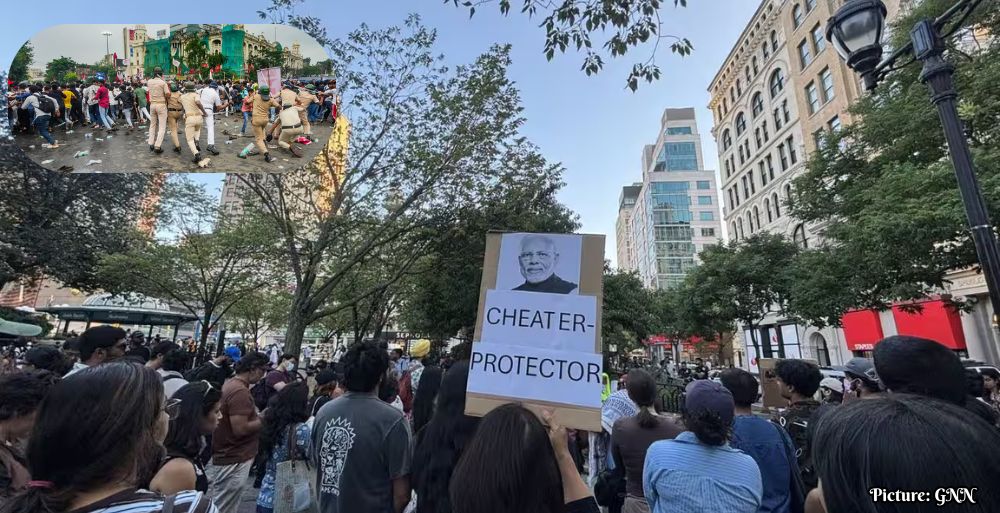
New York, NY, July 23, 2026: On July 20, a gathering of protesters convened at Union Square in New York City to express solidarity with students in India who are protesting the recent controversy surrounding leaked National Eligibility cum Entrance Test (NEET) examination papers. The demonstration was organized by Hindus for Human Rights, a U.S.-based advocacy organization, which called upon supporters to join the rally and stand in support of India’s students.
The event took place near the statue of Mahatma Gandhi and attracted attention for its focus on the demands for greater accountability and reforms in India’s educational system. Yashica Dutt, a writer and activist who participated in the rally, announced that a follow-up demonstration would occur on July 24 at the same location due to what she described as the “tremendous response” from attendees of the first event. Dutt emphasized the importance of the protests, stating that they aimed to amplify the voices of Indian student protesters who are seeking justice and change.
Background of the Protests
The protests in India stem from the cancellation of the NEET examination, which has become a focal point for wider discontent among students. The initial outrage over the leaked medical entrance exam has since evolved into a larger youth-led movement advocating for transparency and reforms within the country’s education system. Demonstrators have expressed concerns over a lack of accountability in examination processes, calling for structural changes that would restore trust in the system.
Dutt invoked the legacy of Dr. B.R. Ambedkar, a key figure in Indian history and the architect of the Indian Constitution, by referencing his call to “Educate, Agitate, Organize.” This call to action resonates with many young people in India who are increasingly vocal about their demands for systemic reforms and accountability in governance.
Nationwide Solidarity Efforts
In addition to the New York City rally, similar demonstrations are being organized in various U.S. cities, including Washington D.C., Los Angeles, San Francisco, and Chicago, scheduled for July 24 and 25. These events aim to strengthen international solidarity among the diaspora and the student protesters in India, showcasing a united front in support of educational reform and justice.
The U.S. protests reflect a growing awareness and engagement among the Indian diaspora regarding issues affecting their home country. As Indian students continue to rally for their rights and call for systemic change, the support from abroad underscores the global nature of these issues. Organizers of the U.S. events have encouraged participants to bring handmade signs and water, emphasizing the peaceful and community-oriented nature of the demonstrations.
The Broader Context of Youth Activism
The protests in India are part of a broader context of youth activism and social movements that have gained momentum in recent years. With the increasing use of social media and digital platforms, young people are finding new ways to organize and mobilize support for their causes, creating a more interconnected global community of activists. The NEET controversy, while specific to Indian students, reflects larger issues of educational integrity and governance that resonate globally.
Moreover, the NEET examination itself has been a subject of contention in India, serving as a crucial gateway for medical aspirants. The leaked papers and subsequent cancellation have raised serious questions about the integrity of the examination system, prompting calls for a comprehensive review and reform. Students and advocates argue that the opaque nature of the examination processes undermines trust and fairness in educational opportunities.
Implications for Indian Education Policy
The implications of these protests extend beyond mere student grievances; they signal a potential turning point in how educational policies are perceived and implemented in India. The growing insistence on accountability and transparency may compel policymakers to reconsider existing frameworks and make substantive changes in response to public outcry. As the protests evolve, they could also inspire further activism among students across various sectors, including higher education and vocational training.
As the situation continues to unfold, the demonstrations in the United States will likely keep the spotlight on the concerns of Indian students and the demand for accountability within the nation’s educational framework. The international solidarity shown through these rallies may serve to amplify the voices of those advocating for change and reforms in India.
The Future of Student Activism
In conclusion, the protests reflect not only a response to immediate concerns regarding the NEET examination but also a growing movement among young people in India and abroad who are demanding a more accountable and transparent educational system. As student activism continues to gain traction both domestically and internationally, it remains to be seen how these movements will influence policy changes and the future of educational integrity in India.