
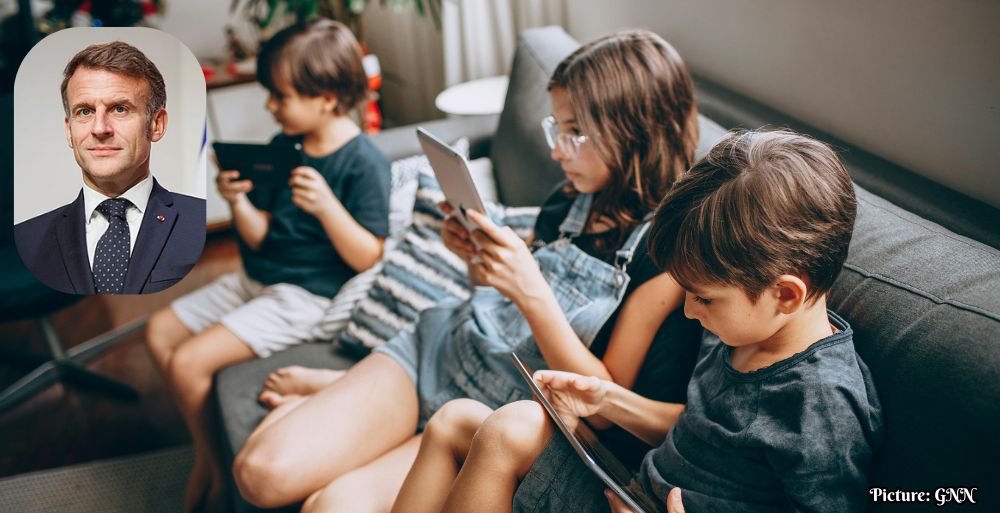
The French Parliament has voted to ban social media access for children under the age of 15, making it the first country in the European Union to implement such restrictions. This move aims to protect young users from potential harm associated with social media platforms.
Paris — French lawmakers enacted a landmark decision on Tuesday, voting to prohibit social media use for children under the age of 15. This legislation positions France as the first country within the European Union to impose such an age limit, reflecting growing concerns over the impact of social media on youth mental health and development.
The vote follows a global trend, with Australia having set a precedent by banning social media access for those under 16 late last year. The British government also announced similar restrictions last month, set to take effect in 2024, while countries like Spain, Greece, and Denmark are considering implementing minimum age limits for social media usage.
The French bill received overwhelming support from lawmakers, backed by President Emmanuel Macron, who is expected to sign the legislation into law shortly. In a post on social media platform X, Macron expressed gratitude to the lawmakers, stating, “Social media will be banned for children under 15 starting this school year.” This initiative is part of a broader effort by the Macron administration to safeguard children’s mental health and emotional well-being.
Legislative Context and Implementation
Macron had directed the French government to accelerate the passage of this bill through parliament, aiming for its implementation in time for the upcoming school year beginning in September. However, details regarding how social media companies will verify the ages of their users remain unclear. In Australia, companies are mandated to “take reasonable steps” to prevent minors from creating or maintaining accounts.
The French government has committed to developing age verification mechanisms to support the enforcement of this law, which will be overseen by Arcom, the national regulator for audiovisual and digital communications. The law will encompass all major social media platforms.
Concerns Over Social Media Impact
According to Arcom, children aged 12 to 17 in France spend an average of 1 hour and 21 minutes daily on TikTok alone. The regulator has raised concerns that the platform’s recommendation algorithms often promote extreme content, potentially exposing teenagers to anxiety-inducing or harmful material. In light of this, many parents have welcomed the new legislation.
Geraldine Delacroix, a mother of six, shared her perspective with CNN earlier this year, stating, “I think it’s great. Now I’m waiting to see how it’s workable, but in any case, it’s better than nothing.” She expressed concerns over children’s ability to circumvent existing parental controls, noting that even with restrictions, children often find ways to access social media. Delacroix, who works as a pediatrician, has observed a growing distrust of smartphones among families over the past decade.
Reactions from Youth and Experts
Responses from young individuals have varied. Ariane, a 13-year-old, expressed that while she sees little downside to the ban, she believes it is “a bit too late for the young people of my generation.” She acknowledged the addictive nature of social media, stating, “We have a tendency to say, ‘OK, I’m just going to look at my phone for five or 10 minutes’ and then, as it’s super-addictive, we spend an hour, two hours on the phone.” Her sister, Gabrielle, highlighted the negative habits formed during the COVID-19 pandemic, stating, “Once you’re, like, used to it, you just keep on using it.”
Despite support for the ban, critics argue that prohibitive measures alone will not suffice. French Education Minister Édouard Geffray emphasized the importance of education alongside restrictions, stating, “We can’t just restrict, we have to educate and propose different ways of socializing.” Katia Roux from Amnesty International France echoed this sentiment, suggesting that a fundamental change in the business models of social media companies is necessary to ensure user safety.
Broader Implications
This legislation has sparked a broader debate about the responsibilities of social media companies and the need for effective age verification systems. Many experts caution that bans may not be effective without comprehensive measures to educate users about safe online practices and to hold platforms accountable for the content they promote.
European Commission President Ursula von der Leyen recently underscored the importance of responsible product development, stating, “In Europe, whoever develops a product is responsible for its safety.” She drew parallels between the expectations placed on car manufacturers to ensure vehicle safety and the responsibilities of social media companies to protect children using their platforms.
In France, the new law does not represent the first instance of restricting online access for minors. A ban on access to online pornography for minors is set to be implemented in 2025, requiring users to provide proof of age.
As France prepares to enforce this pioneering legislation, the outcomes will likely influence discussions on digital safety and youth protection across Europe and beyond, shaping the future landscape of social media use among children.