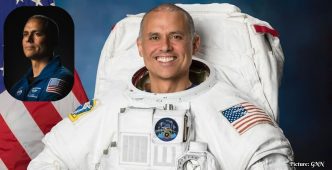
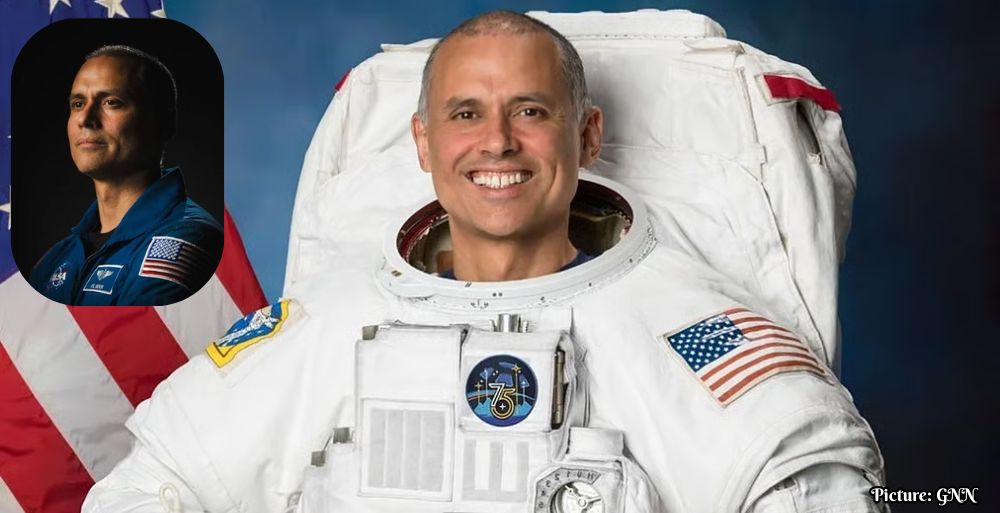
Anil Menon, an astronaut of Indian heritage, has embarked on an eight-month mission aboard the International Space Station (ISS) following a successful docking aboard the Soyuz MS-29 spacecraft, aiming to conduct critical scientific research and technological advancements.
NASA astronaut Anil Menon, who has Indian roots, officially began his first mission in space on July 14, 2023, after successfully docking at the International Space Station (ISS) aboard the Russian Soyuz MS-29 spacecraft. This mission signifies a notable achievement for Menon and highlights the ongoing collaboration between international space agencies as they strive to advance human exploration beyond Earth.
Menon, alongside Roscosmos cosmonauts Pyotr Dubrov and Anna Kikina, achieved docking at the ISS’s Prichal module at 1:52 p.m. EDT, a little over three hours after their launch from the Baikonur Cosmodrome in Kazakhstan at 10:47 a.m. EDT (7:47 p.m. local time). Their arrival increased the ISS crew to a total of ten members for the next two weeks, a temporary augmentation that emphasizes the collaborative nature of space missions.
Mission Goals and Scientific Endeavors
During his eight-month tenure aboard the ISS, Menon is set to engage in a variety of scientific experiments and technological demonstrations that aim to enhance human space exploration while also yielding benefits for life on Earth. His work will focus on refining the production of semiconductor crystals in a microgravity environment, a critical process for the large-scale manufacturing of components used in high-performance computing, artificial intelligence systems, and advanced medical devices.
Additionally, Menon will conduct ultrasound procedures utilizing augmented reality and artificial intelligence techniques. These procedures could significantly reduce reliance on medical support from Earth during future long-duration space missions. Furthermore, he will serve as a test subject in research examining how blood flow is affected in space and will assist in the bioprinting of vascular tissues in microgravity—a project aimed at enhancing understanding of the aging process and facilitating the development of new medical treatments.
Welcoming Ceremony and Crew Dynamics
Upon their arrival, Menon, Dubrov, and Kikina were warmly welcomed aboard by the existing Expedition 74 crew members, which included NASA astronauts Jessica Meir, Jack Hathaway, and Chris Williams, as well as European Space Agency astronaut Sophie Adenot and Roscosmos cosmonauts Sergey Kud-Sverchkov, Sergei Mikaev, and Andrey Fedyaev. The collaborative nature of these missions underscores the significance of international cooperation in space exploration, where diverse expertise and cultural backgrounds converge to tackle common scientific challenges.
Prior to launch, Menon expressed his enthusiasm on social media, stating, “Excited to launch aboard Soyuz MS-29 from Kazakhstan and begin an eight-month mission supporting NASA and Expedition 74/75. Grateful for the NASA community, friends, family, and loved ones and excited for tomorrow – tune in July 14th 9:43 am central time.” This sentiment reflects not only his personal excitement but also the sense of community inherent in space exploration.
Upcoming Developments and Expedition Timeline
Menon’s mission is part of a broader series of expeditions aimed at pushing the boundaries of research in various scientific fields. NASA has indicated that Expedition 75 is scheduled to commence on July 26, 2023, following the departure of crew members Chris Williams, Sergey Kud-Sverchkov, and Sergei Mikaev, who are completing their own eight-month mission aboard the ISS. A change-of-command ceremony is planned for July 25, where command of the ISS will transition from Kud-Sverchkov to Jessica Meir, marking an important milestone in ongoing crew management aboard the station.
The ISS has maintained a continuous human presence in space for more than 25 years, serving as a microgravity laboratory where significant research can be conducted—research that is often not possible on Earth. The contributions made through work conducted aboard the ISS have led to advancements across various disciplines, including medicine, engineering, biology, and materials science, while also laying the groundwork for future human missions to the Moon and Mars.
Menon’s successful launch and subsequent arrival have been met with congratulations from various organizations, including the American Board of Emergency Medicine, where he is recognized as a board-certified emergency physician. His participation in this mission not only promotes scientific inquiry but also serves as an inspiration for future generations, particularly those interested in the fields of science and technology.
Historical Context and Future Implications
The significance of Menon’s mission extends beyond individual achievement. It symbolizes the ongoing global collaboration in space exploration, especially as nations work together to tackle some of the most pressing challenges associated with human spaceflight. The ISS acts as a living laboratory, where research conducted can lead to breakthroughs that have far-reaching implications for both space and terrestrial applications.
As NASA and its international partners prepare for future missions to the Moon and Mars, the research conducted by astronauts like Menon will play a crucial role in informing the design and operation of these ambitious endeavors. The potential applications of technologies developed in microgravity could revolutionize fields ranging from medicine to materials science, providing benefits that resonate well beyond the confines of the ISS.
In summary, Anil Menon’s mission aboard the ISS is not only a personal milestone but also a testament to the power of international collaboration in advancing human understanding and capabilities in space. As he embarks on this eight-month journey, the scientific community and the world at large will be closely watching his contributions to the vast and ever-evolving field of space exploration.