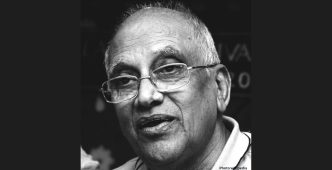
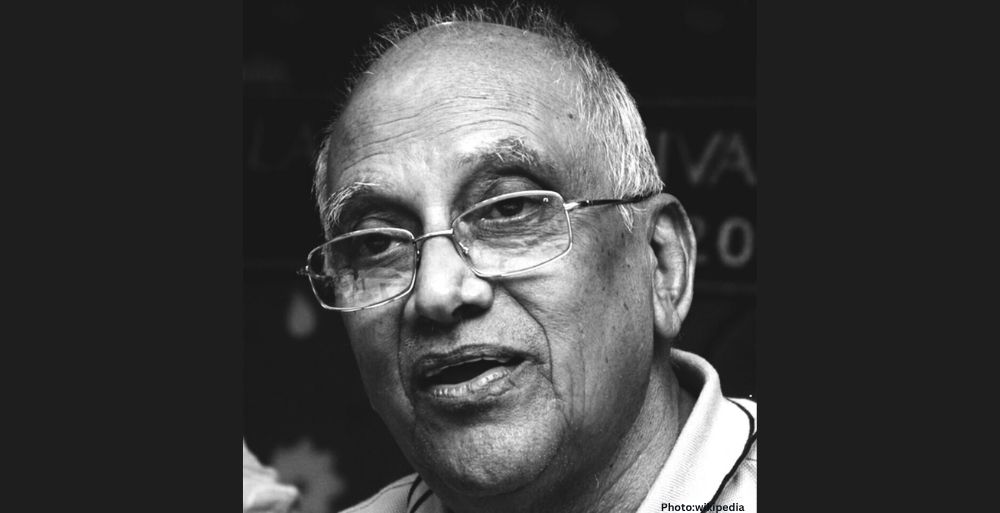
Singeetham Srinivasa Rao, at 94 years old, has surpassed Clint Eastwood’s record as the oldest active filmmaker with his 61st film, ‘Sing Geetham,’ set to release worldwide on June 11, 2026.
At the age of 94, Indian director Singeetham Srinivasa Rao has made headlines by directing his 61st film, Sing Geetham, and in doing so, he has eclipsed the previous record held by Hollywood veteran Clint Eastwood. Eastwood directed his film Juror No. 2 at 93, with its release occurring shortly after he turned 94. Singeetham’s achievement not only positions him as a significant figure in cinematic history but also makes him the oldest filmmaker actively engaged in major production worldwide.
About ‘Sing Geetham’
Sing Geetham is being hailed as India’s first musical fantasy film. It features a fresh lineup of actors, including Ayaan, Ahilya Bamroo, and Shalini Kondepudi, all of whom are relatively new to the film industry. The film’s music is composed by Devi Sri Prasad, marking his debut collaboration with Singeetham. The screenplay is co-written by Singeetham alongside a diverse team of writers, including Gautami Challagulla, Shashank, Sreekar, Nanda Kishore Emani, and Rahul V. Rajeshwar. Produced by Nag Ashwin under the banners of Vyjayanthi Movies and Swapna Cinema, the film is set for its global premiere on June 11, 2026.
Career Overview
Singeetham Srinivasa Rao’s journey in cinema began as an assistant to the esteemed director K.V. Reddy, contributing to the 1957 classic Mayabazar. His foundational experiences paved the way for a prolific career spanning over six decades, during which he has directed around sixty films in various languages, including Telugu, Tamil, Kannada, Hindi, and English. His versatility is notable, encompassing diverse genres such as social dramas, slapstick comedies, science fiction, folklore, and biopics.
One of his most significant works is the 1985 biopic Mayuri, which narrates the inspiring story of classical dancer Sudha Chandran, who overcame the loss of her leg to return to the stage. This film won a record fourteen Nandi Awards and significantly influenced the way the Telugu film industry approached real-life stories. Another landmark film, Pushpaka Vimana (1987), featured the acclaimed actor Kamal Haasan but was unique in its execution as it contained no spoken dialogue. Instead, it relied entirely on visual storytelling and physical comedy, a groundbreaking approach at the time that led to its premiere at the Cannes Film Festival’s International Critics’ Week and earned the National Film Award for Best Popular Film Providing Wholesome Entertainment.
Innovative Contributions
Singeetham’s 1991 film Aditya 369, a science fiction narrative centered on time travel, was groundbreaking during a time when the genre was virtually unexplored in South Indian cinema. His collaboration with Kannada superstar Rajkumar throughout the 1980s resulted in a series of commercially successful and critically acclaimed films, several of which were later remade in Telugu.
Directors like Nag Ashwin, known for his work on Kalki 2898 AD, and Prashanth Varma have openly acknowledged the profound impact Singeetham’s films have had on their own creative thought processes regarding fantasy, scale, and storytelling. After a hiatus of over a decade following his last film, Welcome Obama in 2013, Singeetham’s return with Sing Geetham is characterized by his assertion that this project is the most ambitious of his career.
Legacy and Impact
Singeetham Srinivasa Rao’s legacy is defined by his innovative spirit and his ability to challenge conventional storytelling methods within the Indian film industry. His commitment to creativity has not only transformed the cinematic landscape but has also inspired countless filmmakers. As he prepares for the release of Sing Geetham, both audiences and critics are keen to witness the creative vision of a filmmaker who has consistently pushed the boundaries of what is possible in cinema.
In a broader context, Singeetham’s achievements also invite discussions about age and creativity in the film industry. His record-breaking milestone may inspire future generations of filmmakers to pursue their passions regardless of age, underscoring that artistic creativity can flourish throughout one’s life. As the premiere date for Sing Geetham approaches, anticipation builds not only for the film itself but also for its implications on the legacy of filmmaking and the continuous evolution of storytelling in India.
Singeetham’s career is a testament to the idea that the creative process is not bound by age but is a reflection of passion, dedication, and a willingness to innovate. His body of work serves as a reminder of the importance of diversity in storytelling and the potential for artistic expression at any age. As the Indian film industry continues to evolve, it will be interesting to see how Singeetham’s latest project contributes to the dialogue around age and creativity in cinema.