The Union Cabinet has approved a substantial investment of ₹24,249 crore for highway infrastructure projects in Odisha, Telangana, and Bihar, aiming to significantly enhance connectivity and reduce travel times in these states.
The Union Cabinet of India has approved an extensive road infrastructure plan involving an investment of ₹24,249 crore aimed at improving highway connectivity across the states of Odisha, Telangana, and Bihar. This decision was made public on June 3, 2026, and is part of the government’s broader strategy to enhance national infrastructure through the Prime Minister’s GatiShakti initiative, which seeks to streamline logistics and bolster economic growth through improved transportation networks.
Scope of the Highway Projects
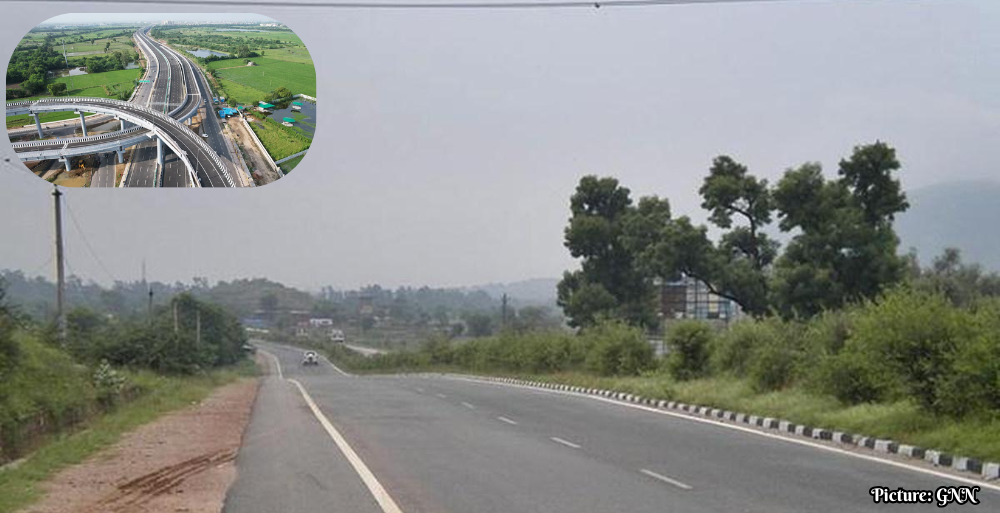
The approved projects will span over 490 kilometers and include the construction of new highways alongside significant upgrades to existing routes. Specifically, the initiatives involve a new coastal highway in Odisha, the widening of National Highway corridors in Telangana, and the enhancement of the Khagaria-Purnea corridor in Bihar. These projects are designed to alleviate traffic congestion, enhance road safety, and facilitate swifter travel for both passenger and commercial vehicles.
Details of the Coastal Highway Project in Odisha
Among the various projects, the most significant is the development of a 160.18-kilometer coastal highway linking Rameshwar and Paradeep in Odisha, with an estimated budget of ₹8,300.79 crore. This highway will traverse several key districts, including Khurda, Puri, Kendrapada, and Jagatsinghpur. The design features a four-lane access-controlled highway between Rameshwar and Konark, complemented by a two-lane highway with paved shoulders extending from Konark to Paradeep.
According to government estimates, the new coastal highway is expected to reduce travel time between Rameshwar and Paradeep by approximately two hours and 30 minutes. This infrastructure will not only improve access to essential sectors such as ports and industrial hubs but also bolster tourism and support fishing communities along Odisha’s coastline, thereby stimulating local economic growth.
Highway Upgrades in Telangana
In Telangana, the Cabinet has allocated ₹7,597.16 crore for the widening of NH-63, specifically the Armoor-Jagtial-Mancherial section, along with the Jagtial-Karimnagar section of NH-563. This project encompasses a total of 190.76 kilometers and aims to enhance these highways to four-lane standards while constructing bypasses around congested urban areas.
Once completed, the project is projected to reduce travel time significantly; journeys between Armoor and Mancherial could see a reduction of approximately one hour and 30 minutes, while trips from Jagtial to Karimnagar may be shortened by nearly 45 minutes. These upgrades are expected to ease congestion, improve road safety, and facilitate the efficient movement of goods and passengers, which is vital for the economic activities in the region.
Infrastructure Improvements in Bihar
In Bihar, a notable project worth ₹3,936.05 crore has been approved to upgrade the 143.53-kilometer stretch of NH-31 and NH-231 between Khagaria and Purnea. This initiative seeks to address critical issues such as traffic congestion, sharp curves, and safety hazards affecting the districts of Khagaria, Bhagalpur, Katihar, and Purnia. Additionally, the project includes the construction of a 6.73-kilometer greenfield bypass to alleviate congestion in Purnea city.
Government officials anticipate that the enhanced corridor will improve travel speeds and reduce journey times, thereby strengthening connectivity between key towns, railway stations, and economic hubs. This initiative is poised to support regional economic development and provide better access to markets for local businesses.
Anticipated Benefits for Travelers and Local Economies
The government asserts that these highway projects will yield several benefits, including:
- Significant reductions in travel time across vital routes.
- Easing of congestion in heavily trafficked areas.
- Enhanced safety measures for all types of road users.
- Lower fuel consumption and reduced operational costs for vehicles.
- Improved connectivity to ports, railway stations, and industrial centers.
- Support for economic activity and job creation in the affected regions.
As the infrastructure projects progress, the government emphasizes its commitment to transforming the transportation landscape, aiming to foster economic growth and enhance the quality of life for residents in these states. The anticipated improvements in travel efficiency and regional connectivity will be closely monitored, with stakeholders eager to observe the impacts on local economies and the broader transportation network.
Conclusion
The Union Cabinet’s investment in highway infrastructure across Odisha, Telangana, and Bihar represents a significant advancement in modernizing India’s roadways. This initiative not only aims to enhance economic opportunities but also seeks to improve the daily commute for millions of residents. As the projects come to fruition, they are expected to play a crucial role in shaping the future of transportation and connectivity in these critical regions, facilitating smoother travel and contributing to the overall growth of the national economy.