A rapidly growing outbreak of the rare Ebola Bundibugyo virus disease (BVD) is expanding across the Democratic Republic of the Congo and into neighboring Uganda, marking the first major global health crisis since the Trump administration systematically dismantled United States foreign aid infrastructure. Public health experts warn that the complete shuttering of the U.S. Agency for International Development (USAID) and the formal U.S. withdrawal from the World Health Organization have severely undermined international detection and field containment efforts. While the U.S. State Department has mobilized $23 million in emergency funds, humanitarian workers on the ground describe an operational vacuum characterized by critical shortages in protective equipment and disrupted contact tracing.
WASHINGTON — A severe outbreak of Ebola is accelerating through Central Africa, presenting the international community with its first major public health crisis since the Trump administration dismantled its primary global health programs and executed a historic retreat from international health governance last year.
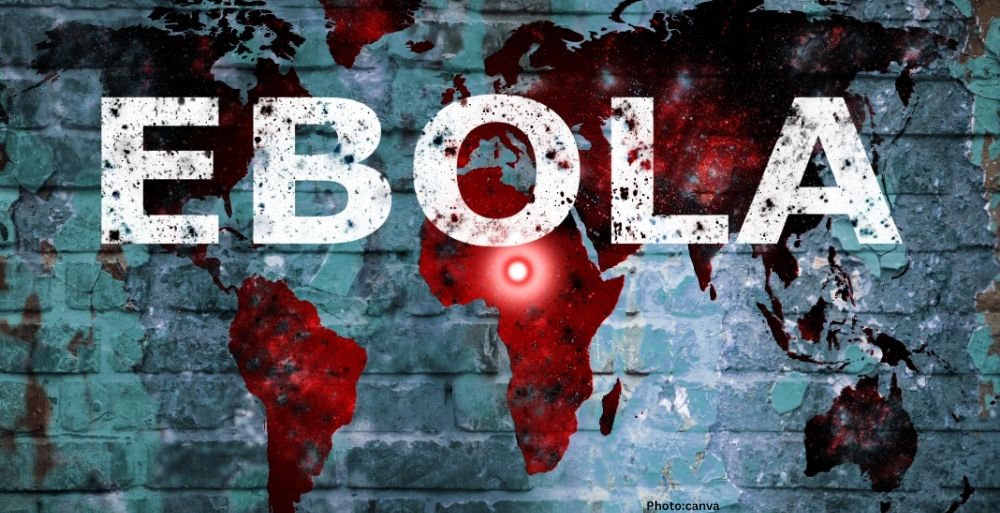
The outbreak, which involves the rare Orthoebolavirus bundibugyoense (Bundibugyo strain), has hit the Democratic Republic of the Congo (DRC) hardest, with geographical transmission concentrated across the northern provinces of Ituri, North Kivu, and South Kivu. Local health officials in the DRC and Uganda officially declared the outbreak on May 15, 2026. Shortly thereafter, the World Health Organization (WHO) designated the situation a Public Health Emergency of International Concern (PHEIC), warning of its alarming “scale and speed.”
International health experts and humanitarian organizations assert that the historic absence of the United States as a leading coordinator is palpable on the ground. While the federal government has initiated emergency financial measures, public health professionals state that the abrupt structural changes made to U.S. foreign assistance last year delayed early detection of the pathogen and are hamstringing the immediate containment strategy.
A Rapidly Expanding Footprint
As of late May 2026, health ministries have logged 746 suspected cases and 176 deaths linked to the outbreak in the DRC alone. The WHO has separately confirmed at least 85 cases across the region, including two imported cases detected in Kampala, Uganda. Epidemiologists estimate the case-fatality rate of the Bundibugyo strain to be between 25% and 50%, with current regional tracking indicating a baseline mortality of roughly 40%. Compounding the crisis is a profound clinical challenge: unlike the more common Zaire strain of the Ebola virus, there are currently no approved vaccines or targeted therapeutic treatments available for the Bundibugyo variant.
The outbreak has directly affected at least one U.S. citizen. Dr. Peter Stafford, an American medical missionary working with the Christian humanitarian organization Serge, contracted the virus while operating in the DRC. Stafford was evacuated via a specialized medical transport from Central Africa to Germany, where he is currently hospitalized in stable condition at the Charité University Hospital in Berlin. His wife and children have also been evacuated and remain under close clinical observation.
In Washington, federal authorities have moved to implement domestic containment boundaries. The Centers for Disease Control and Prevention (CDC) implemented a strict ban preventing all non-U.S. passport holders traveling from affected nations from entering the United States. Concurrently, the State Department issued an emergency travel advisory mandating that all U.S. citizens and lawful permanent residents who have traveled through the DRC, Uganda, or South Sudan within 21 days of arrival submit to “enhanced public health screenings” jointly administered by the CDC and U.S. Customs and Border Protection at designated domestic airports.
Institutional Reshuffling and Funding Drops
The emergence of the virus coincides with a fundamental realignment of U.S. foreign policy. Following directives issued at the start of the second Trump administration in early 2025, the federal government systematically wound down the U.S. Agency for International Development (USAID), with all operational capacity officially ceasing by the summer of 2025. Concurrently, the administration finalized its formal withdrawal from the WHO, which became legally effective at the start of January 2026.
These twin policy changes abruptly concluded decades of dominant U.S. leadership in global public health. The impact has fallen heavily on sub-Saharan Africa. In fiscal year 2024, USAID directed approximately $12.7 billion—representing nearly one-third of its total global foreign assistance portfolio—toward sub-Saharan Africa. Since the agency’s dissolution, total bilateral aid expenditures have plummeted. Public records show that U.S. foreign assistance to the DRC fell from $1.4 billion in 2024 to $431 million in 2025, dropping to just $21 million over the first five months of 2026. Similarly, aid outlays to Uganda fell from $674 million in 2024 to $377 million in 2025.
Jen Kates, senior vice president and director of the Global and Public Health Policy Program at KFF, emphasized that while the domestic policy choices in Washington did not generate the biological mutation or initial transmission of the virus, the destruction of field-level infrastructure has fundamentally altered how the international community responds to such crises.
“The fact that the U.S. has significantly scaled back, reduced its funding, reduced its footprint, or reduced the number of staff does affect the response,” Kates said in an interview conducted in a quiet briefing room in Washington. “I wouldn’t say that this has contributed to the start of this outbreak. But the loss of infrastructure and capacity is going to take a toll, and that can impact the ability to respond.”
Kates noted that during past health emergencies, including the major 2018 Ebola outbreak within the DRC, USAID functioned as the central logistical nexus for the U.S. government. Following the news of the current Bundibugyo outbreak, the State Department announced that it had mobilized $23 million in emergency funding for the DRC and Uganda alongside capital to construct up to 50 temporary treatment clinics. However, experts argue that raw capital cannot replace vanished logistical expertise. While some personnel transferred from USAID to the State Department, the overall headcount dedicated to international health crises is significantly lower.
“Whether it was a disease outbreak, an earthquake, whatever, those kind of disasters or serious emergency situations, this was part of the USAID DNA,” Kates explained, gesturing to historical response data. “Putting together these rapid response teams and coordinating across the U.S. government, CDC.”
Field Realities and Logistics
On the ground in the affected provinces, the lack of traditional U.S. operational support has heavily strained local health authorities and non-governmental organizations. The first known death associated with the outbreak occurred on April 24, 2026, in the city of Bunia, where a health worker succumbed to severe hemorrhagic symptoms. Because specialized testing infrastructure had been curtailed, the virus spread undetected for several weeks while clinicians performed diagnostic tests for more common strains, which repeatedly returned negative results. The delay allowed the virus to enter heavily populated mining hubs, such as the Mongbwalu health zone.
Abraham Leno, director of government relations for the humanitarian organization Alight, has spent years managing outbreak mitigation campaigns within the DRC. Speaking from an international coordination office, Leno emphasized that the operational retreat of the United States has introduced deep financial and systemic friction for remaining relief partners.
“It has disrupted the ability for that contact tracing to happen, for those preventive activities to be mounted very well,” Leno stated, maintaining a composed but serious demeanor. “That’s not only the result of the loss of USAID, that’s just the chaos and insecurity of the country.”
Leno explained that the sudden absence of reliable federal grants has forced alternative international and local entities to quickly absorb costs that the United States previously guaranteed. This includes purchasing basic medical items, such as personal protective equipment (PPE), and underwriting local contact-tracing networks.
“So, what USAID provided, the U.S. government provided, is not just the funding,” Leno added. “It’s also the capability that it formed with credible alliances and credible partnerships that were formed with other governments.”
Federal Officials Defend Response Capability
Faced with criticism regarding an absolute drop in field resources, senior U.S. health officials maintain that the federal government retains sufficient operational depth to deliver effective assistance through remaining diplomatic and agency channels.
During a Friday press briefing at the agency’s headquarters, Dr. Satish Pillai, the designated incident manager for the CDC’s Ebola response, addressed questions regarding the operational impact of the recent institutional cuts. Pillai argued that decades of institutional collaboration between U.S. epidemiologists and African scientists provide a durable foundation that transcends recent structural changes in Washington.
“CDC has had a longstanding relationship and engagement with the Ministry of Health. We have a country office, and we work through our implementing partners,” Pillai said, speaking steadily to reporters. “We are supporting contact tracing, we’re supporting laboratory efforts, infection prevention control efforts, and so I think for how we are approaching this and how we are working at CDC through our implementing partners, it is based on those existing relationships that we have had and we have built over two decades.”
When questioned during a subsequent press session regarding the closure of specialized research laboratories—such as an essential National Institutes of Health (NIH) monitoring facility in the region that was shuttered during last year’s fiscal drawdowns—Pillai declined to comment on specific facility closures. Instead, he emphasized that the United States continues to provide diagnostic support via its broader, remaining laboratory networks.
Currently, the CDC maintains a staff of between 25 and 30 personnel within its DRC country office. Agency leadership confirmed they are deploying one additional expert to the region, while keeping a broader pool of infectious disease specialists available to local teams via remote consulting platforms.
With field contact-tracing follow-up rates hovering around 21% in high-risk zones due to ongoing regional insecurity and severe material shortages, international health leaders warn that the current containment framework remains highly fragile. Without the heavy logistical backing and diplomatic coordination historically provided by Washington, responders face an extended, uphill effort to stabilize the region.