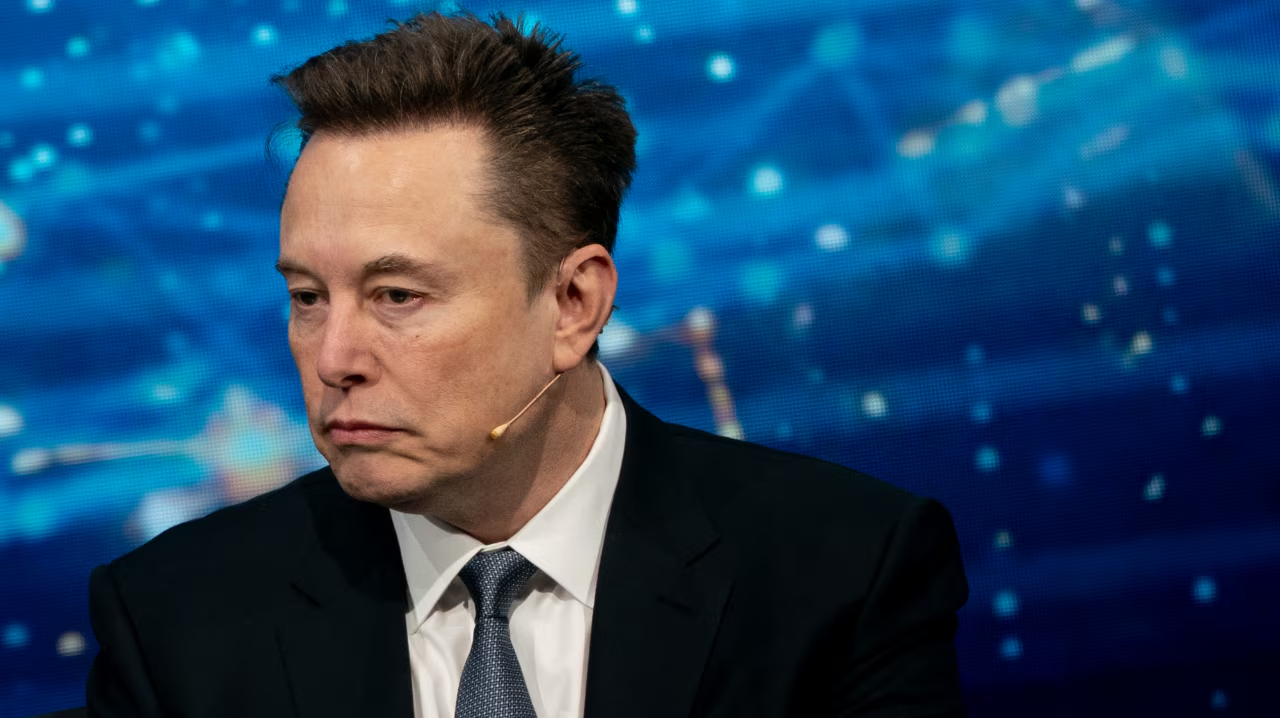
Elon Musk’s net worth has surged to a record $722 billion, driven by the recent initial public offering (IPO) filing of SpaceX, which reveals critical insights into his financial obligations and potential market impacts.
Elon Musk, the CEO of Tesla and SpaceX, has seen his net worth hit an unprecedented $722 billion, as reported by Bloomberg. This remarkable financial milestone is primarily attributed to the anticipated initial public offering (IPO) of SpaceX, a move that not only enhances Musk’s personal wealth but also signals significant implications for the commercial aerospace sector and broader market dynamics.
SpaceX’s IPO: A Game Changer
The filing for SpaceX’s IPO, disclosed publicly on [insert date], has marked a significant turning point in Musk’s financial trajectory. Analysts estimate that the valuation of SpaceX could reach approximately $137 billion, positioning it among the most valuable private aerospace companies in the world. This anticipated valuation reflects SpaceX’s impressive track record, including achievements in satellite deployment and ambitious plans for interplanetary travel.
Musk’s wealth is heavily concentrated in his equity stakes in both Tesla and SpaceX. Tesla’s market capitalization has consistently exceeded $1 trillion, signifying its dominant position in the electric vehicle market. The intertwined nature of Musk’s financial standing with the performance of these companies underscores the volatility inherent in his wealth, particularly as both firms navigate the unpredictable waters of stock market fluctuations.
Understanding Musk’s Financial Obligations
Despite the staggering figure associated with Musk’s net worth, an examination of his financial obligations reveals a more complex picture. Reports indicate that Musk has leveraged approximately $10 billion in loans against his holdings in Tesla and SpaceX. This level of debt raises important questions about the sustainability of his wealth, especially in the face of potential market downturns.
Financial analysts suggest that high levels of leverage are not uncommon among entrepreneurs in rapidly evolving sectors such as technology and aerospace. However, they caution that the risks tied to such significant debt could jeopardize Musk’s financial stability. Should the market experience volatility, his ability to manage these financial obligations could be severely tested.
The Implications of SpaceX’s IPO for Investors
The upcoming IPO of SpaceX is expected to have profound implications for both investors and the aerospace industry. A successful IPO may bolster SpaceX’s capital reserves, enabling the company to expand its operations and invest in new technologies. This potential influx of capital could accelerate advancements in satellite technology and further exploration endeavors.
Moreover, the outcome of SpaceX’s IPO could set important precedents for other private aerospace firms considering public offerings. If SpaceX’s IPO is well-received, it may encourage a surge of similar IPOs within the sector, which has historically relied heavily on government contracts for funding. This shift could democratize access to capital for emerging aerospace companies and stimulate innovation across the industry.
Contextualizing Musk’s Wealth Amid Economic Trends
Musk’s skyrocketing wealth is emblematic of broader economic trends that highlight the increasing significance of technology and innovation in shaping financial markets. The valuations of companies like Tesla and SpaceX underscore the resilience and growth potential of tech-centric businesses, even amid economic uncertainties.
Furthermore, Musk’s financial journey serves as a case study in the intersection of entrepreneurship, investment strategy, and market dynamics. His strategic leveraging of his companies for personal wealth generation while fostering growth within the organizations illustrates the intricate balance that modern entrepreneurs must navigate in high-stakes environments.
Looking Ahead: The Future of Musk and SpaceX
The developments surrounding Elon Musk and SpaceX reflect significant shifts within the financial landscape, particularly regarding the valuation of technology-driven companies and the implications of IPOs in emerging sectors. As Musk’s wealth continues to increase amid these changes, the forthcoming IPO of SpaceX will attract intense scrutiny from investors, analysts, and policymakers alike.
This upcoming event not only represents a pivotal moment for Musk personally but also signifies a crucial juncture in the ongoing evolution of commercial space exploration. The financial methodologies employed by Musk and the broader implications for the tech and aerospace industries will be closely monitored as they unfold.
As the IPO date approaches, market participants will be eager to gauge how the public responds to SpaceX’s offering and what this may mean for future investments in the aerospace sector. The interaction between Musk’s wealth and the performance of his companies highlights the complexities of wealth accumulation in the modern era, as well as the potential for innovation to reshape entire industries.