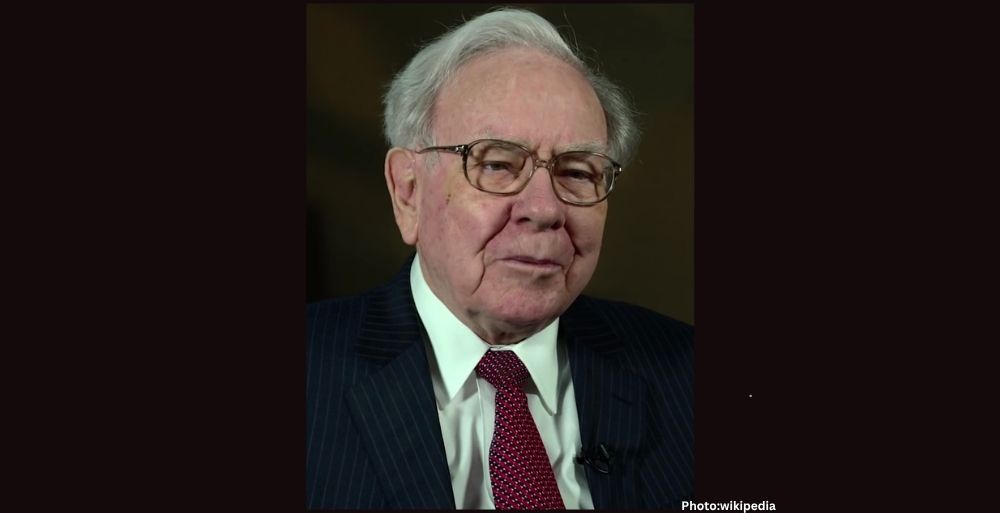
Warren Buffett’s principles of wealth-building challenge conventional financial wisdom, emphasizing patience, understanding, and self-investment as key strategies for long-term success.
Omaha, NE – Renowned investor Warren Buffett has dedicated his life to understanding the intricacies of wealth creation, offering insights that often contradict mainstream financial advice. His seven principles for building wealth are rooted in a philosophy that emphasizes the importance of patience, knowledge, and self-development over traditional investment strategies. These principles have not only guided Buffett’s own investment decisions but have also served as a roadmap for countless investors seeking to achieve lasting financial success.
1. Volatility Is Not the Enemy
Buffett posits that many investors misinterpret market volatility as a threat. Instead of fearing falling markets, he views them as opportunities to acquire solid assets at discounted prices. In his framework, true risk lies in purchasing investments without a comprehensive understanding of their fundamentals. “We do not view volatility as risk. Purely geometric measurements of volatility, such as beta, are totally irrelevant to us,” Buffett has stated. He advises investors to remain steadfast during market downturns, asserting that the discipline to do so differentiates successful wealth builders from those who merely break even.
2. You Don’t Have to Swing at Every Pitch
In the world of investing, patience is a virtue. Buffett likens wealth-building to a baseball game, where there are no penalties for waiting for the right opportunity. He encourages investors to refrain from reacting impulsively to market pressures, instead emphasizing the importance of waiting for the ideal investment. “The trick in investing is just to sit there and watch pitch after pitch go by and wait for the one right in your sweet spot,” he has remarked. This analogy underscores the significance of selective investing in a climate often driven by urgency.
3. The Market Transfers Wealth From the Impatient to the Patient
Buffett articulates that the stock market serves as a mechanism for redistributing wealth from those who react hastily to those who exercise patience. Many investors treat daily market fluctuations as indicators of their financial acumen, feeling elated during price increases and anxious during declines. However, Buffett suggests that declining prices can be advantageous for long-term investors, allowing them to acquire assets at reduced rates. “The stock market is a device for transferring money from the impatient to the patient,” he asserts, reinforcing the idea that a long-term perspective can yield significant rewards.
4. Price and Value Are Not the Same Thing
A common misconception in investing is conflating price with value. Buffett clarifies that price reflects market sentiment at any given moment, while value pertains to the intrinsic worth of an asset over time. He advocates for purchasing assets based on their long-term value rather than their current price. “Price is what you pay; value is what you get,” he emphasizes, advising investors to focus on quality investments that can yield substantial returns over the years.
5. Borrowed Money Is the One Thing That Can Destroy You
In stark contrast to the prevailing financial culture that endorses leveraging debt to enhance returns, Buffett adopts a cautious approach regarding borrowed money. He warns that while leverage can amplify profits, it also magnifies losses, potentially leading to devastating financial consequences. “I’ve seen more people fail because of liquor and leverage, leverage being borrowed money,” he observes. His perspective encourages investors to prioritize financial stability over risky borrowing practices.
6. Wide Diversification Is a Hedge Against Ignorance
Buffett challenges the notion of broad diversification as a safety net, arguing that it often signals a lack of understanding about one’s investments. He contends that true knowledge of a few companies can mitigate the need for extensive diversification. “Diversification is protection against ignorance. It makes little sense if you know what you are doing,” he states, underscoring the importance of developing a deep understanding of one’s investments.
7. The Best Investment Is in Yourself
Buffett advocates for personal development as the most critical investment one can make. Rather than seeking refuge in tangible assets like gold or real estate, he emphasizes the value of enhancing one’s skills and abilities. “The best investment by far is anything that develops yourself, and it’s not taxed at all,” he highlights. Buffett asserts that expertise in any field compounds value, providing a foundation for success that transcends market fluctuations.
In conclusion, Warren Buffett’s principles of wealth-building challenge the conventional wisdom propagated by the financial industry. His emphasis on patience, understanding, and self-investment reveals a paradigm shift in how individuals can approach investing. By adopting these principles, investors can navigate the complexities of the market with confidence and clarity, paving the way for long-term financial success.