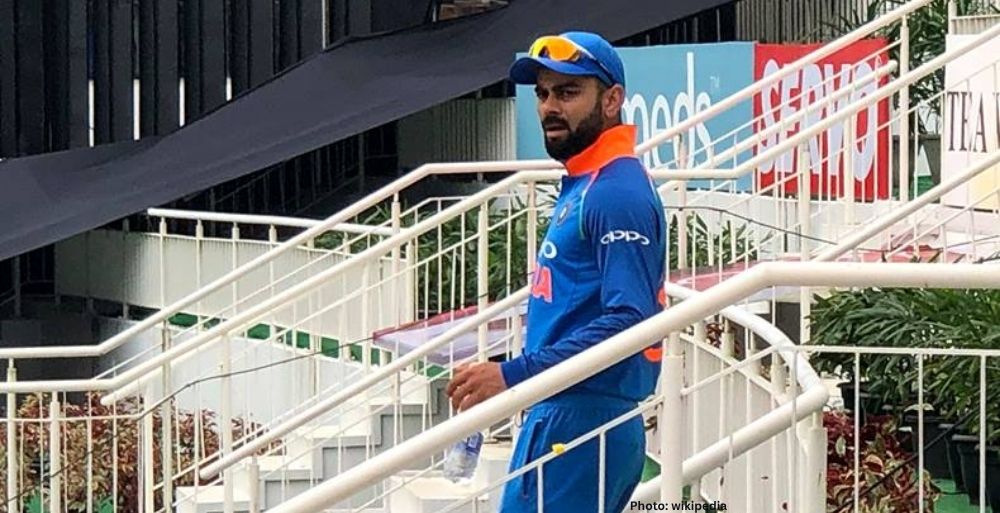
NEW DELHI — Breaking more than a year of relative silence following his abrupt departure from red-ball cricket, former Indian captain Virat Kohli has characterized his tenure at the helm of the national Test side as a historic “golden era” underpinned by egalitarian dressing-room dynamics, a shared sense of collective ownership, and deep personal friendships. Speaking during an appearance on a Royal Challengers Bengaluru (RCB) media platform, the 37-year-old batting icon detailed the structural and cultural changes that propelled India to a five-year stay at the top of the International Cricket Council (ICC) Test rankings. However, the retrospective remarks have triggered fresh debate across the cricketing world, coming immediately after Kohli acknowledged that a perceived lack of institutional trust from selectors and team management ultimately accelerated his decision to step away from the longest format of the game.
The Culture of Collective Ownership: Overcoming the Senior-Junior Divide
The strategic evolution of India’s Test squad from a transitional unit into a dominant global force began with a fundamental dismantling of traditional domestic cricket hierarchies. Appearing on the podcast hosted by sports presenter Mayanti Langer, Kohli emphasized that the foundational catalyst for India’s unprecedented consistency in the longest format was the remarkably narrow age gap among the squad’s core leadership group.
Under legacy systems, Indian dressing rooms had frequently been defined by rigid divides separating established veteran players from newly capped juniors, an arrangement that often stifled open communication and localized on-field decision-making.
“The most important thing was our average age,” Kohli remarked, reflecting on the mid-2010s assembly of the roster. “There was no hesitation between seniors and juniors. We were like a group of friends.”
According to Kohli, this horizontal team structure allowed core players—including top-order mainstays Cheteshwar Pujara and Ajinkya Rahane, off-spinner Ravichandran Ashwin, pace veterans Ishant Sharma and Mohammed Shami, and all-rounder Ravindra Jadeja—to establish a transparent operational framework when they entered their collective prime in their mid-to-late 20s.
This deep interpersonal comfort, Kohli argued, meant tactical accountability was decentralized. Rather than relying exclusively on directive leadership from the captain or the formal coaching staff, the broader playing group operated as co-architects of the team’s long-term strategy.
“It was not like a few people would take care of everything,” Kohli explained, gesturing to emphasize the structural shift. “Everyone felt they had a role in building the team for the next six to eight years.”
This systemic sense of individual ownership forced players to constantly innovate and self-regulate, establishing a baseline of intense fitness and tactical discipline that eventually transformed India into the most formidable touring side in modern red-ball history.
Contextualizing the Statistical Moat: The Oversees Dominance
Kohli’s reflective assessment is heavily supported by the statistical record of his captaincy, which began under challenging circumstances during India’s December 2014 tour of Australia following the sudden mid-series retirement of Mahendra Singh Dhoni. Over the next eight years, before relinquishing the captaincy in early 2022, Kohli became India’s most statistically successful Test leader, securing 40 victories across 68 matches, balanced against 17 defeats and 11 draws, representing an exceptional win percentage of 58.82%.
| Captaincy & Career Metrics | Statistical Figure | Historical Context / Significance |
| Total Tests as Captain | 68 Matches | Most by an Indian Test leader |
| Total Test Wins | 40 Victories | Ranked 4th in global cricket history |
| SENA Country Victories | 7 Test Wins | Highest absolute volume by any Asian captain |
| Home Series Dominance | 11 Consecutive Series Wins | Unbeaten bilateral home record under his tenure |
| Final Career Test Runs | 9,230 Runs | Fourth-highest aggregate in Indian history |
| Career Test Average | 46.85 Per Innings | Completed across 123 total Test appearances |
| Late-Career Average (2020–2025) | 30.72 Per Innings | Periodic form drop that drew selector scrutiny |
Prior to Kohli’s tenure, Indian red-ball teams were frequently criticized for their inability to win outside the subcontinent, often struggling on fast, bouncing pitches in the Southern Hemisphere and the United Kingdom. Under Kohli’s leadership, India achieved a historic breakthrough during the 2018–19 tour of Australia, securing a 2-1 series triumph that marked the first time an Asian nation had won a Test series on Australian soil since touring began in 1947.
Furthermore, Kohli oversaw a record seven Test victories in SENA (South Africa, England, New Zealand, and Australia) nations, the most ever by an Asian captain. This overseas success coincided with the systematic development of a high-velocity pace bowling unit. By prioritizing raw speed, physical conditioning, and aggressive short-ball tactics, Kohli and the team management successfully built a bowling attack around Shami, Ishant Sharma, and later Jasprit Bumrah and Mohammed Siraj, capable of taking 20 wickets in any playing conditions.
                  ┌────────────────────────────────────────┐
                  │      INDIA'S TEST WIN ACCUMULATION     │
                  └────────────────────────────────────────┘
                                       │
         ┌─────────────────────────────┴─────────────────────────────┐
         ▼                                                           ▼
┌─────────────────────────────────┐                         ┌─────────────────────────────────┐
│        HOME DOMINANCE           │                         │        OVERSEAS BREAKTHROUGHS   │
├─────────────────────────────────┤                         ├─────────────────────────────────┤
│ • 11 Consecutive Series Wins    │                         │ • 7 Wins in SENA Countries      │
│ • Built an Unbeaten Fortress    │                         │ • Historic 2018-19 Aus Triumph  │
└─────────────────────────────────┘                         └─────────────────────────────────┘
         │                                                           │
         └─────────────────────────────┬─────────────────────────────┘
                                       │ Driven by pace-bowling revolution
                                       ▼
                        ┌──────────────────────────────┐
                        │    40 TOTAL TEST VICTORIES   │
                        │  (Most successful Indian Ldr)│
                        └──────────────────────────────┘
The Friction Behind the Exit: Fading Institutional Trust
Despite the nostalgic look back at this highly successful era, the timing of the podcast interview has drawn intense scrutiny from cricket analysts and fans alike. Kohli abruptly announced his retirement from the longest format on May 12, 2025, via a social media statement following India’s early 2025 tour of Australia, finishing his career with 9,230 runs and 30 centuries across 123 Test matches.
While his retirement message originally stated he was “signing off with a smile,” his recent remarks reveal significant behind-the-scenes friction with selectors and team leadership regarding his late-career form. Between February 2020 and his final match in Sydney in January 2025, Kohli’s Test average fell to 30.72 across 39 matches—a sharp decline from his career peak of 54.97 at the end of 2019. This prolonged dip in form led to intense public and internal scrutiny, especially as contemporary rivals like England’s Joe Root experienced a major surge in runs.
Addressing the underlying causes of his exit, Kohli admitted that he felt alienated by an environment where veteran players were continuously forced to justify their positions on a game-by-game basis.
“Either tell me on day one I am not good enough or I am not needed,” Kohli stated bluntly during the broadcast, exposing the communication breakdowns that occurred toward the end of his Test career. “But if I am made to feel like I need to constantly prove my worth and my value, then I am not in that space. I couldn’t play without trust.”
This candid admission has received strong backing from former teammates. Longtime off-spinner Ravichandran Ashwin, who also stepped away from international cricket during the 2024–25 structural transition, defended Kohli on his personal media channel. Ashwin argued that players who have spent over a decade winning high-stakes matches for their country should be afforded greater institutional leeway rather than facing constant pressure from selectors.
“Virat said, ‘I don’t have to prove my worth to anyone,’ and that’s absolutely right,” Ashwin noted, analyzing the immense mental strain placed on modern veteran athletes. “Why, man? I also felt the same. There was nothing left to prove.”
Ashwin suggested that true professional maturity involves ignoring outside criticism and focusing entirely on internal performance standards, a perspective he believes Kohli fully embraced before making his final exit from the Test arena.
Tactical Leadership and the ‘Plan A’ Blueprint
Beyond the cultural aspects of his captaincy, Kohli also detailed his specific tactical approach to managing bowlers on the field, offering a clear contrast to more rigid, captain-centric leadership models. He explained that his default on-field methodology relied on empowering the individual bowler to dictate their own strategic setups, rather than enforcing a top-down plan from the slip cordon.
“My default way of operation was, I throw the ball to the guy and say, I have plan B, C, and D ready,” Kohli explained. “But plan A is yours, and I want you to hold that ball, knowing that I have set the field. Because the ball is coming out of your hand, it’s not coming out of mine. If it doesn’t work, I’m here.”
This high level of tactical trust encouraged young fast bowlers like Bumrah and Siraj to develop their own analytical approaches to setting up international batsmen. By forcing the bowling unit to take full responsibility for their field placements and tactical adjustments, Kohli cultivated a deeply analytical team environment.
While cricket historians will continue to debate his leadership legacy—particularly given the absence of an ICC Test Championship mace following India’s defeat to New Zealand in the inaugural 2021 final—the cultural changes Kohli introduced have fundamentally redefined how India approaches red-ball cricket on the world stage.