In 2026, Singapore’s passport ranks highest globally, providing visa-free access to 192 destinations, while significant disparities persist between the world’s strongest and weakest passports, highlighting issues of global mobility and inequality.
In an extensive report released by the Henley Passport Index, Singapore has secured its position as the leading country for passport strength in 2026, offering its citizens visa-free travel to 192 destinations across the globe. This ranking not only showcases the impressive diplomatic relationships Singapore has cultivated but also illustrates the stark disparities in global mobility, with the weakest passports granting access to fewer than 50 locations. The findings underscore how factors such as geography, international relations, and political stability significantly influence a nation’s travel freedoms.
Leading the Rankings
Following Singapore, a notable three-way tie has emerged for the second position in the rankings. Japan, South Korea, and the United Arab Emirates (UAE) each provide their citizens with access to 187 destinations without the need for a visa. Notably, while the UAE boasts the strongest passport outside of East or Southeast Asia, it faces a critical limitation: Emirati citizens do not have visa-free access to the United States, a privilege that remains available to the citizens of Singapore, Japan, and South Korea.
Detailed Rankings Overview
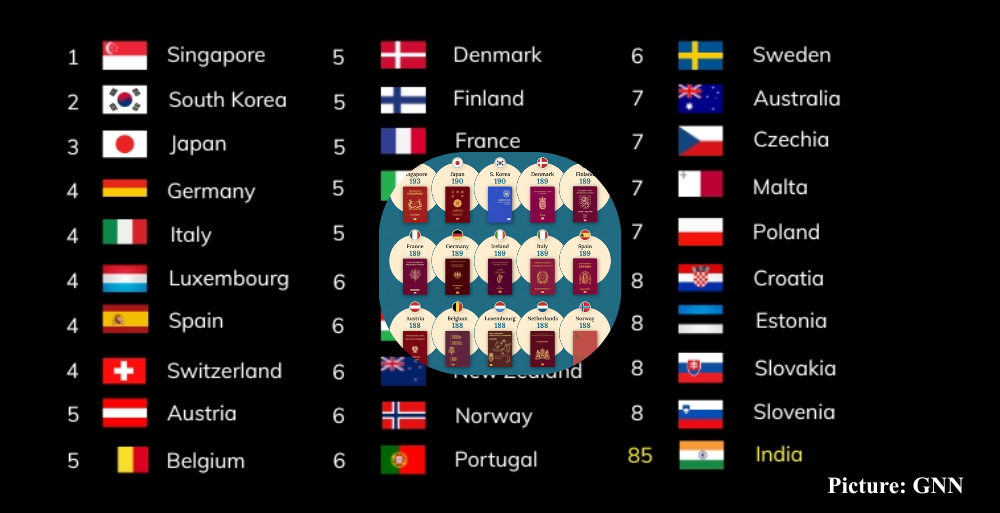
The top ten rankings for passport strength based on visa-free access are as follows:
- 1. Singapore – 192 destinations
- 2. Japan – 187 destinations
- 2. South Korea – 187 destinations
- 2. UAE – 187 destinations
- 5. Norway – 185 destinations
- 5. Switzerland – 185 destinations
- 7. EU average – 183 destinations
- 7. Malaysia – 183 destinations
- 7. United Kingdom – 183 destinations
- 10. Australia – 182 destinations
- 10. Canada – 182 destinations
- 10. New Zealand – 182 destinations
Among European nations, Norway and Switzerland rank highly, each allowing access to 185 destinations. While the European Union (EU) operates under a unified passport system, the individual member states demonstrate varying levels of visa-free access; for example, Bulgaria and Romania provide access to 177 destinations, whereas Sweden offers access to 186. The average passport strength within the EU stands at 183, which aligns it with Malaysia and the United Kingdom, while slightly surpassing its North American counterparts, Canada (182) and the United States (179).
The Global Disparity
In stark contrast to the powerhouses at the top, the lowest-ranked passports reveal a dramatic decline in global mobility. The weakest passports allow their holders access to fewer than 50 countries, illustrating a profound disparity in travel opportunities. Countries occupying the bottom ranks often grapple with political instability, high emigration rates, or the lingering effects of conflict, which severely limits their citizens’ access to many developed nations. The rankings for the weakest passports are as follows:
- 1. Afghanistan – 23 destinations
- 2. Syria – 26 destinations
- 3. Iraq – 29 destinations
- 4. Pakistan – 31 destinations
- 4. Yemen – 31 destinations
- 6. Somalia – 32 destinations
- 7. Nepal – 35 destinations
- 7. North Korea – 35 destinations
- 9. Bangladesh – 36 destinations
- 10. Eritrea – 38 destinations
- 10. Iran – 38 destinations
- 10. Palestine – 38 destinations
Countries such as Afghanistan, Syria, and Iraq rank at the bottom of the index, with their citizens having access to only a handful of nations. Additionally, countries like Nigeria (44), Somalia (32), and the Democratic Republic of the Congo (43) also find themselves in low rankings, reflecting trends of stringent visa restrictions imposed on their nationals due to significant diasporas and rapidly growing populations.
Mapping Global Inequality
The contrasting passport rankings provide insights into broader global inequalities. The ability to travel freely is often indicative of the opportunities available to individuals, with profound implications for economic and social mobility. Regions such as Africa, the Middle East, and South Asia frequently witness their passports ranked lower than those of their European or Western Hemisphere counterparts. Even nations like Malaysia and the UAE, which boast relatively high rankings, still encounter limitations regarding access to major destinations, particularly the United States.
This analysis of passport strength reveals not only the convenience of travel but also serves as a map of global inequalities, shaping the opportunities and freedoms available to individuals based on their nationality. It highlights the complex interplay of diplomatic relations, national stability, and historical contexts that dictate global mobility.
In conclusion, as the world becomes increasingly interconnected, the strength of a passport continues to be a critical determinant of a citizen’s ability to engage with the international community. The Henley Passport Index for 2026 serves as a reminder of the ongoing disparities in global mobility and the vital role that diplomacy and international relations play in expanding or constraining access to the world’s nations.