The Congress-led United Democratic Front (UDF) has achieved a historic victory in the 2026 Kerala Assembly elections, fundamentally altering the state’s political landscape as the ruling Left Democratic Front (LDF) suffers substantial losses.
The 2026 Kerala Assembly elections culminated on May 4, 2026, with the United Democratic Front (UDF) winning a decisive majority in the state legislature. Preliminary results from the Election Commission of India indicate that the UDF is projected to secure 97 out of 140 seats, while the CPI(M)-led LDF has been reduced to just 35 seats. The BJP, part of the National Democratic Alliance (NDA), has made notable gains, winning three seats, a significant increase from its previous performance.
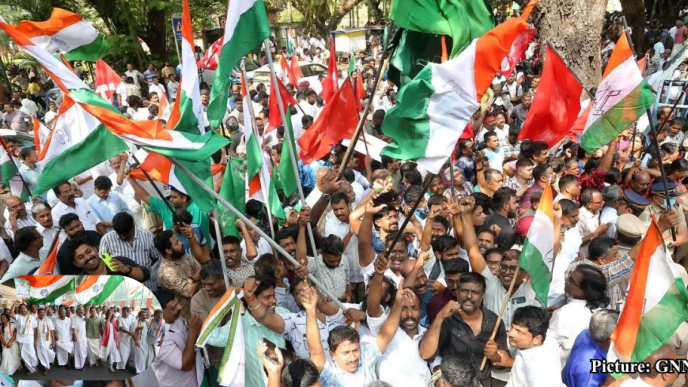
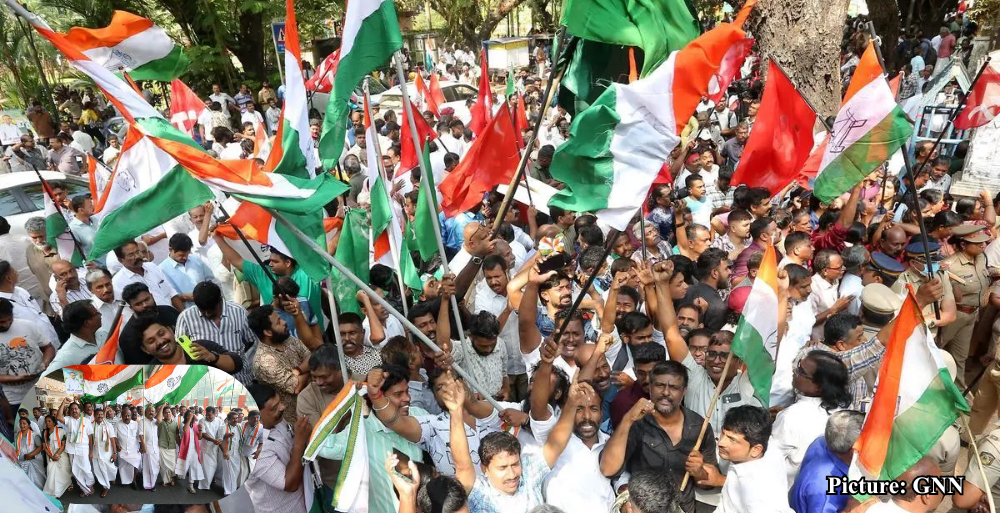
The results mark a significant shift in Kerala’s political dynamics, with the UDF coalition, primarily composed of the Indian National Congress (INC) and the Indian Union Muslim League (IUML), celebrating its victory at their headquarters in Thiruvananthapuram. The UDF’s success is attributed to various factors, including public discontent with the LDF’s governance over the past decade, effective campaigning strategies, and a united front presented by the opposition alliance.
Key Outcomes and Data
As counting progressed throughout the day, the UDF maintained a commanding lead, reflecting widespread support from the electorate across various constituencies. Chandy Oommen, a prominent Congress leader, won the Puthuppally constituency by a staggering margin of 52,907 votes, accumulating 84,031 votes compared to CPI(M)’s K. M. Radhakrishnan, who garnered only 31,124 votes. Similarly, senior Congress figure Ramesh Chennithala achieved a significant victory in Haripad, winning by over 23,000 votes, further solidifying the UDF’s dominance.
The LDF faced unprecedented challenges in this election, with 13 out of its 21 ministers defeated in their respective constituencies. Chief Minister Pinarayi Vijayan narrowly retained his seat in Dharmadam but was initially trailing behind UDF candidate V. P. Abdul Rasheed during the early counting rounds, a situation described by party officials as “technical” due to the nature of the vote counting process.
Electoral Trends and Voter Sentiment
Initial reports suggest that the UDF’s victories extend beyond traditional strongholds, indicating a significant shift in voter sentiment. The UDF’s ability to consolidate its base and attract voters disillusioned with the LDF’s governance has been pivotal in this electoral cycle. The results signal a clear repudiation of the LDF’s policies over the past decade, with Congress General Secretary K.C. Venugopal asserting that the electorate’s anger was directed against what he termed “arrogance, corruption, and nepotism” exhibited by the LDF government.
Venugopal emphasized that the UDF is committed to addressing the expectations of the electorate and working diligently to fulfill its promises. “We recognize our responsibility and pledge to live up to the trust that the people of Kerala have reposed in us,” he stated in a post-election address.
CPI(M)’s Response and Future Directions
In a response to the electoral setback, CPI(M) State Secretary M.V. Govindan acknowledged the LDF’s defeat and pledged to evaluate the reasons behind the party’s losses. He indicated that the LDF would conduct a thorough introspection to identify necessary corrections moving forward. “Every aspect that led to the defeat will be analyzed. The LDF will evaluate and study the defeat, after which required corrections will be made. We expect the support of the people for it,” Govindan remarked.
Additionally, the performance of the BJP, which secured three seats—Nemom, Kazhakuttam, and Chathannoor—marks a noteworthy development for the party in a state where it has historically struggled to gain a foothold. BJP Kerala President Rajeev Chandrasekhar expressed gratitude to voters for their support, asserting that the results demonstrate the people’s desire for change. The BJP’s improved performance is viewed as a counter to prior predictions that suggested it would win no seats at all.
Looking Ahead: Implications for Governance
The UDF’s victory represents a critical juncture for both the UDF and LDF, with the former reclaiming power after a decade in opposition. The UDF is expected to announce its chief ministerial candidate promptly, with leaders assuring a collaborative decision-making process involving all elected legislators and key stakeholders. Congress General Secretary Priyanka Gandhi Vadra thanked the voters for their overwhelming support and pledged to work diligently for a better future for the people of Kerala. “The trust you have placed in us will be our guiding force,” she stated.
As the political landscape in Kerala shifts, the focus will now turn to how the UDF implements its policies and addresses the challenges ahead. The UDF is poised to face issues such as economic recovery post-pandemic, educational reforms, and health sector improvements, all while managing the expectations of a diverse electorate.
Meanwhile, the LDF will need to regroup and assess its strategies as it prepares for future electoral contests. The significant losses experienced by the ruling party will likely prompt a reevaluation of its policies and outreach efforts to better align with the needs of the constituents. In the face of these challenges, the LDF’s leadership will need to demonstrate adaptability and responsiveness to regain public trust.
Conclusion
The 2026 Kerala Assembly elections not only reflect a change in political fortunes but also signify a shift in the electorate’s expectations and priorities. As the UDF prepares to take the reins of governance, the coming months will be crucial in determining how effectively it can translate electoral promises into tangible policy outcomes. The implications of these results will resonate throughout Kerala’s political landscape for years to come, shaping alliances and strategies as both major parties navigate the path ahead.