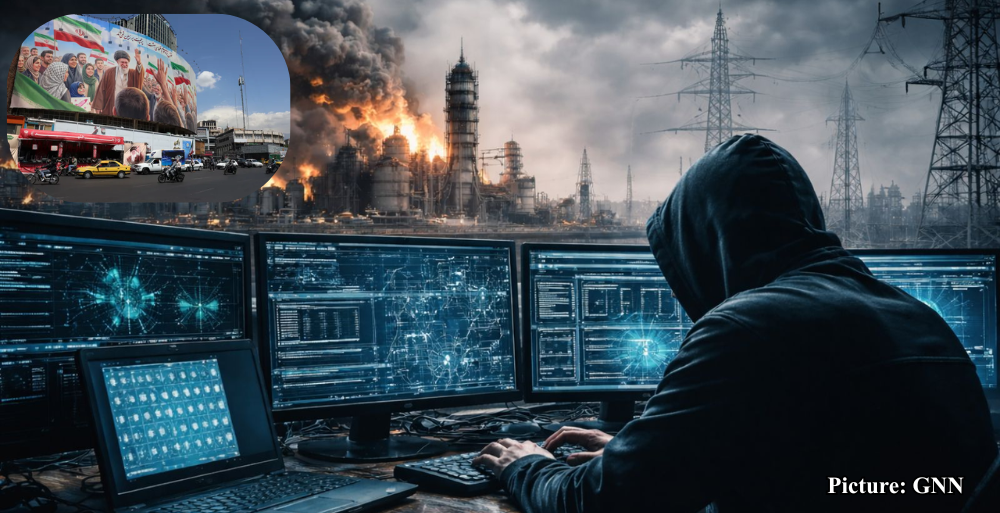
The Islamic Republic of Iran has turned to social media as a critical tool in its ongoing conflict with the United States, utilizing AI-generated content and sharp commentary to counter U.S. narratives and bolster its own position.
As tensions escalate between Iran and the United States, particularly in the wake of recent military engagements, social media has emerged as a significant battleground. Over the past two months, Iran has strategically deployed a range of digital tactics—including sarcastic videos and witty remarks—to respond to U.S. actions and portray the Trump administration unfavorably.
Experts suggest that this approach, referred to as ‘sharp power,’ aims to destabilize opponents by undermining their credibility and exploiting their own communication channels. Priya Doshi, a senior professorial lecturer in strategic communications at American University, noted, “Sharp power is kind of purposely trying to destabilize your opponent by making them look bad, or by using their own systems against them.” This tactic appears to be a direct response to a social media campaign initiated by the Trump administration that utilized AI-generated content to depict military actions against Iran in a glorified manner.
In the early stages of the conflict, U.S. social media efforts included videos that merged military imagery with elements of American pop culture, which drew considerable criticism for trivializing the impacts of warfare. Doshi remarked on the unconventional methods employed by the current administration, stating, “What the Iranians are doing is, they’re basically taking that and they’re turning it around and aiming it back at the United States.”
Iran’s Digital Strategy
The Iranian embassy accounts have showcased a keen understanding of American cultural references, using humor and satire to engage with audiences. For instance, the Iranian embassy in Thailand shared a video clip that appeared to show President Trump dozing off during an official engagement. The embassy in Ghana then shared a Lego adaptation of this moment, humorously captioning, “He must be dreaming that he defeated Iran. Leave him sleeping.” Other content included AI-generated videos depicting a frustrated Trump pretending to negotiate with an absent Iranian delegation, set to lively carnival music.
Research conducted by Joseph Bodnar and Krysia Sikora from the Institute for Strategic Dialogue indicates a significant uptick in engagement with Iranian diplomatic accounts, with posts garnering 900 million views and 22 million likes in the first 50 days of the conflict—representing a thirtyfold increase compared to the previous period. Bodnar and Sikora characterize this surge as “arguably Iran’s most notable win in the war thus far,” although some may argue that Iran’s control over the strategic Strait of Hormuz is a more significant achievement.
According to the analysts, Iran’s social media strategy seeks to bolster its international standing by mocking and belittling the Trump administration. Sikora cautioned, however, that it’s essential for audiences to remember that Iran is a totalitarian regime with a history of human rights abuses, advising that propaganda should not obscure the complexities of the ongoing conflict.
Institutional Investment in Information Warfare
The Iranian strategy can be traced back to substantial investments made by the Islamic Revolutionary Guards Corps (IRGC), designated as a foreign terrorist organization by the U.S. in 2019. The IRGC is integral to the regime’s military operations and has been linked to various repressive tactics domestically and abroad, including funding militant groups across the Middle East.
In 2016, the IRGC established a dedicated digital warfare center, known as the Qorb-e Baqiat-Allah (QBA) Headquarters), underscoring its commitment to engaging in information warfare as a component of its broader military strategy. Matin Mirramezani, project manager for Stanford University’s Iran 2040 project, highlighted that the Iranian government allocated approximately $55 million to the QBA in 2023, significantly surpassing the budget for the IRGC’s main planning ministry.
The QBA engages with a network of smaller content creation firms to produce material that resonates with younger audiences, leveraging the creativity of a generation raised in the digital age. One such firm, Explosive Media, is credited with producing much of the Lego-themed content circulating on Iranian social media. Despite the Iranian government’s internet blackout, the firm claims to have acquired a license to operate as a news media organization, enabling them to access the internet.
Content and Themes
Explosive Media’s representatives have indicated a shift in their stance toward the Iranian government, framing their current work as a patriotic defense against U.S. aggression. They have previously been critical of the regime but have stated that the ongoing conflict has motivated them to support the government. This nuanced position reflects the complex landscape of dissent and loyalty within Iran.
Doshi characterized the type of content being disseminated by Iranian accounts as “slopaganda,” a term that captures the blend of entertainment and propaganda designed to engage audiences unfamiliar with international politics. The use of relatable imagery and popular music serves to attract viewers, delivering counter-narratives that challenge U.S. portrayals of the conflict.
Some of the content produced by Explosive Media and other Iranian accounts draws on high-profile scandals involving U.S. leadership. For example, one video depicts Trump as a puppet manipulated by Israeli Prime Minister Benjamin Netanyahu, while another portrays Secretary of Defense Pete Hegseth in a Lego-style animation that lampoons past controversies.
As the conflict continues, social media remains a vital communication tool for both sides. President Trump himself has often utilized social media for direct communication with the public, demonstrating the profound impact online narratives can have on political discourse. In response to stalled negotiations over Iran’s nuclear program, Trump recently shared an image of himself with a machine gun, declaring, “No more Mr. Nice Guy!”—a statement emblematic of the combative tone that characterizes the current U.S. administration’s approach to international relations.