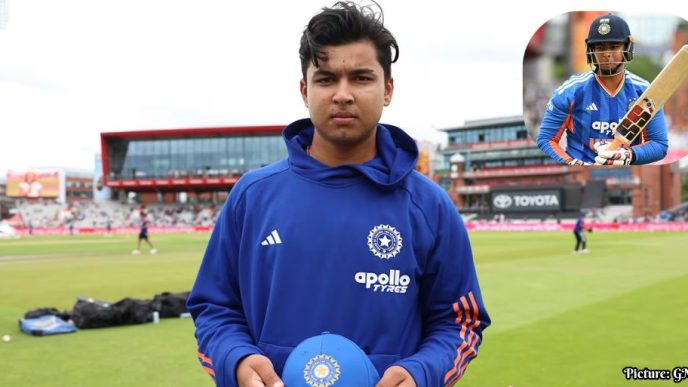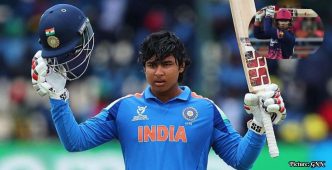

A 15-year-old from Bihar, Vaibhav Sooryavanshi, has made headlines as the youngest player to score a century in the Indian Premier League and earn a call-up to the national team, showcasing the potential of young cricketers from underrepresented regions in India.
In an emerging story in the world of cricket, 15-year-old Vaibhav Sooryavanshi is poised to make his T20 international debut for India against Ireland on Friday in Belfast. This momentous event follows a series of remarkable achievements, including becoming the youngest player to score a century in the Indian Premier League (IPL) and the youngest to receive a call-up to the senior national team. His journey from a small village in Bihar to the international stage highlights not only his exceptional talent but also the challenges faced by aspiring cricketers from less recognized regions of India.
Early Signs of Talent
The narrative of Sooryavanshi’s rise began in Patna, the capital of Bihar, where he first showcased his abilities at a local inter-academy match. Observing the young player hit boundaries with ease, Manish Ojha, his coach, turned to Sooryavanshi’s father, declaring the boy was ready for more competitive cricket. This marked the beginning of a journey that would see him defy expectations and break records.
Sooryavanshi’s cricketing abilities were nurtured from a young age. His father, Sanjiv Sooryavanshi, a former club-level cricketer, recognized his son’s potential and committed to supporting his cricketing aspirations despite the limited resources available in Bihar. When Vaibhav was just four years old, he was introduced to cricket with a bat, and by five, he was training at Jha’s academy in Samastipur, where he quickly distinguished himself from his peers. “He was very young,” recalls coach Brajesh Jha. “But as soon as he was told something, he followed the task very quickly.”
Overcoming Challenges
Despite facing several obstacles, including financial constraints and the lack of competitive opportunities in Bihar, Sooryavanshi’s family remained steadfast in their support. His father would often incur debt to fund his son’s cricket training, and their commitment involved traveling to Patna for training sessions multiple times a week. “The routine was very tough,” Ojha explains, noting the early mornings and late nights devoted to the sport.
As he progressed, Sooryavanshi’s talent became undeniable. By the age of eight-and-a-half, he was selected for the state Under-17 team, an achievement that further fueled his ambitions. Coaches recognized his adaptability and willingness to learn, which set him apart from his peers. “He regularly faced at least 600 balls during training sessions,” Ojha states, emphasizing the rigorous regimen that contributed to his development.
Emerging on the National Stage
Sooryavanshi’s ascent continued as he made his first-class debut in the Ranji Trophy at the age of 12, a feat that is almost unprecedented in Indian cricket. Zubin Bharucha, a renowned coach, highlighted the courage of the Bihar selectors for acknowledging Sooryavanshi’s potential at such a young age. His debut innings left an impression, showcasing his fearless approach and ability to back himself against bowlers much older than him.
His performance in domestic cricket caught the attention of IPL scouts, leading to his selection by the Rajasthan Royals in 2024 for INR 1.10 crore (approximately $116,000). During his debut IPL season, Sooryavanshi not only made history as the youngest centurion in the league’s history but also collected several accolades, including the Emerging Player of the Tournament and the Most Valuable Player award.
Impact on Bihar’s Cricketing Landscape
Sooryavanshi’s success is reshaping the perceptions of cricket in Bihar, a state that has historically been overlooked despite its talent pool. “Vaibhav did not really have a role model from Bihar while growing up,” Ojha notes, indicating the significance of Sooryavanshi’s achievements for aspiring cricketers in the region. His journey has inspired a new generation of young players, prompting an increase in participation in cricket academies.
Parents who once discouraged their children from pursuing sports are now more supportive, with many young children arriving at training sessions clutching oversized bats. “Before, parents here didn’t allow kids to go into sports,” Ojha explains. “Today, four and five-year-olds come to the ground with their parents to train.”
Looking Ahead
As Sooryavanshi prepares to take the international stage, the cricketing world is abuzz with anticipation regarding his potential and future contributions to the Indian team. His ability to adapt and grow alongside the game has drawn comparisons to legendary players, with Bharucha stating, “I genuinely believed this kid was the best batting talent I had seen since Sachin Tendulkar.”
In the coming matches against Ireland and later against England, all eyes will be on Vaibhav Sooryavanshi as he embarks on this next chapter of his cricketing career. His journey thus far not only exemplifies individual talent but also underscores the importance of nurturing young athletes from diverse backgrounds, potentially altering the landscape of Indian cricket for years to come.