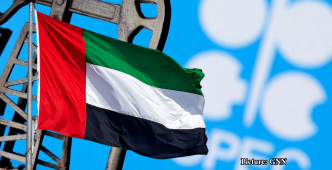
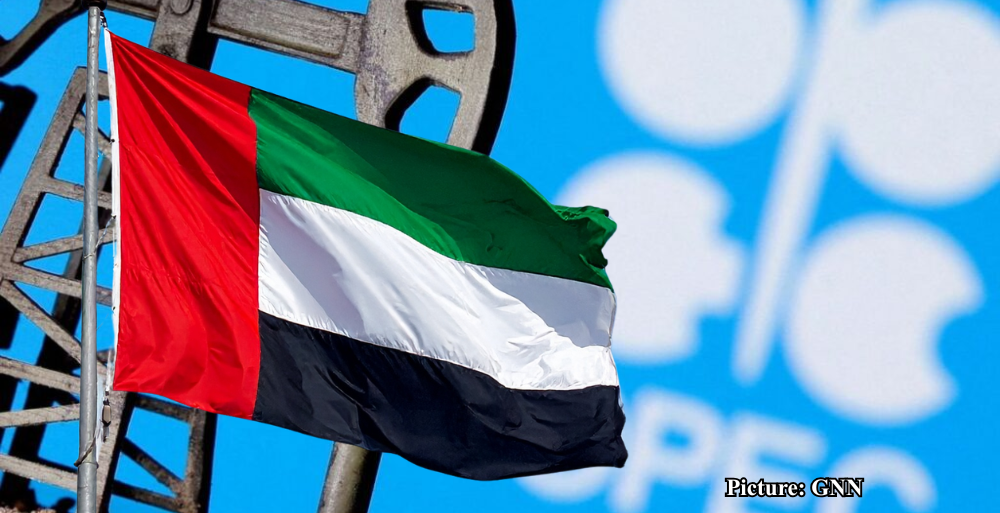
The United Arab Emirates has declared its decision to leave the Organization of the Petroleum Exporting Countries (OPEC), effective May 1, 2024, amid significant shifts in global energy markets and production strategies.
The United Arab Emirates (UAE), the world’s seventh-largest oil producer, announced on Tuesday that it will withdraw from OPEC after more than five decades of membership, marking a significant shift in its energy policy. This decision, which will take effect on May 1, 2024, came just ahead of an OPEC meeting scheduled in Vienna.
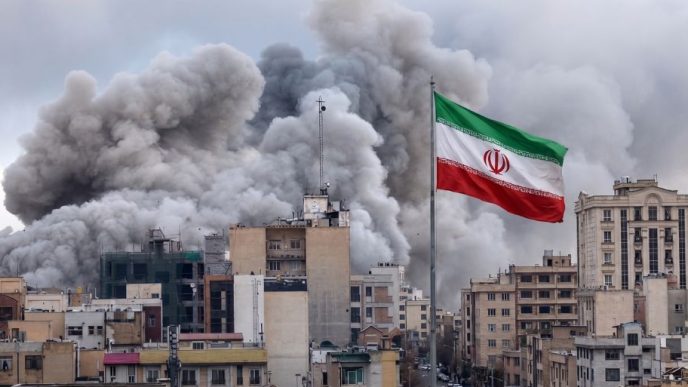
In a statement, Suhail Al Mazrouei, the UAE Minister of Energy and Infrastructure, described the move as a “policy-driven evolution aligned with long-term market fundamentals.” He emphasized that the UAE’s exit would enhance its ability to manage its oil market in response to changing global dynamics, particularly following a recent energy supply collapse exacerbated by the ongoing conflict in Iran.
Strategic Independence and Production Goals
The UAE’s decision to exit OPEC is intended to grant the country greater flexibility in its oil production strategies. Currently, the UAE accounts for approximately 4% of global oil production. Dr. Sultan Al Jaber, managing director and group chief executive of the Abu Dhabi National Oil Company (ADNOC), further elaborated on the decision, stating that it reflects the UAE’s national interests and its long-term energy strategy. He described the move as “sovereign” and crucial for maintaining global energy market stability.
ADNOC operates the majority of the UAE’s oil and gas fields, predominantly located in the emirate of Abu Dhabi. The company is nearing its ambitious target of reaching a production capacity of 5 million barrels per day (bpd) by 2027, a goal accelerated by a $150 billion investment program. This target was advanced by three years as a result of sustained investment in hydrocarbon resource development.
Impact of Geopolitical Events on Oil Production
The UAE’s crude oil exports are primarily directed toward Asian markets, with India, China, and Japan being among its key buyers. Following the recent escalation of the Iran conflict, an energy industry source indicated that the UAE believed it was “the right time to leave OPEC.” This individual noted that the decision is in alignment with global consumer needs amid a tightening supply situation.
The ongoing conflict has significantly impacted OPEC’s production capabilities, with the organization experiencing its largest supply drop in decades. In March alone, OPEC production fell by 27% to 20.79 million bpd, largely due to the Iran war, which eliminated approximately 7.88 million bpd from the market. This decline surpassed the production cuts of 6.28 million bpd that occurred in May 2020 during the peak of the COVID-19 pandemic and was more severe than reductions during the oil crises of the 1970s and the Gulf War in 1991.
Production Capacity and Quota Discrepancies
Prior to the recent geopolitical tensions, the UAE was producing around 3.4 million bpd. However, due to the closure of the Strait of Hormuz, production plummeted by 44% to 1.9 million bpd in March. This decrease coincided with a growing mismatch between the UAE’s production capabilities and its OPEC+ quotas, which have constrained its output to nearly 30% below its true capacity of 4.85 million bpd.
The UAE’s departure from OPEC is viewed as a strategic move to better align its production capabilities with market demands. The UAE Ministry of Energy stated that the decision followed “a comprehensive review of the UAE’s production policy and its current and future capacity” and is firmly rooted in national interests.
A Historical Perspective on UAE and OPEC
Abu Dhabi joined OPEC in 1967, four years prior to the formation of the UAE federation, and has since played a pivotal role in the organization. The UAE has been a key contributor to the Middle Eastern oil supply, which constitutes about 30% of global production. The historical context of the UAE’s involvement in OPEC underscores its significance within the global oil market and its influence on energy policy.
In recent years, the UAE has faced pressure regarding its production quotas, notably vetoing an OPEC+ deal in July 2021 that sought to limit output amid rising global demand. As the UAE embarks on this new chapter outside OPEC, it may seek to address its production capabilities more freely and effectively respond to global market needs.
Notably, the UAE is not the first nation to exit OPEC in recent years; Qatar left the organization in 2019, citing its focus on gas production as a reason for its departure. Meanwhile, Bahrain and Oman remain outside of OPEC but align with the group’s supply management initiatives.
The implications of the UAE’s exit from OPEC will be closely monitored by analysts and industry stakeholders as the global energy landscape evolves in response to geopolitical shifts and market demands.