
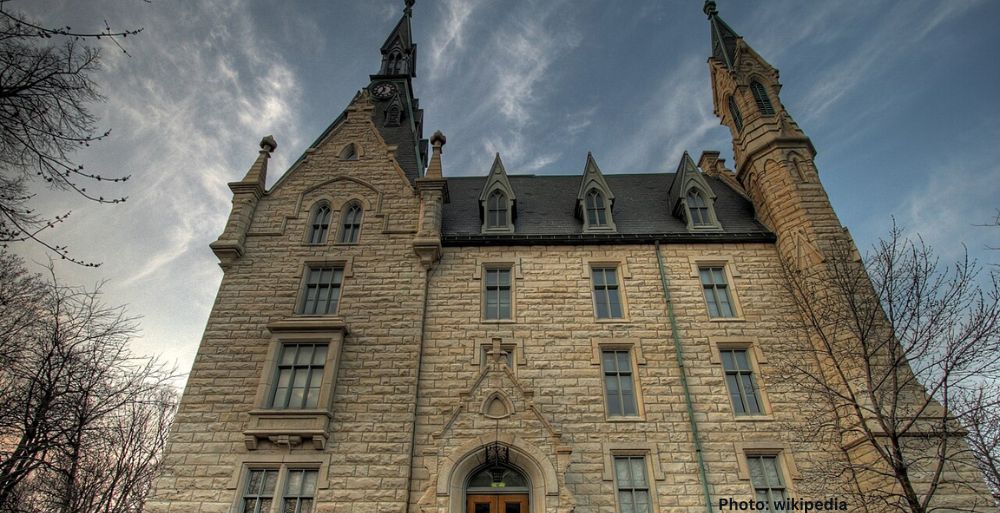
In the latest rankings released by U.S. News & World Report, Northwestern University retains its top position among Big Ten schools, while several institutions experience notable shifts in their standings.
As of September 22, 2026, U.S. News & World Report has published its updated rankings of national universities, revealing significant changes both within the Big Ten Conference and among institutions across the country. These annual rankings are critical as they can influence student applications, institutional funding, and overall perceptions of academic quality.
Northwestern University Maintains Its Dominance
Northwestern University, located in Evanston, Illinois, continues to lead the Big Ten, holding its position as the highest-ranked institution in the conference. In the 2026 rankings, Northwestern was ranked No. 7 nationally, but it has slightly slipped to No. 9 in the recent 2027 report. The university has an undergraduate enrollment of 9,039 students and a reported in-state cost of $73,062, reflective of its status as a private institution.
Significant Shifts in Rankings
Several universities within the Big Ten have experienced notable shifts in their rankings. The University of Nebraska – Lincoln, which ranked No. 18 in the Big Ten in 2026, has seen its national ranking fall from No. 158 to No. 169 as of 2027. With an undergraduate enrollment of 19,787, the university’s specific in-state cost data is currently unavailable. This decline highlights ongoing challenges faced by the institution, which has struggled to improve its academic standing in recent years.
The University of Oregon, ranked No. 17 in the Big Ten, also experienced a drop in its national ranking, moving from No. 110 in 2026 to No. 116 in 2027. This public university boasts an undergraduate enrollment of 20,710 students and an in-state cost of approximately $16,509. This decline may reflect shifting perceptions of the university’s academic programs and overall institutional performance.
Conversely, the University of Iowa managed to improve its national ranking slightly from No. 102 to No. 100 while maintaining its Big Ten position at No. 16. The institution serves 23,407 undergraduate students, with an in-state cost of $11,971. This modest improvement may indicate efforts by the university to enhance its academic offerings and student support services.
Stability and Mixed Results Among Other Institutions
Indiana University – Bloomington remains steady at No. 15 in the Big Ten and retains its national ranking at No. 73. With an undergraduate enrollment of 38,463 and an in-state cost of $12,144, the university continues to attract a diverse student body and maintain its reputation for quality education.
In contrast, Michigan State University has dropped from No. 14 in the Big Ten to No. 69 nationally, down from No. 64. With an undergraduate enrollment of 41,415 and an in-state cost of $19,742, this decline raises concerns about the university’s competitive positioning in the higher education landscape.
Meanwhile, the University of Minnesota – Twin Cities has maintained its position at No. 12 in the Big Ten and No. 59 nationally. The university serves 42,565 undergraduate students and has an in-state cost of $19,162, reflecting its commitment to providing accessible education.
Tied Rankings and Emerging Trends
Several institutions are tied in their rankings, including Penn State University – University Park and Purdue University – Main Campus, both ranked No. 12 in the Big Ten. Penn State improved its national ranking from No. 59 to No. 55, while Purdue matched this national ranking. Their undergraduate enrollments are 42,822 and 43,633, respectively, with in-state costs of $21,518 and $9,992. The improvements for both institutions may suggest successful initiatives aimed at enhancing academic quality and student outcomes.
Other notable institutions include the University of Maryland, College Park, and the University of Washington, both tied for No. 10 in the Big Ten and ranked No. 49 nationally. Maryland has an undergraduate enrollment of 31,875 with an in-state cost of $12,834, while Washington has 40,996 students and an in-state cost of $13,406. The rankings reflect the universities’ ongoing efforts to bolster academic programs and research initiatives.
Rutgers University – New Brunswick and The Ohio State University are tied for No. 8 in the Big Ten. Rutgers dropped from No. 42 to No. 44 nationally, with an undergraduate enrollment of 39,477 and an in-state cost of $19,389. Ohio State also dropped to No. 44 nationally from No. 41, boasting 46,627 undergraduates and an in-state cost of $14,050. This trend of declining national rankings raises questions about the strategies these universities are employing to maintain their competitive edge.
Top Performers in the Big Ten
At the higher end of the rankings, the University of Southern California is ranked No. 4 in the Big Ten, with a national ranking of No. 27. It has an enrollment of 20,768 students and a substantial in-state cost of $77,336. The University of Michigan – Ann Arbor and the University of California – Los Angeles follow closely, ranked No. 3 and No. 2, respectively. Michigan has an undergraduate enrollment of 35,358 and costs $20,082, while UCLA serves 33,534 students and charges an in-state cost of $15,473. These institutions continue to be recognized for their rigorous academic standards and comprehensive student services.
As educational institutions grapple with challenges posed by shifting demographics, funding issues, and the evolving landscape of higher education, these rankings serve as a critical benchmark for assessing institutional performance and attracting prospective students. The implications of these rankings extend beyond mere numbers; they influence student decisions, alumni engagement, and the overall public perception of the universities involved.