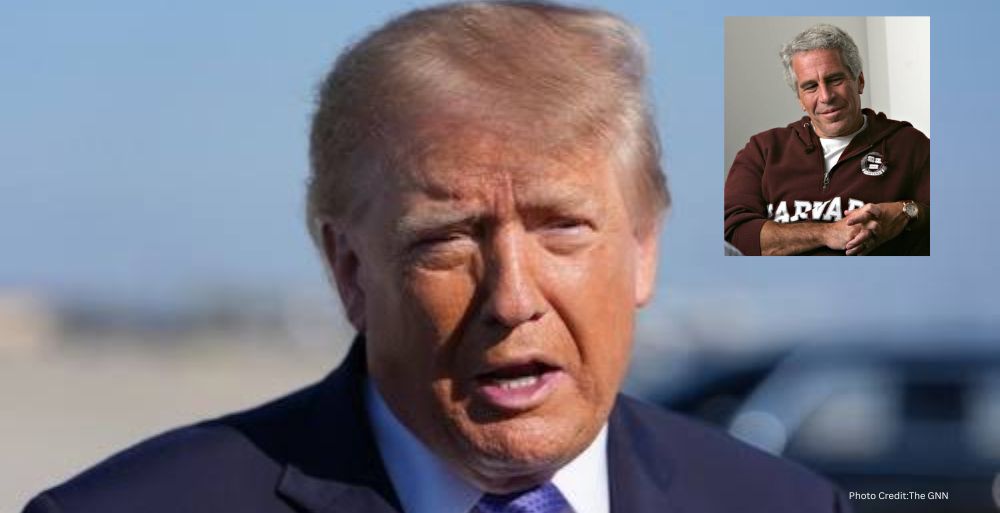
The dismissal of Donald Trump’s lawsuit against the Wall Street Journal concludes a contentious legal battle over the newspaper’s reporting on a purported letter from Trump to Jeffrey Epstein.
A U.S. District Court judge dismissed Donald Trump’s lawsuit against the Wall Street Journal on Saturday, marking the conclusion of a legal challenge stemming from the newspaper’s reporting on an alleged birthday letter sent by Trump to convicted sex offender Jeffrey Epstein. The ruling, issued by Judge Darrin P. Gayles, was made with prejudice, meaning that Trump is barred from amending or refiling the lawsuit.
The case originated from a July 17, 2025, article in the Wall Street Journal which claimed that Trump sent a “bawdy” letter to Epstein for his 50th birthday in 2003. The article suggested that the letter contained inappropriate content, a claim that Trump has vehemently denied, asserting instead that it was fabricated.
Legal Proceedings and Court Rulings
Judge Gayles’ dismissal followed an earlier ruling in April that permitted Trump to amend his complaint. However, upon reviewing the revisions, the judge found that they still failed to meet the legal standard of “actual malice,” which is a high burden for public figures in defamation cases. To prove actual malice, a plaintiff must demonstrate that the defendant acted with knowledge that the statement was false or with reckless disregard for its truthfulness.
In his ruling, Gayles stated, “As President Trump has not plausibly alleged that each Defendant made defamatory statements with actual malice, the Amended Complaint must be dismissed.” He emphasized that since this was Trump’s second attempt to present his claims, it was appropriate to dismiss the case with prejudice.
Responses from Trump’s Legal Team and the Wall Street Journal
Following the court’s decision, a spokesperson for Trump’s legal team expressed the former president’s intention to continue pursuing legal action against the Wall Street Journal and other defendants. The spokesperson noted, “President Trump will continue to press forward in his powerhouse lawsuit against the Wall Street Journal and all of the other defendants,” indicating that Trump remains resolute in holding accountable those he believes disseminate misleading information.
Conversely, a spokesperson for Dow Jones, which owns the Wall Street Journal, welcomed the court’s ruling. They stated, “We’re pleased with the court’s decision,” asserting that the article was factually accurate and that it did not meet the legal criteria for defamation. They maintained that the reporters involved did not knowingly publish false information and adhered to appropriate journalistic standards.
Background of the Case
The lawsuit gained significant public attention, partly due to the inclusion of Rupert Murdoch, a prominent media ally of Trump, among the defendants. Murdoch’s News Corporation owns the Wall Street Journal. Prior to the publication of the article, Trump reportedly reached out to Murdoch in an attempt to prevent it from being released, underscoring the contentious relationship between Trump and the media.
The original article reported that Epstein received various letters from friends for his birthday, including one allegedly from Trump. Although the Journal did not initially publish an image of the letter, it was later released by the House oversight committee in September, having been obtained from Epstein’s estate.
Implications of the Ruling
This dismissal adds another chapter to Trump’s ongoing and often contentious relationship with the media, characterized by frequent legal confrontations. Throughout his political career, Trump has pursued litigation against numerous news organizations over claims of defamation and other grievances, especially during and after his presidency. This case, however, highlights the challenges faced by public figures in proving defamation in court, particularly given the stringent requirement of demonstrating actual malice.
The ruling also raises broader questions about the balance between free speech and the protection of individual reputations. As the legal landscape evolves, this case may have implications not only for Trump but also for other public figures and media organizations navigating similar disputes. It underscores the complexities involved in cases where public figures seek to challenge media narratives, particularly in an era of heightened scrutiny and polarized public sentiment.
Overall, this case illustrates the ongoing tensions between media freedom and the reputational interests of individuals, particularly those in the public eye. As the dynamics of media reporting continue to shift, the parameters surrounding defamation and the obligations of journalists may also face reevaluation in the courts.
Historical Context of Trump’s Legal Battles with the Media
Donald Trump has a well-documented history of initiating legal action against media outlets. This pattern intensified notably during his presidency, as he frequently criticized news organizations for what he termed “fake news.” His legal strategies often reflect broader concerns about media portrayal and the impact of such coverage on his public image. In this context, Trump’s lawsuit against the Wall Street Journal appears to be part of a broader strategy to confront and challenge narratives he perceives as damaging.
The legal standards for defamation are particularly challenging for public figures like Trump. The precedent set by the landmark Supreme Court case New York Times Co. v. Sullivan (1964) established the “actual malice” standard, which requires that public figures prove that false statements were made with knowledge of their falsity or with reckless disregard for the truth. This case underscores the extent to which the legal system protects freedom of the press, even when the subjects of reporting may find the coverage unflattering or damaging.
Future Considerations for Media and Public Figures
The implications of this ruling extend beyond Trump himself. As media organizations continue to navigate the complexities of reporting on high-profile individuals, the legal outcomes of such cases may influence journalistic practices and standards. The ongoing debate about media integrity, accountability, and the responsibilities of public figures in the digital age remains highly relevant.
In conclusion, the dismissal of Trump’s lawsuit against the Wall Street Journal serves as a significant moment in the intersection of media rights and public figure accountability. As both sides continue to navigate this contentious landscape, the case highlights the enduring challenges of balancing free expression with the protection of individual reputations in an increasingly polarized environment.