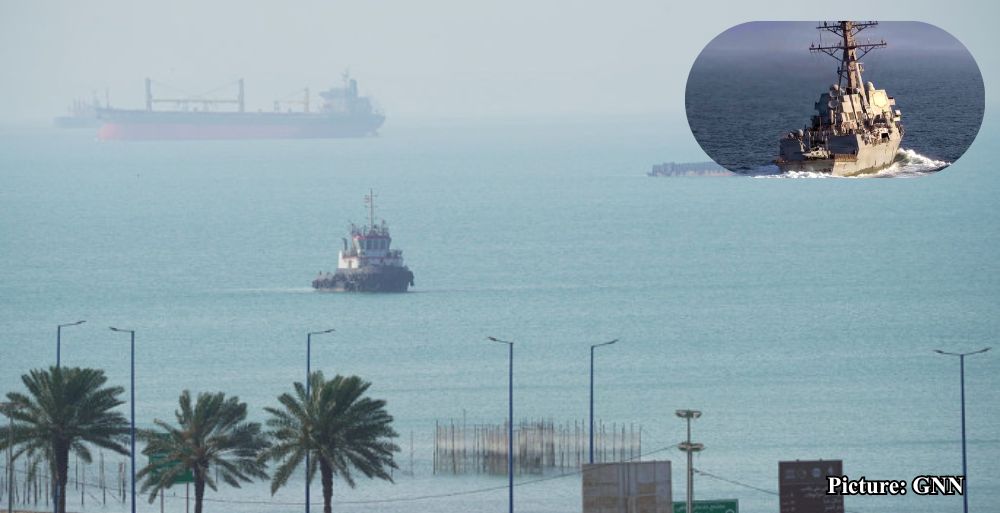
Efforts by the United States to reopen the Strait of Hormuz for commercial shipping have raised tensions with Iran, which claims the initiative undermines an existing ceasefire. The situation has significant implications for global energy markets and regional stability.
DUBAI, United Arab Emirates — Tensions in the Middle East escalated on a recent Tuesday as the United States attempted to reopen the Strait of Hormuz, a critical maritime passage for global oil trade, amidst claims that Iran had launched missile and drone attacks against the United Arab Emirates (UAE). The U.S. initiative, part of what the administration has dubbed “Project Freedom,” aims to create an “enhanced security area” to facilitate the safe passage of commercial vessels through the strategically vital waterway.
The Strait of Hormuz, which sees approximately one-fifth of the world’s oil and gas trade, has been under increasing Iranian control, leading to significant rises in global fuel prices and economic uncertainty. The U.S. military reported that two American-flagged merchant ships successfully transited the strait on a Monday, although the situation remained fluid with additional ships weighing their options for passage the following day.
Iran’s Response to U.S. Initiatives
Iran has responded vehemently to the U.S. actions, with senior officials asserting that the attempt to reopen the strait violates the delicate ceasefire that had held for over three weeks. Mohammad Bagher Qalibaf, the Iranian parliamentary speaker and chief negotiator, criticized the U.S. efforts via social media platform X, alleging that Washington is jeopardizing shipping security in the region and warning of a potential shift in the balance of power in the strait.
“We know full well that the continuation of the status quo is intolerable for America; while we have not even begun yet,” Qalibaf stated, indicating that Iran has yet to fully respond to U.S. maneuvers.
U.S. Military Strategy and Regional Reactions
U.S. President Donald Trump has vowed to deal forcefully with Iranian efforts to impede maritime passage. The Joint Maritime Information Center, under U.S. command, advised vessels to navigate the strait through Oman’s territorial waters, claiming the establishment of a secure passage free from Iranian mines. U.S. Central Command reported that Iranian forces had launched multiple attacks, including drones and cruise missiles, against civilian shipping, which were met with defensive actions from American military assets.
The UAE’s Defense Ministry confirmed that its air defense systems intercepted 15 missiles and four drones launched by Iran, with one drone reportedly igniting a fire at a key oil facility, injuring three Indian nationals. The British military corroborated reports of cargo vessels ablaze off the coast of the UAE, further highlighting the acute risks to regional maritime security.
Indian Prime Minister Narendra Modi condemned the attacks, labeling the targeting of civilian infrastructure as “unacceptable” and reaffirming India’s solidarity with the UAE. Modi emphasized the importance of safe passage through the Strait of Hormuz for regional peace and global energy security.
International Mediation Efforts
In response to the rising tensions, Pakistan, which has been mediating between the U.S. and Iran, alongside Saudi Arabia, condemned the Iranian strikes against the UAE. Pakistan’s Prime Minister Shehbaz Sharif called for adherence to the ceasefire and expressed support for the Emirati government during this challenging period. Similarly, Saudi Arabia urged Iran to cease hostilities, calling for compliance with international law and UN Security Council resolutions.
Economic Implications of the Strait’s Closure
The ongoing conflict and closure of the Strait of Hormuz have far-reaching implications for global markets, particularly for countries in Europe and Asia that rely heavily on oil and gas from the Persian Gulf. The U.S. has enforced a naval blockade on Iranian ports since April 13, resulting in at least 49 commercial vessels being instructed to turn back. The blockade aims to curtail Iran’s oil revenue, which is crucial for its struggling economy, while U.S. officials hope it will compel Iran to negotiate concessions regarding its nuclear program and other contentious issues.
Despite these pressures, Iran has proposed conditions for ending the conflict, including the lifting of U.S. sanctions, withdrawal of foreign forces, and cessation of hostilities involving Israel. Iranian officials have stated that their proposal does not involve discussions about their nuclear program, which has historically been a major point of contention with the U.S. and its allies. However, U.S. officials have expressed skepticism about the likelihood of reaching an agreement, with Trump indicating doubts about the viability of Iran’s proposal.
As the situation evolves, the potential for renewed conflict remains high, and the implications of U.S. actions in the Strait of Hormuz will continue to reverberate through international markets and geopolitical relations.