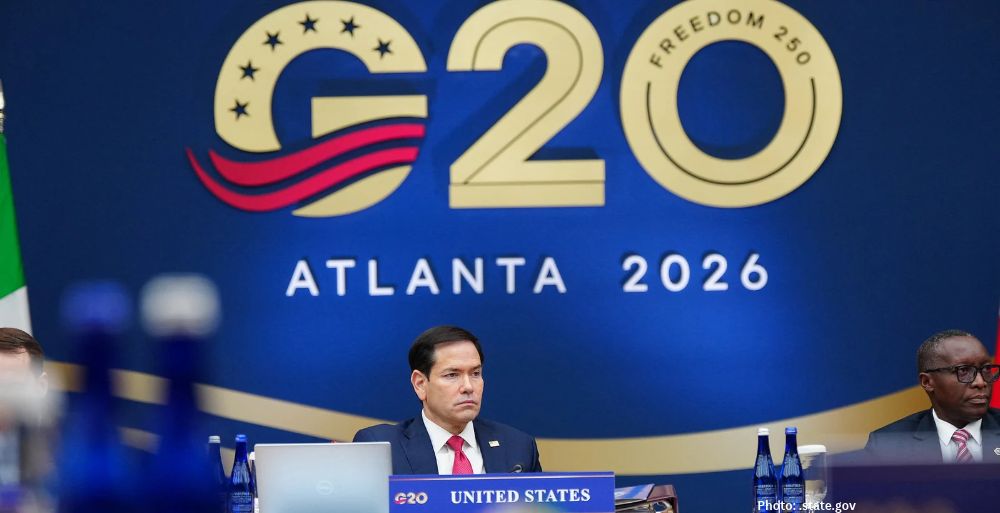
The U.S. has canceled the traditional family photo at the G20 foreign ministers’ meeting in Atlanta following a boycott by several nations, including Australia and the UK, protesting Russia’s presence amid ongoing tensions stemming from its invasion of Ukraine.
The G20 foreign ministers’ meeting, convened in Atlanta, has been marred by significant geopolitical tensions, culminating in the cancellation of the traditional family photo that typically marks the opening of such international gatherings. The decision, announced by U.S. Secretary of State Marco Rubio, followed clear indications from multiple nations, including Australia and the United Kingdom, that they would boycott the photo opportunity due to the presence of Russian Foreign Minister Sergei Lavrov.
In his opening remarks, Rubio emphasized the critical juncture at which the international community finds itself, stating, “We are in a critical moment. We are facing a series of interconnected economic and geopolitical crises.” His remarks underscored the U.S. commitment to addressing these challenges, particularly in light of Russia’s actions in Ukraine, which have provoked widespread condemnation from several G20 partners.
International Response to Russia’s Actions
Approximately one-third of the countries attending the G20 meeting signaled their refusal to participate in any photo that included Russian representatives. This sentiment was particularly pronounced among European Union nations. Germany’s Foreign Affairs Minister Johann Wadephul articulated this position, declaring, “In no case will there be a family photo with European partners and Mr. Lavrov together because … there is no normality with Russia.” This assertion highlights a growing consensus among European leaders against normalizing relations with Russia amid its ongoing military aggression in Ukraine.
UK Foreign Secretary Ed Miliband echoed these sentiments, stating, “We do not engage in that way with the Russians and have not for a number of years.” This refusal to appear alongside Russian officials signifies a broader geopolitical rift that has emerged since the onset of the conflict.
Australia’s Foreign Affairs Minister, Penny Wong, delivered a strong condemnation of Russia’s military actions during the meeting, characterizing them as “brutal and unjustified.” Wong highlighted the broader implications of the conflict, noting its severe impact on international markets and the exacerbation of global food security challenges. A spokesperson for Wong reiterated Australia’s support for the U.S. decision to cancel the group photo, asserting, “Australia has been clear and consistent: we will not normalize Russia’s brutal and illegal invasion of Ukraine. Our focus at the G20 remains on the important work before us and addressing the challenges facing the global economy.”
Implications of the Meeting
The cancellation of the family photo underscores the deepening rift among G20 nations, a divide that has become increasingly pronounced since the conflict in Ukraine began. The Trump administration’s prior attempts to reintegrate Russia into the international community appear to have faltered significantly in the wake of ongoing hostilities. Diplomats who attended the meeting described the atmosphere as cordial, yet acknowledged the rigidity of Russia’s position on Ukraine and its opposition to Poland’s G20 membership.
There was widespread skepticism among participants regarding the likelihood of producing a joint communique at the conclusion of the meeting, given the stark disagreements among member states. Polish Deputy Prime Minister and Foreign Minister Radosław Sikorski, attending the G20 for the first time as a guest, remarked on the challenges of achieving consensus amid ongoing conflicts, stating, “We have wars going on and we have participants in those wars around the table, so it’s very difficult to agree a common line.” This acknowledgment highlights the complexities of international diplomacy when conflicting national interests collide.
Membership Dynamics
The dynamics of G20 membership were also a point of contention during the meeting. Ukraine, while not a G20 member, has previously attended meetings but was notably excluded this year. U.S. officials attributed this decision to a desire to include only formal members of the group. Conversely, Poland, which is seeking formal membership with U.S. support, attended the meeting as a guest. In a significant oversight, South Africa, a founding member of the G20 and the only African country in the group, was notably absent from the invitation list. This exclusion has further strained relations with the Trump administration, as South Africa has faced increasing diplomatic tensions with U.S. officials.
Phindile Kunene, a spokesperson for South Africa’s International Relations Minister Ronald Lamola, stated that their nonparticipation was not voluntary, reflecting ongoing disputes. The absence of South Africa from the G20 discussions is particularly notable given the country’s pivotal role as a representative of the African continent and its long-standing membership in the group.
Looking Ahead
The diplomatic fallout from the Atlanta meeting underscores the significant challenges facing the G20 as it grapples with pressing global issues amid escalating geopolitical tensions. The divisions highlighted during this meeting raise concerns about the ability of the G20 to reach consensus on critical topics in the future. This is particularly pertinent as the upcoming G20 leaders’ summit is scheduled to be hosted by President Donald Trump in Florida next month. The ability of member nations to navigate these divisions will be crucial in determining the effectiveness and relevance of the G20 in addressing global challenges moving forward.