A draft report from President Trump’s Religious Liberty Commission suggests redefining the relationship between church and state, calling for the construction of ‘bridges’ rather than maintaining the traditional separation, a concept long upheld in U.S. jurisprudence.
On Friday, a draft report from President Donald Trump’s Religious Liberty Commission was made public, advocating for a re-examination of the long-standing principle of separation between church and state. This report proposes the need to build ‘bridges’ rather than ‘walls’ between religious institutions and government entities, signaling a significant shift in the legal landscape surrounding religious freedom in the United States.
The document asserts that ‘Americans must know their rights and stand with courage when those rights are challenged.’ It further states, ‘To preserve this freedom, we must build bridges, not walls, between the City of God and the City of Man. If we do so, we will pass on a free and prosperous nation to the next generation.’ This rhetoric reflects a growing trend among some political factions to advocate for greater integration of religious principles into public policy.
Historical Context of Church-State Separation
The principle of separation of church and state is primarily rooted in the First Amendment of the U.S. Constitution. This amendment prohibits Congress from establishing a religion or impeding the free exercise of religion, which has generally been interpreted to mean that the government should not favor or discriminate against any particular religion. While the phrase ‘separation of church and state’ does not appear verbatim in the Constitution, it has been a guiding standard in judicial interpretations and decisions regarding religious freedom.
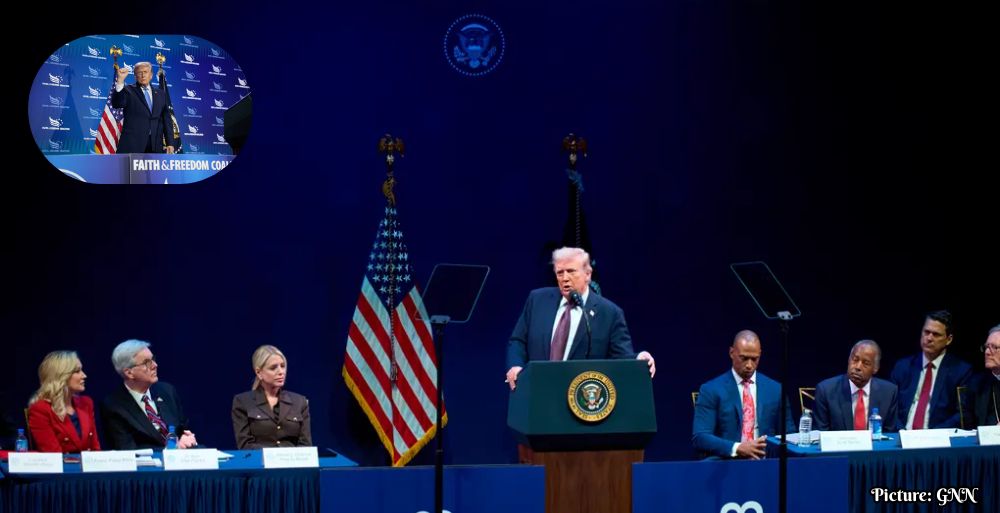
Texas Lieutenant Governor Dan Patrick, who serves as the vice chair of the commission, expressed strong support for the report during a press event alongside President Trump, Acting Attorney General Todd Blanche, and other commission members. Patrick argued that over the past 70 to 80 years, the political left has exploited the concept of separation of church and state to diminish the rights of individuals practicing their faith. ‘This report will speak very clearly that Americans understand that they cannot be attacked by that phrase any longer,’ he asserted.
Proposed Changes to Tax Code
In addition to advocating for a reevaluation of church-state relations, the commission’s report also calls for the repeal of the Johnson Amendment. This provision of the federal tax code prohibits nonprofit organizations, including religious groups, from endorsing or opposing political candidates. Proponents argue that the Johnson Amendment is essential for maintaining the political neutrality of religious institutions, while critics assert that it restricts free speech and the ability of religious organizations to engage in the political process.
President Trump established the Religious Liberty Commission in 2020, appointing Patrick and Dr. Ben Carson, a former presidential candidate and Secretary of Housing and Urban Development, as vice chairs. Television personality Dr. Phil McGraw was also appointed to the commission, which has positioned itself as a prominent advocate for religious freedom, particularly in response to perceived encroachments on the rights of religious individuals and organizations.
Implications of the Report’s Recommendations
The recommendations outlined in the Religious Liberty Commission’s report could have profound implications for the legal framework governing religious freedom in the U.S. Should these principles be adopted, they may herald a move towards greater incorporation of religious perspectives into public policy and governance. Some advocates argue that this integration could enrich public discourse and promote a more robust dialogue about moral and ethical issues. However, critics warn that such changes could pave the way for discrimination against non-religious individuals and minority faiths, potentially undermining the very freedoms the report seeks to protect.
The report is likely to generate significant attention and debate among lawmakers, advocacy groups, and the public. Proponents of church-state separation may mobilize to counteract any legal changes prompted by the commission’s recommendations, while supporters of the report might push for legislative actions that align with its findings. This dynamic could lead to a renewed focus on the balance between religious liberty and the secular nature of government.
Current Debates Over Religion in Public Life
The release of the report comes at a time of heightened scrutiny regarding the role of religion in public life and the interpretation of constitutional protections for religious freedom. The discussions are further complicated by ongoing legal battles over issues such as religious exemptions, the rights of religious organizations in public funding, and the inclusion of religious expression in public schools. As these conversations unfold, the impact of the Trump Administration’s Religious Liberty Commission and its assertions about church-state relations will likely remain a contentious topic within American political discourse.
In summary, the draft report from President Trump’s Religious Liberty Commission advocates for a significant shift in the relationship between church and state. By proposing the building of ‘bridges’ rather than maintaining a strict separation, the commission seeks to redefine the parameters of religious freedom in the United States, a move that could reverberate through the legal and political landscape for years to come.