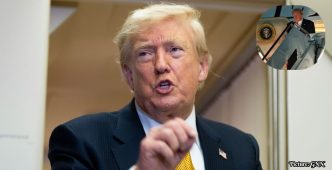

In a move that critics argue politicizes the electoral process, President Donald Trump has removed two Democratic members of the bipartisan Election Assistance Commission (EAC) amidst ongoing tensions over voter registration requirements and election integrity.
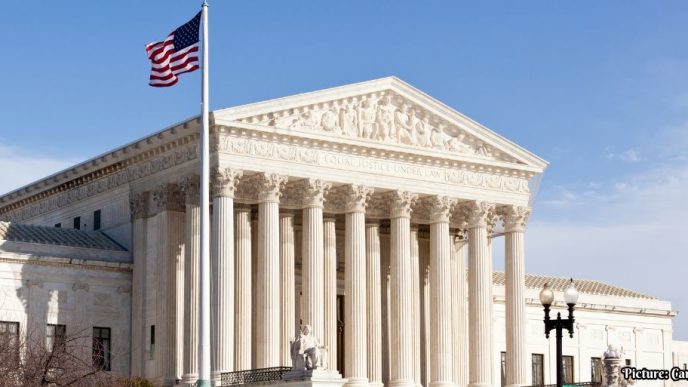
In a significant action that underscores the Trump administration’s ongoing influence over U.S. election procedures, President Donald Trump announced the dismissal of two members of the Election Assistance Commission (EAC) on Friday. This decision occurs just months before the November midterm elections and follows a recent Supreme Court ruling that expands presidential authority to dismiss members of independent agency boards without cause.
Details of the Dismissal
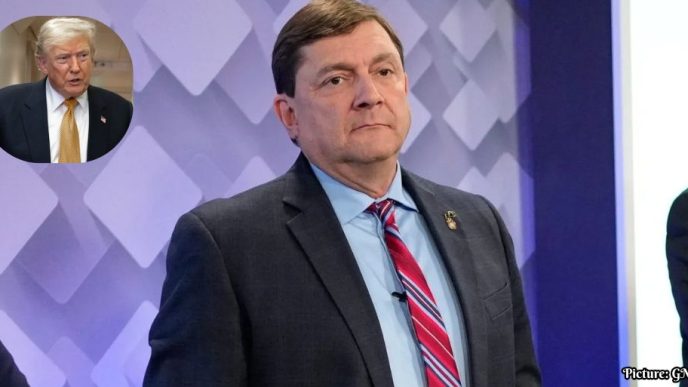
The individuals removed from their positions are Thomas Hicks and Benjamin Hovland, both of whom were serving on the bipartisan commission that oversees federal election guidelines and distributes federal grants to state election offices. The EAC also plays a critical role in maintaining the national voter registration form, which has become a focal point in the ongoing debate over voter ID laws and election integrity.
The White House’s statement emphasized that the president has the authority to remove individuals from such positions who are not aligned with his goals of securing U.S. elections. “The President, and head of the Executive Branch, reserves the right to remove individuals that may not be totally aligned with the important task of securing America’s elections and ensuring every legal vote is counted,” stated a White House spokesperson. This statement referenced the Supreme Court’s recent decision in the Slaughter case, which the administration believes justifies this action.
Political Context and Reactions
The commission’s role has been particularly contentious as Trump has advocated for stricter voter ID laws, including measures requiring potential voters to document their U.S. citizenship before registering. The EAC has previously resisted such changes, indicating a fundamental disagreement between the administration and the agency over election integrity measures.
Critics, including leading Democrats with election oversight responsibilities, argue that Trump’s actions are damaging to the integrity of U.S. elections. Senator Alex Padilla (D-CA), ranking member of the Senate Rules Committee, and Representative Joe Morelle (D-NY), ranking member of the House Administration Committee, expressed their concerns, stating, “President Trump is trying to dismantle yet another independent guardrail of our democracy designed to keep elections fair and secure.” They accused the president of politicizing the electoral process by purging commissioners just months before the midterms, a move they view as undermining public trust in the electoral system.
The lawmakers further noted that the Supreme Court’s conservative majority significantly enabled the president’s actions by altering the traditional understanding of executive power. They argue that the removal of these commission members not only threatens the integrity of elections but also sets a concerning precedent for future administrations.
Implications for Election Oversight
While it remains to be seen whether these dismissals will have an immediate impact on the upcoming elections, the long-term implications could be substantial. The EAC is responsible for overseeing the testing and certification of voting systems, as well as providing essential support to state and local election officials. With only two Republican members remaining on the four-member commission, questions arise regarding the EAC’s ability to effectively carry out its duties during the midterm elections, particularly in terms of facilitating election security and integrity.
Moreover, the White House has not clarified whether Trump intends to nominate replacements for the dismissed members, leaving open the possibility that vacancies could hinder the commission’s operations and its capacity to distribute federal election grants. Such a scenario could complicate the EAC’s role in overseeing the testing and certification of voting systems across the country, particularly as states prepare for the midterm elections.
Historical Context and Legal Challenges
The EAC was established as part of the Help America Vote Act, a bipartisan law signed by Republican President George W. Bush in 2002 in response to the controversies surrounding the 2000 presidential election. The act aimed to enhance the administration of elections and ensure their integrity through a bipartisan approach, mandating equal representation from both major political parties on the commission.
The question of whether Hicks and Hovland could legally challenge their dismissals remains open. Any legal proceedings could potentially lead to further scrutiny of the Supreme Court’s recent decisions regarding presidential authority over independent agencies. The court’s ruling in the Slaughter case, decided with a 6-3 majority, indicates a significant shift in the balance of power between the presidency and independent agencies, a change that could have ramifications extending beyond just the EAC.
As this landscape continues to evolve, the ongoing tension between the Trump administration and various election oversight bodies raises concerns among advocates for fair and transparent electoral processes. The implications of these changes extend beyond mere personnel shifts; they could reshape the foundational structures that govern how U.S. elections are conducted, potentially influencing voter confidence and participation in the democratic process.