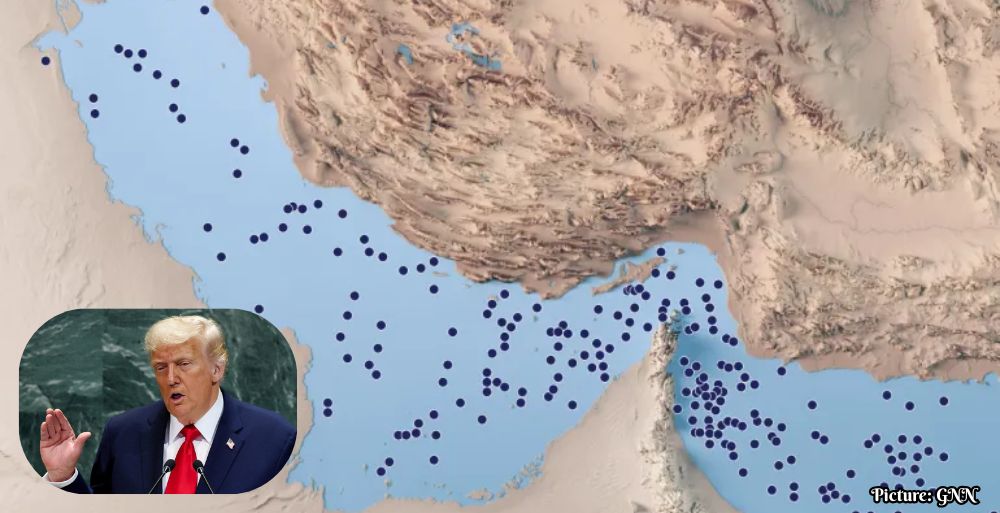
In a significant escalation of military tensions in the region, President Donald Trump has declared a full blockade on Iranian shipping in the Strait of Hormuz, announcing that the vital waterway is open to all international traffic except for vessels linked to Iran.
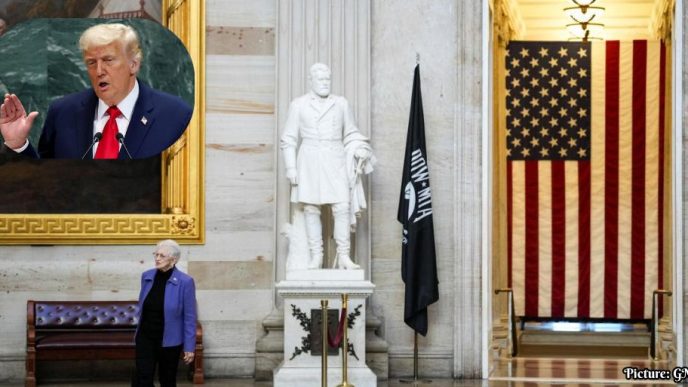
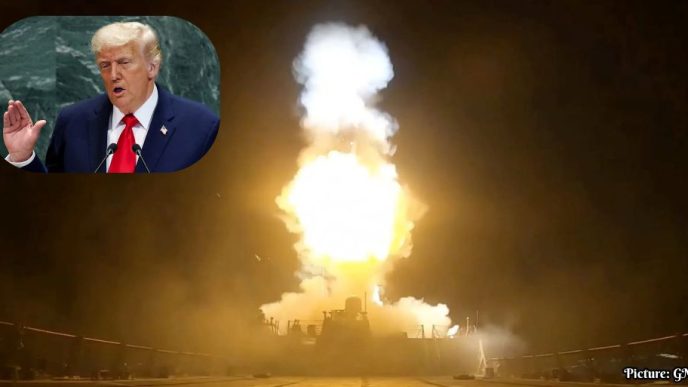
PORTSMOUTH, England — On Wednesday, President Donald Trump announced a sweeping policy shift regarding Iranian shipping through the strategically critical Strait of Hormuz, stating that the waterway would be open to all international traffic, with the exception of ships associated with Iran. This declaration, communicated via a lengthy post on Truth Social, follows a series of U.S. military strikes on Iranian targets that have heightened tensions between the two nations.
In his early morning post, Trump praised Defense Secretary Pete Hegseth, Chairman of the Joint Chiefs of Staff General Dan Caine, and CENTCOM Commander Admiral Brad Cooper for their contributions to restoring security in the Gulf region. He specified, “We will therefore have a FULL Blockade, but only on Ships coming to and from Iranian ports, or carrying anything have to do with Iranian cargo.” This statement underscores the U.S. administration’s hardline stance towards Iran amid a backdrop of increased military operations.
The announcement of the blockade occurred shortly after U.S. military officials reported executing strikes on “dozens” of Iranian targets overnight. According to state media outlets in Iran, the strikes led to the deaths of seven military personnel at an army base, escalating the ongoing conflict and prompting Iranian officials to threaten retaliatory actions against U.S. military facilities in the Gulf.
Economic Policy Changes
In conjunction with the blockade, President Trump also announced the withdrawal of a previously proposed 20% reimbursement fee on vessels transiting the Strait of Hormuz. This proposal, which had been unveiled just one day earlier, raised significant questions regarding its feasibility and adherence to international maritime law. Initially, Trump framed this fee as a measure to counteract Iran’s alleged exploitation of a crucial maritime trade route.
Instead of pursuing this reimbursement strategy, Trump indicated that he had reached an alternative arrangement with Gulf partners, stating, “Based on highly productive conversations with Middle East leadership, I have decided to replace the 20% United States Reimbursement Fee with Trade and Investment Deals that the various Gulf States will be making into the United States.” He characterized these prospective investments as potentially “MASSIVE,” suggesting a shift in focus towards enhancing economic ties between the U.S. and its Gulf allies.
Historical Context and Strategic Implications
The Strait of Hormuz is not only a vital maritime passage but also a geopolitical flashpoint, with approximately 20% of global oil trade traversing its waters. The region has a long and complex history of tensions, particularly involving Iran and the U.S., which dates back to the 1979 Iranian Revolution and subsequent imposition of U.S. sanctions on Iran. The recent military actions and Trump’s announcement of a blockade represent a marked escalation in these ongoing hostilities, reflecting a broader strategy aimed at countering Iranian influence in the region.
Trump’s declaration that “The days of Iran killing hundreds of thousands of people, including 52,000 protestors, are OVER” highlights his administration’s aggressive posture towards Iran, particularly concerning its nuclear ambitions. He reiterated his commitment to preventing Iran from acquiring nuclear weapons, asserting with conviction, “IRAN WILL NEVER HAVE A NUCLEAR WEAPON!” This rhetoric is consistent with the administration’s past efforts to isolate Iran diplomatically and economically.
Reactions and Potential Consequences
The announcement has elicited a range of responses from international observers, analysts, and political leaders. Critics of the blockade have expressed concerns regarding the potential for increased military confrontation as well as the economic ramifications of restricting Iranian shipping. Some analysts suggest that the blockade could further destabilize the region, provoking aggressive counteractions from Iran, which has a history of responding vehemently to perceived threats to its sovereignty.
Iranian officials condemned the U.S. military operations and the blockade, characterizing them as provocations that breach international norms. The Iranian government has vowed to respond to any attacks on its military facilities, significantly raising the risk of military conflict in an already volatile region. Iranian Foreign Minister Hossein Amir-Abdollahian stated, “The U.S. actions are reckless and will have consequences,” underscoring the tense atmosphere following the strikes.
As tensions escalate, the implications of Trump’s blockade and military strategy may reverberate beyond the Strait of Hormuz, impacting global oil markets and international diplomatic relations. Observers are closely monitoring the situation as both the United States and Iran navigate this precarious moment in their histories, with potential consequences for regional stability and security. The international community will be watching to see how this situation unfolds and whether diplomatic avenues can be pursued amidst rising hostilities.