
The House of Representatives voted 308-117 on Tuesday to pass the Sunshine Protection Act, a bill that seeks to eliminate the semiannual clock changes associated with daylight saving time, sending the legislation to the Senate for further consideration.
On March 15, 2023, the U.S. House of Representatives passed the Sunshine Protection Act with a significant bipartisan majority, aiming to establish permanent daylight saving time across the country. The vote, which concluded with a tally of 308 in favor and 117 against, reflects a growing public sentiment favoring the elimination of the biannual clock changes that many Americans find disruptive.
The Sunshine Protection Act, sponsored by Rep. Vern Buchanan, R-Fla., proposes to maintain the current daylight saving time observed from March to November throughout the entire year. States wishing to opt out of this change would need to do so prior to the implementation of the act, which is intended to simplify timekeeping and reduce confusion.
Support from the White House
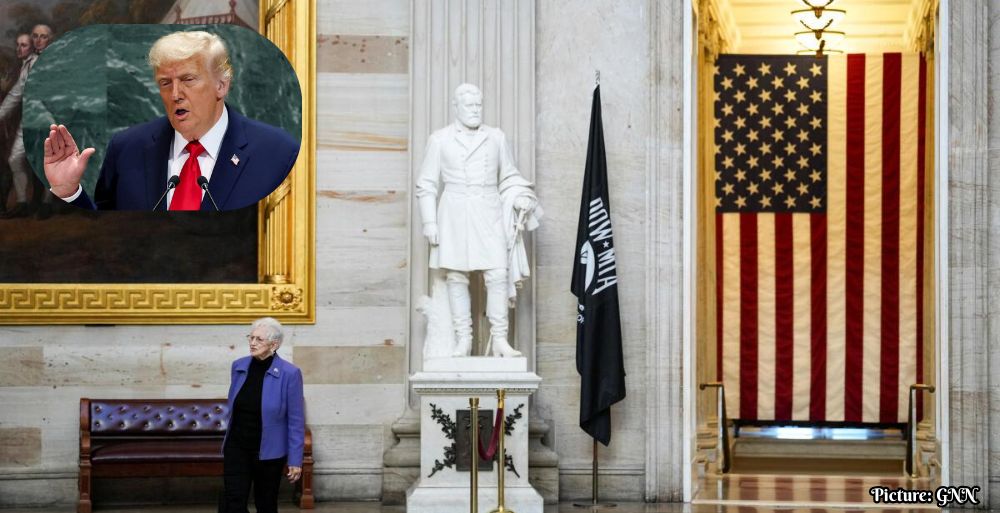
Former President Donald Trump has been a vocal advocate for the Sunshine Protection Act, expressing his support on social media. In a post on Truth Social dated May 21, 2023, Trump declared his commitment to ensuring the act’s passage, stating, “It’s time that people can stop worrying about the ‘Clock,’ not to mention all of the work and money that is spent on this ridiculous, twice yearly production.” He characterized the act as a potential political victory for the Republican Party.
Senate Considerations and Concerns
The bill now advances to the Senate, where its fate remains uncertain. A similar proposal stalled in the Senate last year, primarily due to objections from Sen. Tom Cotton, R-Ark. Cotton raised concerns over the potential negative consequences of permanent daylight saving time, particularly the implications for states in the Eastern and Northern regions where daylight may not occur until late in the morning. He warned of safety issues related to dark morning commutes and the challenges faced by workers starting their days in darkness.
A senior aide on Capitol Hill indicated that Cotton continues to express these concerns and that several senators from both parties have voiced opposition to the bill during committee discussions. The aide noted that Cotton plans to request Senate Majority Leader John Thune, R-S.D., to refrain from bringing the legislation to a vote.
Public Sentiment and Legislative History
Support for the Sunshine Protection Act appears to resonate with many Americans. Rep. Tim Burchett, R-Tenn., reflecting on his constituents’ feedback, expressed optimism about the bill’s prospects but acknowledged skepticism regarding the Senate’s willingness to act. “I’m kind of digging the fact that we’re going to fix it, I hope,” Burchett remarked. “See if the Senate takes it up. They probably won’t, but we’ll see.”
Rep. Rich McCormick, R-Ga., also voiced his support for the legislation, citing mental health benefits and fiscal advantages associated with eliminating the clock changes. Drawing on his experience as an emergency room physician, McCormick stated, “You get more depression, you get out of joint with the time adjustments.”
Public opinion on daylight saving time has garnered attention in recent years. A 2025 AP-NORC poll indicated that while a majority of Americans are dissatisfied with the biannual clock changes, there remains a division of opinion on whether to adopt permanent daylight saving time or standard time. Previous attempts to address the issue in Congress have faced hurdles, including a Senate vote in 2022 that passed unanimously but ultimately failed to gain traction in the House.
Historical Context
The concept of daylight saving time has historical roots dating back to World War I and World War II, when it was implemented as a wartime measure. However, it was not officially adopted nationwide until the Uniform Time Act of 1966, which standardized the practice of advancing clocks one hour in March and reverting them one hour in November. This act aimed to create uniformity in timekeeping across the states, as previously, states and localities set their own timekeeping schedules, leading to significant confusion.
In the decades following the implementation of daylight saving time, the debate over its efficacy has continued. During the 1970s, President Richard Nixon signed into law a bill intended to make daylight saving time the norm for two years as a measure to conserve energy during the oil crisis. However, the legislation was repealed after less than a year due to widespread public disapproval, particularly concerning the dark early mornings many experienced.
Currently, almost all states have considered legislation to stop the biannual time changes, with 19 states enacting bills that would allow for year-round daylight saving time should Congress approve such a shift. Notably, Arizona and Hawaii, along with several U.S. territories, do not observe daylight saving time at all. The ongoing debate over timekeeping practices continues to reflect broader societal considerations regarding public health, safety, and economic efficiency.
The prospect of making daylight saving time permanent raises questions about potential impacts on various sectors, including retail and tourism, which often benefit from the extended evening daylight. Proponents argue that a more consistent timekeeping system could lead to increased economic activity, while opponents caution about the potential risks associated with darker mornings.
As the Sunshine Protection Act moves to the Senate, it faces a critical test of bipartisan cooperation and public interest. The next steps will involve navigating the concerns raised by senators like Cotton while also addressing the demands from constituents who favor the cessation of clock changes. The outcome may have lasting implications not only for how Americans manage their time but also for broader discussions about legislative responsiveness to public sentiment.