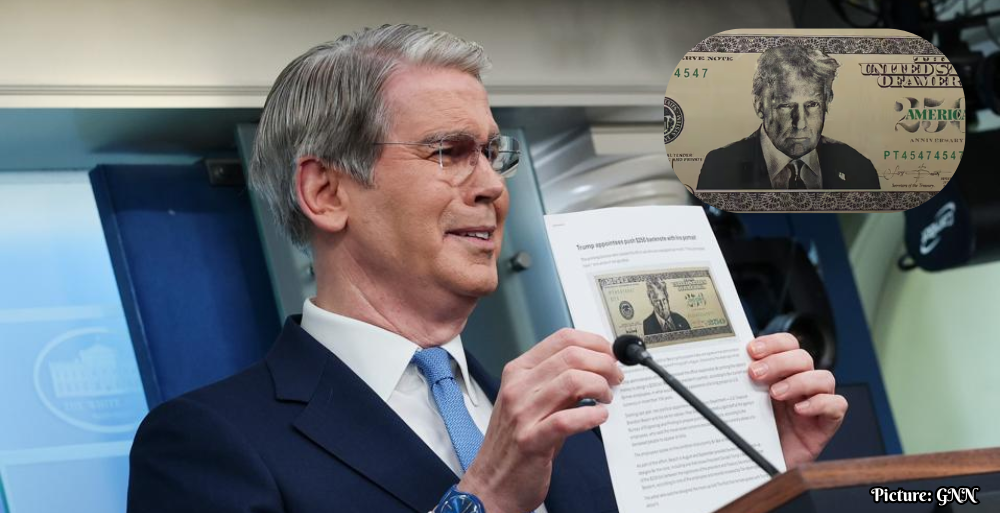
Treasury Secretary Scott Bessent recently defended the proposed design of a commemorative $250 bill featuring former President Donald Trump’s likeness, highlighting ongoing legal challenges and public concerns regarding the initiative.
Treasury Secretary Scott Bessent addressed reporters during a press briefing at the White House on Thursday, responding to a report by The Washington Post regarding the Trump administration’s plans to advance a commemorative $250 bill bearing the former president’s image. The proposed currency is intended to commemorate the 250th anniversary of the United States, which is set to take place in 2026, and has sparked considerable debate over its legality and appropriateness.
Understanding the Proposed Commemorative Bill
The Washington Post reported that officials from the Trump administration have made progress in designing the bill, with involvement from the Treasury Department. This initiative coincides with the United States’ upcoming milestone anniversary, which is expected to be celebrated through various public and private events.
During the briefing, Bessent expressed confusion regarding the characterization of the report, stating, “I don’t really understand this Washington Post article, but who here is from the Post?” After identifying the reporter, he criticized the article, asserting, “Terribly written, terribly edited.” Bessent argued that the Treasury is simply following the law regarding the proposed bill and that the decision to proceed lies with Congress.
Legal Implications of Featuring a Living President
A significant legal hurdle for the proposed $250 bill is the existing federal law that stipulates only deceased individuals may be depicted on U.S. currency. The Washington Post highlighted that any change to this legal framework would require legislative action from Congress. Notably, a bill introduced over a year ago aimed at amending this law has yet to progress beyond committee stages.
When pressed by reporters, including CNN’s Kaitlan Collins, regarding the Bureau of Engraving and Printing’s readiness to create prototypes for the bill, Bessent confirmed that preparations were being made. “Yes, of course,” he stated, emphasizing the importance of being proactive in such initiatives. “But we prepare for everything if it gets passed, just like we were ready six months in advance for the One Big Beautiful Bill for tax guidance.” His comments suggest that the Treasury is taking a measured approach, preparing for potential outcomes without indicating certainty regarding congressional approval.
Public Sentiment and Economic Context
Concerns have emerged regarding the appropriateness of launching a commemorative bill featuring a living president amidst ongoing economic challenges facing many Americans. When Collins inquired whether showcasing Trump’s image on the bill was a suitable idea, particularly as citizens grapple with rising costs for essentials like gas and groceries, Bessent responded with a bifurcated view. He countered by asking whether a 250th anniversary celebration was warranted.
Collins pointed out that the celebration would occur regardless of the bill, to which Bessent countered that funding for the events would come from a combination of private citizens and various levels of government. He maintained that the initiative was legitimate and in the public interest, stating, “I don’t think that there’s anything untoward about having the president of the United States on the 250th anniversary bill.”
Political and Historical Context
The proposed $250 bill is situated within a larger historical context that examines how commemorative currency has been used in the United States. Throughout history, U.S. currency has often served as a medium for honoring national figures and significant events. However, the decision to feature a living president could set a precedent that challenges traditional norms surrounding currency design.
As discussions surrounding the bill continue, the lack of legislative movement on the proposal to update currency depiction laws raises questions about the feasibility of the project. Without congressional approval, the Treasury is limited in its ability to advance the design and production of the commemorative bill. This situation reflects broader themes in U.S. politics, where the intersection of economic realities and national commemorations can lead to contentious debates.
Future Implications and Stakeholder Reactions
The outcome of this proposed bill could have significant implications for how living figures are represented in U.S. currency, potentially reshaping public perceptions of both monetary policy and historical commemoration. As stakeholders monitor the situation, the interplay between public opinion, legislative action, and economic conditions will play a crucial role in determining the bill’s fate.
Critics of the initiative may point to the current economic climate as a reason to reconsider the appropriateness of such a commemorative effort, while supporters may argue that the 250th anniversary deserves recognition, irrespective of the challenges faced by citizens. As the situation develops in the lead-up to 2026, the political landscape surrounding the proposed bill will likely evolve, reflecting the complex dynamics of contemporary American politics.