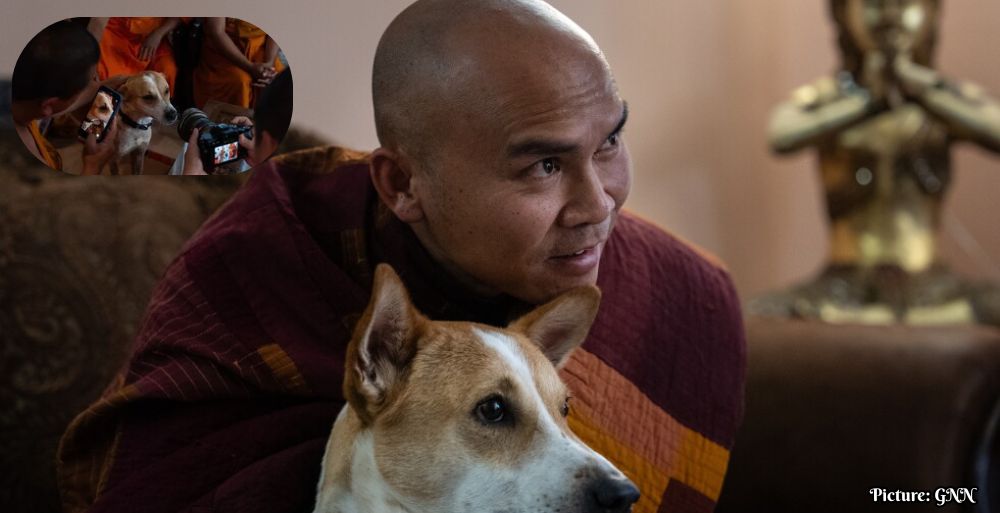
A 2,300-mile pilgrimage led by Venerable Bhikkhu Pannakara has garnered widespread attention as he advocates for peace and mindfulness across the United States.
LOS ANGELES — The Venerable Bhikkhu Pannakara, a monk based in Fort Worth, Texas, has emerged as a prominent voice for peace following a 2,300-mile pilgrimage that spanned from his temple in Texas to Washington, D.C. The journey, known as the Walk for Peace, began on October 26, 2022, and concluded on February 14, 2023, drawing a diverse following and significant media attention.
Chien Le, secretary of the Huong Dao Vipassana Bhavana Center where Pannakara serves as deputy abbot, remarked on the monk’s unwavering determination: “When he decides to do something, he goes all the way. He’s never been afraid of obstacles. He always finds a way through them.” This steadfast resolve was evident throughout the Walk for Peace, which featured an international group of monks and Pannakara’s rescue dog, Aloka, who has become a symbol of the movement.
Growing Popularity and Media Attention
Pannakara’s teachings on mindfulness and compassion resonated with many as he delivered discourses in various public spaces, including churchyards and town squares. His appearances attracted large crowds, and millions followed the journey online, marking a significant increase in his visibility and influence. As a result, he has drawn comparisons to renowned figures such as the Dalai Lama, Rev. Martin Luther King Jr., and the late Thich Nhat Hanh, a respected Zen master.
Despite the surge in attention, Pannakara has expressed a lack of interest in fame, stating, “There is no fame for monks. I made a vow to walk to raise awareness of peace, loving kindness, and compassion. That’s what it’s about.” He adheres to a strict code of monastic rules, known as the Vinaya, which prohibits social media use, personal possessions, and handling money, alongside practices of celibacy and modesty.
A Personal Journey from Engineering to Monastic Life
Born in Dak Lak, Vietnam, in 1981, Pannakara immigrated to the United States in 1997. Initially, he pursued a career in information technology after graduating from the University of Texas at Arlington. His introduction to Buddhism came through temple summer camps, eventually leading him to leave his engineering career to become a novice monk. He was fully ordained in 2010 by the Most Venerable Ratanaguna, who has served as his mentor and inspiration.
Pannakara’s decision to become a monk was not prompted by a single event but rather by the cumulative experiences of witnessing suffering and a sense of disillusionment with the superficiality of life. “To me, everything just seemed fake,” he explained. His transition was met with emotional challenges, particularly from his family, as Le recalled, “Even on the day he was ordained, his mother came, and she cried a lot.” Over time, however, they accepted his path.
Insights from a Transformative Pilgrimage
Prior to the Walk for Peace, Pannakara participated in a 2,100-mile pilgrimage in late 2022, retracing the footsteps of the Buddha. This experience further deepened his understanding of Buddhism and enhanced his spiritual practice. “I had learned the Buddha’s teachings from the Tipitaka, but with this walk, I experienced it,” he noted. Along the way, Pannakara formed a bond with Aloka, his dog, who accompanied him on this challenging journey.
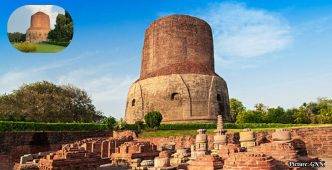
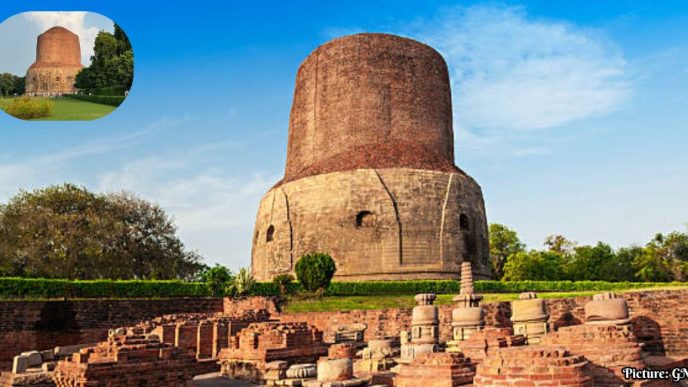
The notion of building stone stupas to preserve Buddha’s teachings also emerged from his earlier experiences. Under the Bodhi tree in Bodh Gaya, where the Buddha attained enlightenment, Pannakara envisioned creating a project that would embody these teachings. With the support of his teacher, he initiated the $200 million Dhammacetiya project, which aims to create 840 stupas inscribed with Buddha’s teachings in ten languages, designed to endure for millennia.
Avoiding Political Engagement
During the Walk for Peace, Pannakara consciously chose to refrain from political discourse. Senior Theravada monk Venerable Bhikkhu Bodhi commended this decision while expressing hope that Pannakara might engage with pressing social issues in the future, such as poverty and climate change. Bodhi emphasized the moral and spiritual significance of such topics.
Another Theravada monk, Ajahn Nisabho, echoed this sentiment, suggesting that Pannakara’s focus on peace and unity allows for a diverse gathering of individuals without the divisiveness of politics. “If you bring politics into that, you cause damage by alienating half the country,” he stated.
Pannakara’s journey and the conversations it has sparked reflect a broader quest for understanding and compassion in a divided society. His commitment to peace and the teachings of Buddhism continues to inspire many, as he remains dedicated to his mission of fostering mindfulness and unity.