
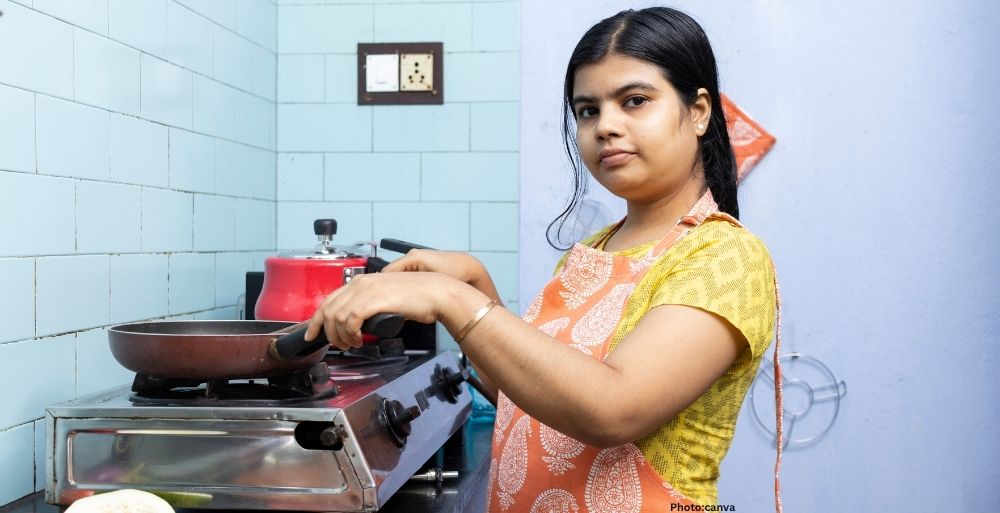
In a landmark judicial intervention, the Supreme Court of India has formally recognized the economic and social contributions of homemakers, categorizing them as “nation builders.” The apex court ruled that the loss of unpaid domestic care services must be calculated as a separate, distinct head of compensation in motor accident claims, fixing a baseline notional income of ₹30,000 per month for this purpose. This judgment marks a significant departure from historical tort law calculations in India, which have frequently undervalued or ignored non-market household labor. Additionally, the court addressed systemic judicial backlogs, issuing directives to State High Courts to ensure motor accident claims are adjudicated within a strict one-year timeframe.
NEW DELHI — In a precedent-setting judgment that formalizes the economic value of unpaid domestic labor, the Supreme Court of India on Thursday ruled that homemakers are inherently “nation builders” whose household services must be quantified and compensated independently in legal disputes. The two-judge bench established a mandatory legal baseline, holding that the loss of domestic care services must be treated as a distinct head of compensation with a minimum notional value fixed at ₹30,000 per month.
The ruling, delivered by a bench comprising Justice Sanjay Karol and Justice N. Kotiswar Singh, seeks to rectify decades of systemic undervaluation of domestic work within the Indian insurance and legal frameworks. By establishing a fixed, non-discretionary monetary floor, the apex court has elevated the status of household labor from an unquantifiable emotional contribution to a legally recognized economic asset.
Transforming Jurisprudence: From ‘Housewife’ to ‘Nation Builder’
For decades, Indian courts determining compensation under the Motor Vehicles Act have struggled to consistently evaluate the financial worth of a deceased or incapacitated homemaker. In many instances, tribunals relied on arbitrary calculations, often equating a homemaker’s economic value to that of an unskilled laborer or applying minimal notional incomes that failed to capture the multifaceted nature of domestic management.
The Supreme Court’s latest ruling explicitly rejects these archaic frameworks. Pronouncing the operative part of the judgment, Justice Karol emphasized that the traditional nomenclature must evolve to reflect societal reality.
“Housewives contribute to the household. They are nation builders. They build the nation. How do you assess that contribution and monetise it? The word ‘homemaker’ would now acquire the acronym of nation builder,” the bench observed.
By elevating the semantic and legal definitions of domestic workers, the court has signaled a paradigm shift in how tort law measures human capital. The decision recognizes that unpaid household labor—encompassing childcare, eldercare, nutritional management, financial budgeting, and logistical coordination—forms the invisible infrastructure supporting the active workforce and, by extension, the macroeconomic stability of the country.
Under the Pranay Sethi guidelines, the court standardized the addition of “future prospects” to a deceased person’s income and streamlined conventional heads like loss of estate, loss of consortium, and funeral expenses. By inserting “loss of domestic care” as an independent, non-negotiable category, the Supreme Court ensures that insurance companies and claim tribunals can no longer absorb household contributions into general dependency figures. This dual-track approach guarantees a significantly higher and more equitable financial safety net for surviving family members.
Case History: A Two-Decade Delay Explored
The apex court’s ruling emerged from an appeal concerning a tragic motor vehicle accident that occurred in Punjab in November 2001, which resulted in the death of a woman named Reshma. Following her demise, her husband and three children initiated legal proceedings before the local Motor Accident Claims Tribunal (MACT) seeking financial restitution for their loss.
While the initial tribunal passed an award in 2003, the subsequent appeal process languished within the high court system for over two decades. The Punjab and Haryana High Court finally adjudicated the appeal in December 2024, twenty-three years after the initial incident. By the time the matter reached its final resolution before the Supreme Court, the economic realities of the surviving family had fundamentally shifted, showcasing the severe limitations of delayed judicial remedies.
Directives to Address Systemic Judicial Backlogs
The extraordinary delay in Reshma’s case prompted the Supreme Court to voice severe criticisms regarding the administration of tort litigation in India. The bench observed that prolonged delays defeat the remedial purpose of social welfare legislation like the Motor Vehicles Act, leaving victims and their dependents financially vulnerable during the immediate aftermath of a tragedy.
To prevent future structural delays, the Supreme Court issued a series of administrative mandates directed at the leadership of the state judiciaries:
- One-Year Resolution Target: The apex court declared that motor accident compensation claims should ordinarily be heard and decided within a strict timeframe of one year from the date of filing.
- Chief Justice Oversight: The bench formally requested the Chief Justices of all State High Courts to personally supervise the pendency of motor accident claims within their respective jurisdictions.
- Administrative Directions: High Court leadership is expected to issue binding administrative guidelines to lower tribunals, establishing fast-track protocols and accountability metrics for claims judges.
By engaging the administrative machinery of the High Courts, the Supreme Court aims to decentralize enforcement, ensuring that local tribunals comply with the one-year disposition target. Legal analysts note that if successfully implemented, these directives could drastically reduce the millions of tort cases currently clogging India’s lower judiciary.
Socio-Economic Implications of the Baseline Value
The decision to peg the notional income at ₹30,000 per month is statistically significant. In the context of India’s current economic indicators, this amount sits substantially higher than the minimum wage mandates designated for skilled manual labor across most states. By setting the economic floor at this level, the Supreme Court has effectively insulated homemakers from the low-wage benchmarks typically applied to domestic staff or casual laborers.
This monetization acts as a formal acknowledgement of the opportunity costs borne by individuals—predominantly women—who opt out of the formal labor market to manage households. The judgment acknowledges that replacing the services of a primary homemaker requires hiring multiple specialized service providers, an expense that few middle- or lower-income families can absorb out-of-pocket without facing downward economic mobility.
Furthermore, the decision challenges institutional biases within the commercial insurance sector. Insurance providers have historically contested high compensation claims for non-earning individuals, arguing that no verifiable income loss occurred. The Supreme Court’s mandate removes this ambiguity, creating a statutory requirement that insurers must factor into their actuary models and liabilities moving forward.
A New Bench for Gender Equity in Tort Law
As State High Courts begin receiving the administrative directives from New Delhi, legal experts predict a wave of recalculations for pending claims across the country. The judgment represents a critical milestone in gender-sensitive jurisprudence, aligning Indian case law with global progressive standards that seek to count women’s unpaid work in broader measures of national productivity and legal equity.
By explicitly linking the private labor of the home to the macroeconomic strength of the state, the Supreme Court has permanently altered the landscape of third-party insurance litigation. The ruling ensures that future generations of surviving dependents will receive financial recognitions that honor the true, systemic value of the care work that sustains Indian society.