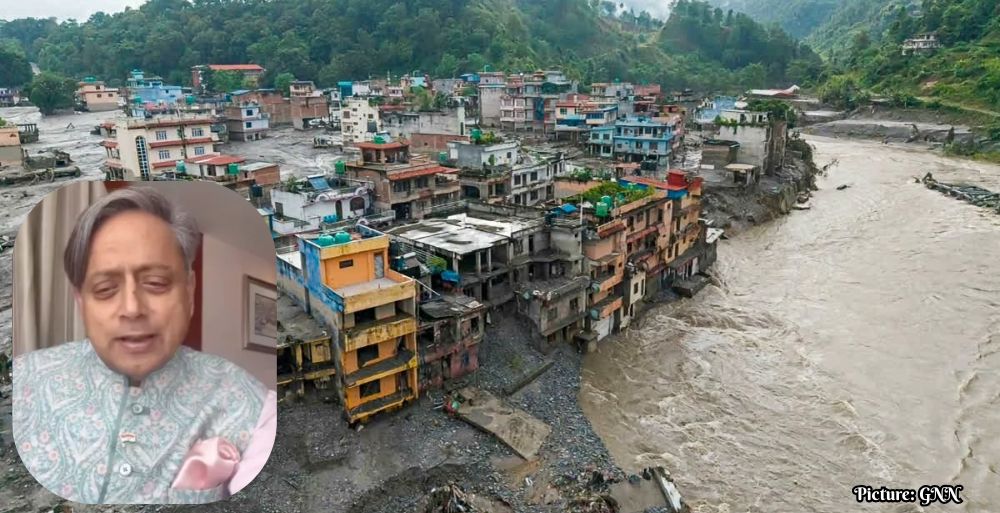
Shashi Tharoor, Congress MP and former diplomat, has welcomed India’s rapid response to the recent flash floods in Nepal while cautioning the media against boasting in their coverage, reflecting on past tensions in India-Nepal relations.
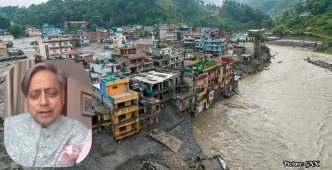
At the NDTV World Anviksha Summit held in Kathmandu, Congress MP and former diplomat Shashi Tharoor articulated his support for India’s immediate humanitarian assistance to Nepal following devastating flash floods that have claimed lives and caused significant destruction. While commending the Indian government’s prompt action, Tharoor highlighted the importance of media responsibility in reporting such aid, drawing attention to a contentious history of media coverage that has previously strained relations between the two neighboring countries.
Context of Recent Flooding
The recent flash floods in Nepal have left a trail of destruction, exacerbating an already challenging humanitarian situation. According to government sources in Nepal, at least 30 people have lost their lives due to the floods, with many others displaced as rivers overflowed their banks. In response to this disaster, the Indian government swiftly mobilized resources and personnel to aid in the relief efforts, a move that Tharoor praised as a natural obligation of neighboring states to support one another in times of crisis.
Tharoor stated, “I am sure there will be more relief, and the government will do whatever is needed. We are the nearest neighbors to Nepal and stand in solidarity. That’s how it is done.” This reflects a longstanding tradition of mutual assistance between India and Nepal, underscoring the moral imperative that often drives foreign aid responses.
Lessons from the 2016 Earthquake
Tharoor’s remarks also served as a cautionary tale drawn from the aftermath of the 2016 earthquake that struck Nepal. During that crisis, media portrayals of Indian relief efforts were met with considerable backlash, as many Nepalese perceived the coverage as overly self-congratulatory and insensitive to their suffering. Tharoor described the coverage as “problematic,” emphasizing that the media should avoid framing humanitarian assistance as a form of benevolent dominance.
“During the earthquake, India provided commendable help, but the way the media covered it, the boasting was in bad taste. That was a low point. Even though the assistance given by India was tangible, the coverage of it was problematic,” Tharoor noted. His critique points to a need for greater sensitivity in how aid narratives are constructed, recognizing that respect for the dignity of the recipients is paramount.
Redefining India-Nepal Relations
Tharoor’s comments extend beyond immediate media practices; they encompass a broader call for a fundamental reassessment of how India approaches its relationship with Nepal. He argued that it is crucial for New Delhi to treat Nepal as a sovereign nation, deserving of equal status in bilateral discussions. Tharoor specifically referenced the 2016 economic blockade, which he labeled a “Himalayan blunder” that inflicted long-lasting damage on diplomatic ties.
“I have always argued that India needed to change its approach to Nepal. It was a colossal blunder. Though the government had said India had nothing to do with it, it damaged our ties. We need to show Nepal the respect that a sovereign and equal country deserves,” he emphasized. This shift in perspective is increasingly recognized among Indian political circles, highlighting the need for a more balanced and respectful engagement with Nepal.
Optimism for Current Relations
Despite the historical challenges, Tharoor expressed a more optimistic outlook on the current state of India-Nepal relations. He remarked that he is less concerned about bilateral ties now than he was in previous years, pointing to positive developments and gestures from both countries. “We are in a good place today. I am much less worried about the relationship than I was a few years ago. Today the body language on both sides is positive, and the latest evidence is India’s immediate relief on Wednesday after the floods,” Tharoor stated, indicating a potential thaw in diplomatic relations.
This sentiment resonates with many observers who see a gradual but significant improvement in bilateral relations, particularly as both countries navigate shared challenges and opportunities in an increasingly complex regional context. Tharoor concluded by stressing the importance of mutual respect and meaningful dialogue: “The roti-beti relationship is important, but the relationship has to go beyond that. The process of respectful dialogue is fundamental to taking our relationship forward. We must show that their views are important for us.”
Tharoor’s insights highlight the critical role of media in shaping public perception and diplomatic relations. As India continues to extend its hand in aid during crises, the manner in which these efforts are reported may significantly influence the future trajectory of India-Nepal relations.