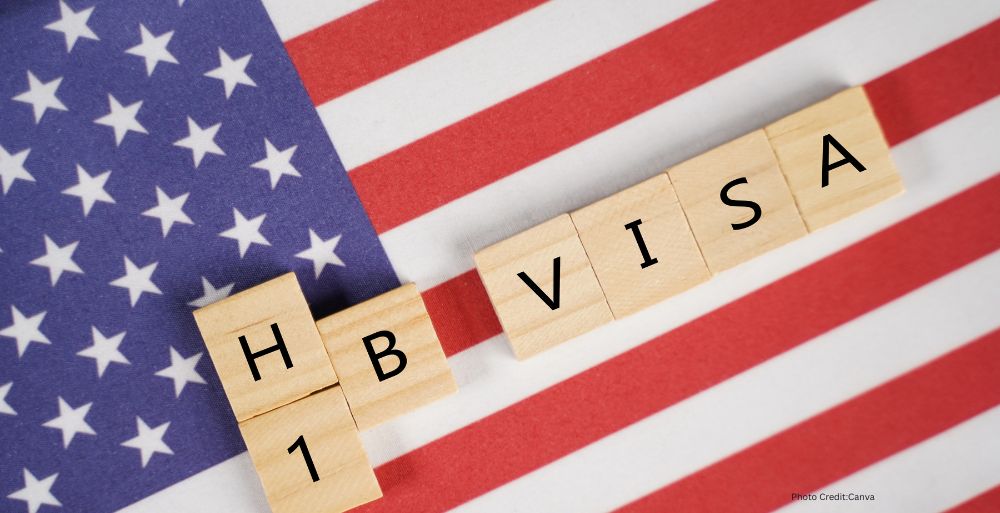
Republican Senator Jon Husted of Ohio has introduced legislation aimed at raising the H-1B visa salary threshold from $60,000 to nearly $140,000, arguing that the current standard is outdated and allows companies to bypass protections for American workers.
Washington — In a significant move to reform the H-1B visa program, Republican U.S. Senator Jon Husted of Ohio introduced the Protecting American Workers Through H-1B Modernization Act on Tuesday. This new legislation seeks to raise the salary threshold for H-1B visa holders from its longstanding level of $60,000 to approximately $140,000. Husted believes that the existing threshold is outdated and allows some companies to circumvent essential requirements designed to protect American workers.
Key Provisions of the Legislation
The proposed act aims to replace the fixed $60,000 salary requirement with a formula that links the threshold to the Social Security Administration’s National Average Wage Index. This adjustment is particularly targeted at H-1B-dependent employers, which are defined as companies where H-1B visa holders make up a significant portion of the workforce.
Under the current legal framework, H-1B-dependent employers are generally required to attest that they have made a concerted effort to recruit American workers before seeking to hire additional H-1B employees. However, they can circumvent this requirement if an H-1B worker earns at least $60,000 annually or has obtained a master’s degree or higher. Husted’s proposal seeks to amend this exemption by increasing the salary threshold considerably.
Historical Context and Need for Reform
The $60,000 threshold was established in 1998, with the intention of being equivalent to twice the National Average Wage Index at that time. Husted’s office reports that this figure has not been adjusted to reflect inflation or wage growth over the past 25 years. Today, the National Average Wage Index is nearly $70,000. If the original formula were applied today, it would set the H-1B salary threshold at around $140,000.
“For decades, companies have been able to sidestep hiring American workers because of a salary threshold that hasn’t budged since 1998. That’s not modernization, that’s a loophole,” Husted stated during the bill’s announcement. He emphasized that the legislation aims to ensure that companies reliant on H-1B visas should not exploit outdated laws to avoid offering jobs to qualified American workers first.
Implications for Labor Market and Employers
If enacted, the Protecting American Workers Through H-1B Modernization Act would allow the salary requirement to be adjusted regularly in line with wage growth in the United States. This change would alleviate the need for Congress to periodically revise a static salary figure. “American workers should always come first, and this bill closes an outdated loophole that lets companies bypass them,” Husted reiterated.
The H-1B visa program serves as a vital pathway for U.S. employers, particularly in sectors such as technology, healthcare, and engineering, to recruit foreign professionals for specialized positions. Advocates of the program argue that it provides U.S. companies with the ability to attract highly skilled talent that may be difficult to find domestically. Conversely, critics contend that the program can be misused to hire foreign workers in place of qualified American candidates, potentially exacerbating unemployment among U.S. workers.
Current Landscape and Future Considerations
As of 2023, the H-1B visa program remains a focal point of ongoing debate in the U.S. labor market. The balance between attracting international talent and protecting domestic job opportunities continues to be a contentious issue among policymakers, labor advocates, and business leaders. With companies increasingly dependent on H-1B workers, any changes to the program could have significant implications for hiring practices, wage standards, and the overall dynamics of the U.S. labor market.
The introduction of Husted’s legislation is likely to intensify discussions surrounding the effectiveness and fairness of the H-1B visa program. Stakeholders from various sectors, including technology firms, labor unions, and immigration reform advocates, will undoubtedly weigh in on the potential consequences of raising the salary threshold. The outcome of this legislative proposal could shape the future of the H-1B program and its impact on both American workers and the U.S. economy as a whole.
Furthermore, the proposal’s introduction comes at a time when the Biden administration has been reviewing immigration policies, including those related to H-1B visas. The interplay between Husted’s legislative effort and the administration’s regulatory stance may affect the trajectory of immigration policy in the coming years.
In summary, Senator Husted’s proposed increase to the H-1B salary threshold not only reflects a response to changing economic conditions but also seeks to align labor policy with contemporary wage standards. As the bill moves through Congress, it will be critical to monitor the discussions and debates that arise, as they will illuminate the ongoing tensions between the need for skilled labor and the imperative to protect American jobs.