The Senate has approved a bipartisan bill aimed at intensifying sanctions on Russia and its significant oil importers while extending existing sanctions on Iran, reflecting a unified legislative effort in response to ongoing geopolitical tensions.
The U.S. Senate on Friday passed a bipartisan bill designed to impose stricter sanctions on Russia and the five largest buyers of Russian oil, while also extending existing sanctions on Iran. The legislation, which received overwhelming support with a vote of 86-11, marks a significant legislative achievement for the late Senator Lindsey Graham (R-S.C.), who championed the bill prior to his recent passing earlier this month.
The bill had been under consideration for much of the week as senators negotiated amendments. Concerns were raised by some members of both parties regarding the potential implications of increasing tariffs on key trading partners. Senator Rand Paul (R-Ky.) proposed an amendment aimed at removing provisions that would grant the executive branch authority to impose tariffs of up to 100 percent on nations engaged in importing energy products from Russia. However, his amendment was rejected in a vote of 32-64, clearing the path for the broader legislation’s passage.
Legislative Intent and Context
If enacted, the new sanctions would surpass previous measures in their severity, targeting Russia’s oil and gas revenue streams to economically weaken the country in light of its ongoing military actions. The provisions concerning Iran were added at President Trump’s request, aiming to prevent longstanding sanctions from expiring at the end of the year, thereby maintaining pressure on both nations.
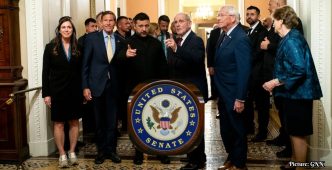
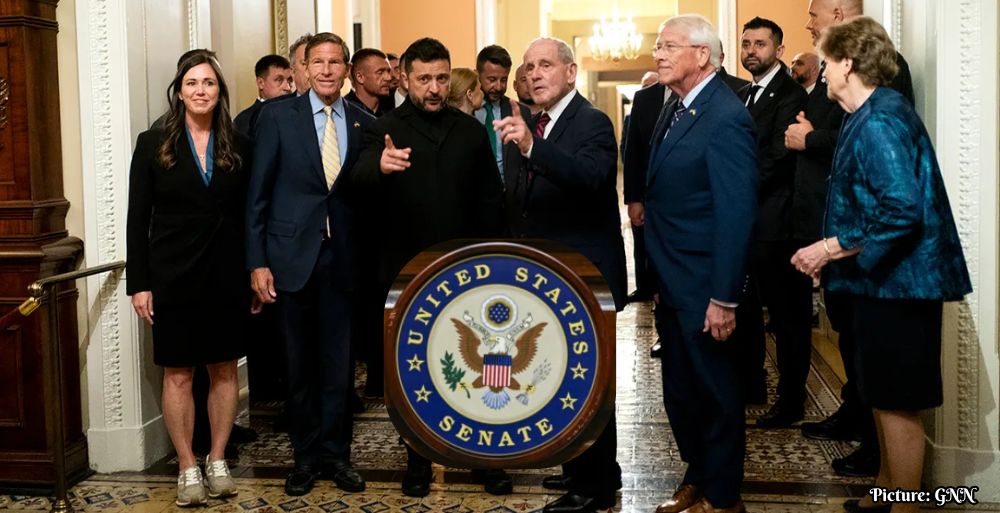
The passage of this legislation underscores a growing urgency among lawmakers to demonstrate solidarity with Ukraine amid its conflict with Russia. Many senators had met with Ukrainian President Volodymyr Zelensky last month, following Graham’s funeral, where Zelensky advocated for increased military aid and the need for robust sanctions against Russia.
Reactions from Lawmakers
Senator Richard Blumenthal (D-Conn.), a lead sponsor of the bill, described the legislative victory as a significant achievement, recalling Graham’s final sentiments regarding the bill’s potential impact. He stated, “As he said to me in some of his last words, this is a big f’ing deal. We all did good. A bipartisan team achieved this overwhelming 86-11 vote. President Zelensky is watching in Ukraine. President Putin is watching in Moscow.” Blumenthal expressed that the new sanctions would send a strong message to Russian President Vladimir Putin, emphasizing the need for negotiations to end the conflict.
Senator Chris Coons (D-Del.) commented on the bill’s symbolic importance, expressing concerns about President Trump’s willingness to enforce the sanctions effectively. Coons emphasized the urgency of the situation in Ukraine, noting, “Zelensky’s been clear with us; they’re steadily running out of interceptors. Putin has made it clear he’s going to continue killing civilians and pummeling.” He urged the President to take a more active stance against Russia, stating that while the bill is an essential step, it ultimately depends on Trump’s actions following its passage.
Concerns Over Tariff Authority
The specifics of the legislation have sparked debate among Democrats, who largely support the sanctions against Russia but expressed apprehension regarding the expanded powers it would grant Trump to impose tariffs. Senator Raphael Warnock (D-Ga.) articulated these concerns, noting the potential for abuse of authority. He stated, “We’ve seen the ways in which he illegally uses the authorities he has. I think we can write this bill in such a way that we do the necessary work of stopping Putin’s aggression, while at the same time not giving the president even more authorities to handle tariffs in the reckless way in which he is doing it.”
In a notable development, Warnock secured a written commitment from U.S. Trade Representative Jamieson Greer to establish guardrails on the President’s tariff authority, which led him to withdraw an amendment aimed at enshrining these protections into the legislation. Warnock regarded this commitment as a “small but meaningful victory for all Americans who’ve suffered under this president’s reckless tariffs,” reinforcing the notion that it is possible to counteract Putin’s aggression without compromising checks on presidential power.
Despite the successful passage in the Senate, the bill now moves to the House of Representatives, where its future remains uncertain as lawmakers prepare to return from their August recess. The outcome will be closely monitored as it could have significant implications for U.S. foreign policy and international economic relations.