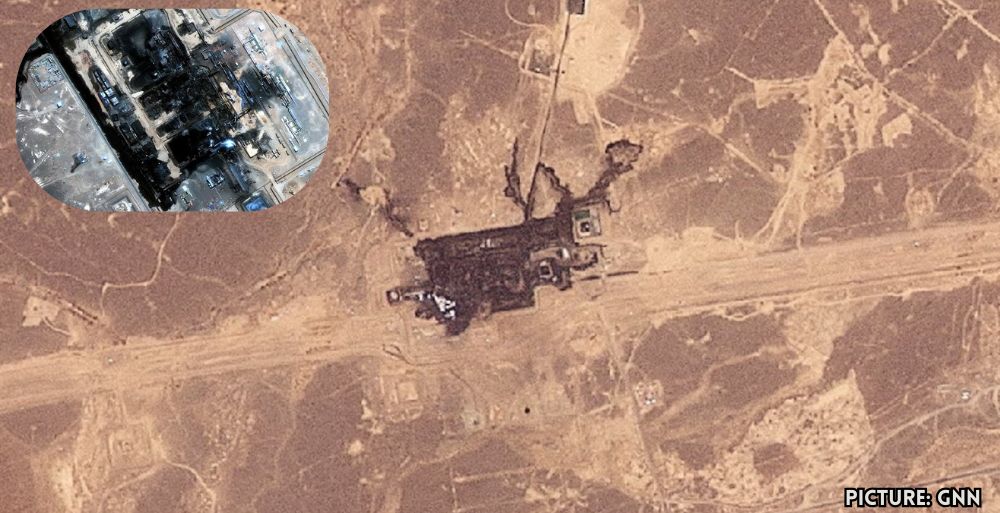
Saudi Arabia’s closure of its East-West oil pipeline following a drone attack linked to Iranian-backed militias has heightened fears of further disruptions to global energy supplies, potentially driving prices higher amidst an ongoing crisis.
CHICAGO (AP) — In a significant escalation of tensions in the Middle East, Saudi Arabia announced the closure of its critical East-West oil pipeline on Friday, following a drone attack attributed to Iranian-backed militias based in Iraq. This development raises alarms about the potential for severe shortages in global energy markets, already strained by the ongoing conflict with Iran, which may lead to rising prices for fuel and essential goods.
The East-West pipeline, which spans approximately 1,200 kilometers (746 miles), plays a pivotal role in Saudi Arabia’s oil export strategy. It transports crude oil from processing facilities near the Persian Gulf to the Red Sea, facilitating shipments to Europe and Asia and bypassing the strategically vital Strait of Hormuz, through which around 20% of the world’s oil supply passes. The closure of this pipeline comes just months after the U.S. and Israel launched attacks on Iranian targets, further complicating the already volatile energy landscape.
According to two regional officials speaking to The Associated Press, repairs to the damaged pipeline could take between three to five weeks, placing a significant portion of Saudi oil exports at risk. Rystad Energy reported that between 2.6 million to 4 million barrels of oil per day had been moving through the pipeline and out of the Red Sea port of Yanbu since late August. This volume represents roughly 4% of the global oil supply, highlighting the potential impact of its closure on international markets.
Historical Context of the East-West Pipeline
Constructed during the 1980s amid fears of Iranian disruptions during the Iran-Iraq war, the East-West pipeline has historically been essential for maintaining oil flows from the region. During the first half of the current conflict, it allowed Saudi Arabia to sustain exports even as tanker traffic through the Strait of Hormuz was severely hindered.
In September 2025, Saudi Arabia’s oil production was reported at nearly 10 million barrels per day, although this figure fell to 6 million barrels per day in August of the same year, according to the International Energy Agency (IEA). The recent uptick in Brent crude prices, which traded at over $105 per barrel on Monday, reflects market anxiety over the anticipated loss of supply.
Current Shipping Channels and Risks
Despite the closure of the East-West pipeline, the Strait of Hormuz remains a viable route for some oil exports. Although maritime traffic through the strait has decreased significantly since the onset of the war, with only 90 transits reported in the first week of September compared to 130 daily prior to the conflict, some tankers are still navigating the route. However, analysts caution that the Houthis’ increased control over the Bab el-Mandeb Strait poses additional risks, jeopardizing oil shipments from the Red Sea.
Salvatore Mercogliano, a maritime history professor at Campbell University, commented on the situation, stating that while the East-West pipeline’s closure is a serious concern, the opening of the Hormuz route provides a buffer that mitigates immediate disaster for Saudi oil exports.
Impact on Global Oil Prices
The disruption in oil supply chains is expected to exacerbate rising energy prices worldwide, with analysts warning that consumers may face further financial burdens in the coming weeks and months. Countries heavily reliant on Middle Eastern oil imports, particularly in Asia and Africa, have already begun to experience significant spikes in fuel costs. For instance, diesel prices in Nigeria have surged by 92% since late February, while gasoline prices have increased by nearly 61% in the same period, according to energy tracking organization Global Petrol Prices.
In the United States, the situation is similarly dire, with the average price of regular gasoline reaching approximately $4.32 per gallon on Monday, up nearly 45% from the $2.98 average before the war began. Diesel prices also hit an all-time high of $6.23 per gallon, reflecting a nearly 66% increase since the start of the conflict.
The repercussions of rising diesel prices extend beyond the fuel itself, impacting other goods and services reliant on transportation and agricultural equipment. Analysts at Melius Research have warned of an impending inflationary spillover, particularly as the squeeze on essential resources like fertilizer and energy sources becomes more pronounced, coinciding with the U.S. harvesting and heating season.