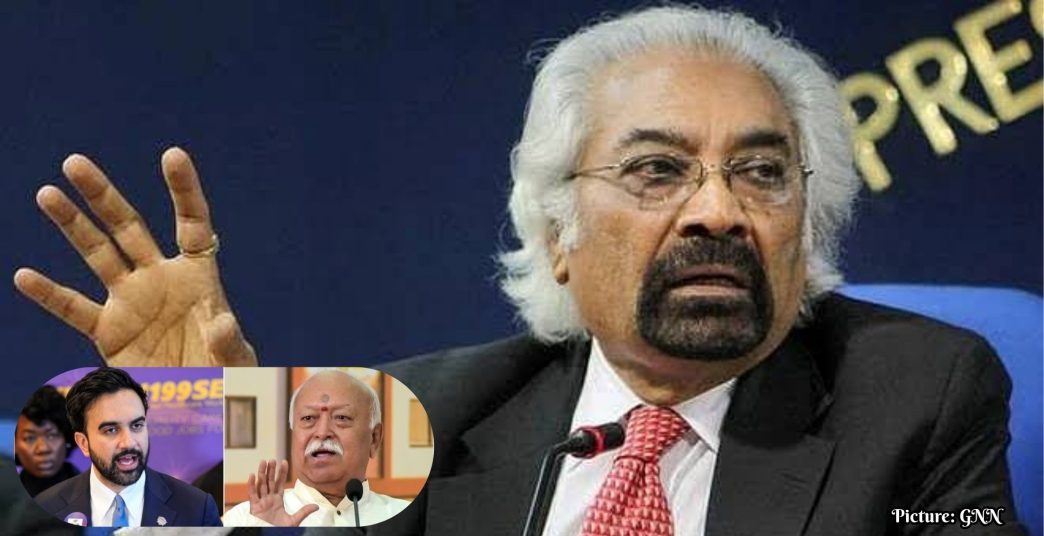
Senior Congress leader Sam Pitroda has endorsed New York City Mayor Zohran Mamdani’s critical remarks about the Rashtriya Swayamsevak Sangh (RSS), asserting that his comments reflect legitimate concerns regarding the treatment of religious minorities in India.
NEW YORK, Aug 28 – In an exclusive interview, senior Indian National Congress leader Sam Pitroda expressed his support for the sentiments voiced by New York City Mayor Zohran Mamdani, which critiqued the Rashtriya Swayamsevak Sangh (RSS) regarding the treatment of religious minorities in India. Pitroda acknowledged that Mamdani’s observations contain “some truth” and are indicative of broader societal concerns.
While recognizing that the gathering where Mamdani articulated his views was a private event, Pitroda emphasized that all organizations hold the right to conduct such gatherings. He stated, “I know Mayor of New York has spoken about his views, but it’s a private event. And everybody is entitled, everybody’s entitled to have their private event. No issue.” This acknowledgment highlights the importance of dialogue and differing perspectives in a democratic society.
Context and Implications of the Criticism
Mamdani’s remarks come amidst increasing scrutiny of the RSS, particularly regarding its treatment of minorities, including Muslims and Christians. Pitroda, when asked if he shares Mamdani’s views, outlined his vision for India as a secular and inclusive nation. He stated, “I think these are his personal views. I do agree with the fact that I believe in secular India. I believe in India where there is no difference in religion, caste, language, state.” This sentiment resonates with many who aspire for a more inclusive Indian society.
Pitroda reflected on the foundational principles of India, asserting his beliefs in equal rights and harmony among diverse communities. He recounted his childhood in a multicultural environment, saying, “I was born in 1942 during British Raj, and in a small little tribal village, I had a Muslim household in front of us, Jain on the left-hand side, Sikh on the right-hand side, and in the back was tribal Oria. We all lived in peace, harmony, no conflict at all.” His recollections serve as a stark contrast to the contemporary sociopolitical climate in India, which he characterized as increasingly divisive.
Rising Tensions in Modern India
Contrasting his idyllic childhood experiences with the current state of affairs, Pitroda expressed profound concerns about the recent rise in conflict and animosity within India. He stated, “Today, conflict has increased substantially. Hate has increased, fear has increased,” suggesting that Mamdani’s remarks resonate with the lived experiences of many citizens today. This assertion reflects a growing apprehension among various communities regarding their safety and acceptance in contemporary India.
Highlighting the experiences of religious minorities, Pitroda remarked, “You ask average Muslim or Christian how they feel in the last 15 years, what has happened to their churches, their communities, and they will tell you.” This statement underscores a significant concern regarding the societal atmosphere surrounding non-Hindu communities, particularly in light of the RSS’s influence on public institutions and educational systems.
Discrepancies Between Words and Actions
Pitroda further critiqued the RSS by asserting that their public pronouncements frequently do not align with their actions. He noted, “Their words mean one thing and their actions mean something else,” emphasizing the need for accountability and transparency in political discourse. He stated, “I think it’d be good for people to know about RSS, but I won’t pay too much attention to their words. I’ll pay more attention to their actions. To me, actions speak louder,” highlighting a common concern regarding the credibility of political organizations.
Despite his criticisms, Pitroda mentioned that he has not personally met Mohan Bhagwat, the chief of the RSS, although he maintains friendships with some members of the organization. He expressed a dedication to respecting diverse viewpoints but drew a clear line at violence and hatred, stating, “When it becomes violent, I have a problem. When it becomes hateful, I have a problem.” This nuance in his position reflects a commitment to dialogue while firmly opposing divisive rhetoric and actions.
A Call for Inclusivity and Foundational Principles
Looking ahead, Pitroda urged the RSS and other organizations in India to return to the foundational principles envisioned by the country’s founding fathers. He articulated that inclusivity should be at the core of India’s identity, suggesting, “What was the core idea of India? That India belongs to everybody. India belongs to Hindu, Muslim, Christians, Jews, Dalits.” This call for unity underscores a broader aspiration for a harmonious coexistence in India’s diverse society.
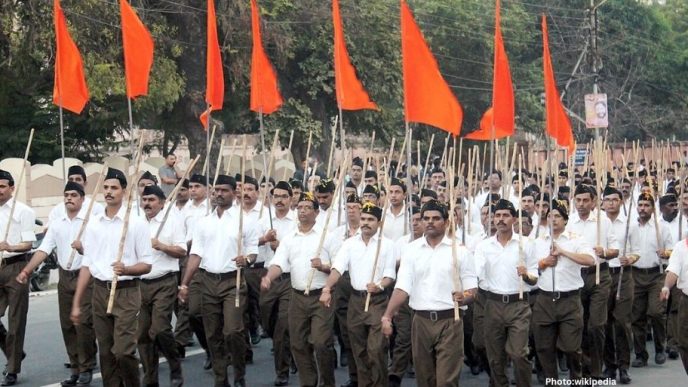
The RSS, established in 1925 in Nagpur, describes itself as a cultural and social organization committed to national service and character-building. As the organization approaches its centenary in 2025, discussions regarding its influence and role in shaping contemporary Indian society continue to evoke strong opinions on both sides of the political spectrum. The ongoing discourse surrounding the RSS, particularly in light of criticisms from leaders like Mamdani and Pitroda, indicates a rising urgency to address the challenges facing religious minorities in India and the need for a more inclusive national narrative.