The Ohio governor’s race this year is historic, potentially resulting in the election of the first Hindu or Jewish governor in the state, reflecting broader societal tensions and religious dynamics.
COLUMBUS, Ohio — The upcoming gubernatorial election in Ohio is poised to set historical precedents, with the potential election of either Democrat Dr. Amy Acton, who would be the state’s first Jewish governor and first female governor, or Republican Vivek Ramaswamy, who would be the first Hindu governor in U.S. history. As the campaign intensifies, religious identities and affiliations are playing a significant role in shaping the narrative and dynamics of the race.
According to data from the Pew Research Center, approximately 65% of Ohio adults identify as Christian, while around 30% classify themselves as religiously unaffiliated. The prominence of both Acton and Ramaswamy as candidates representing minority religions is unprecedented in Ohio’s political history, which has traditionally been dominated by Christian candidates.
The race has drawn national attention, partly due to the contentious and often vitriolic nature of the campaigns. Acton’s campaign has accused Ramaswamy, a biotech billionaire, of promoting fraudulent medical treatments, a claim he has denied. Ramaswamy’s campaign has sparked outrage with an advertisement featuring Acton’s estranged mother accusing her of dishonesty. In response to the backlash, Governor Mike DeWine condemned the ad, and Ramaswamy’s campaign subsequently removed it from circulation.
As of the latest update, Acton holds a narrow lead over Ramaswamy in a state that has favored Donald Trump in the last three presidential elections. In the final stretch of the campaign, Acton has emphasized her Jewish heritage as a source of inspiration for her progressive policies, discussing her experiences with antisemitism. Ramaswamy, who began his campaign with blessings from his Hindu temple, is appealing to voters who align with conservative Christian values, including support for Trump’s immigration policies.
Acton’s Journey of Faith
Dr. Amy Acton, 60, has a compelling personal narrative shaped by her Jewish faith and experiences of adversity. Raised in Youngstown, Ohio, by a Jewish father and a Baptist mother, she has openly shared her struggles with poverty, homelessness, and abuse during her childhood. Her stepfather’s relationship with religion was described as “cult-like,” which contributed to her complex relationship with faith.
Despite her tumultuous upbringing, Acton found solace in spirituality during her formative years, later reconnecting with her Jewish roots as an adult. She has been actively involved in Jewish community organizations and has served on the board of her synagogue, Congregation Beth Tikvah. Throughout her career as a physician and public health leader, Acton has consistently integrated her spiritual beliefs into her professional ethos.
“I’ve spent my whole life talking about spirituality as another component in people’s holistic well-being and health,” she stated in a recent interview, highlighting the importance of spiritual well-being in public health.
Ramaswamy’s Hindu Identity
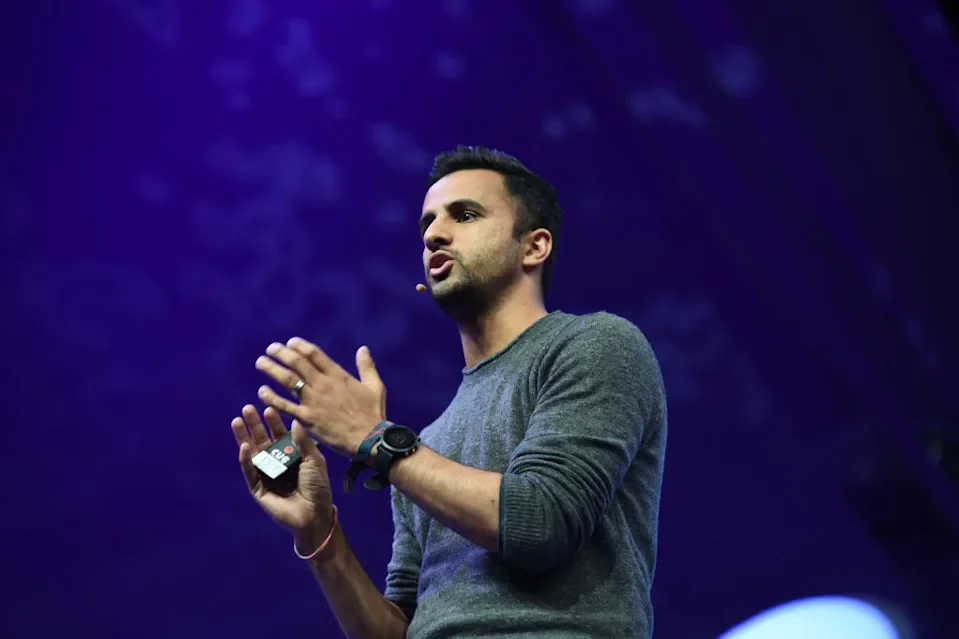
Vivek Ramaswamy, 41, shares a different religious journey. Born to devout Hindu parents who immigrated from South India, Ramaswamy was immersed in Hindu traditions from a young age. He attended a Jesuit high school, where his exposure to Christianity influenced his views. After a period of agnosticism in his twenties, he returned to his Hindu roots, embracing the Advaita Vedanta tradition.
Ramaswamy’s faith has become a focal point of his campaign, as he seeks to connect with voters who identify strongly with Christian nationalism. He has publicly expressed pride in his Hindu identity, stating, “I’m Hindu, and I’m proud of that.” However, his alignment with conservative policies has drawn skepticism from some within the South Asian community, particularly regarding his support for Trump’s immigration agenda.
Religious Dynamics in Campaigning
The interplay of religion and politics is evident in both candidates’ campaigns. Acton has highlighted her experiences with antisemitism and the need for compassion and unity among diverse communities. Conversely, Ramaswamy’s campaign has focused on appealing to Christian voters who prioritize conservative values over religious differences.
As the campaign unfolds, the influence of faith on voter perception is palpable. In a recent campaign event at the Hindu Temple of Dayton, Ramaswamy’s uncle noted the significance of his nephew’s candidacy for the Hindu community. Yet, some temple attendees expressed concerns about Ramaswamy’s unwavering support for Trump, fearing potential repercussions for immigrant communities under his governance.
Similarly, Acton’s candidacy has resonated with many Jewish voters who see her as a beacon of hope in a time of rising antisemitism. Rabbi Rick Kellner of Congregation Beth Tikvah has voiced concerns about the increase in political violence and hatred but remains optimistic about Acton’s potential to bring positive change.
The Challenges Ahead
As Election Day approaches, both candidates face the daunting task of navigating a political landscape marked by division and animosity. Ramaswamy has encountered criticism for his ethnicity and religious beliefs from some sectors of the Republican base, while Acton has contended with vehement opposition stemming from her leadership during the COVID-19 pandemic.
Amid the contentious atmosphere, Acton has articulated a vision of inclusivity, stating, “My opponent is Hindu. I am Jewish. There should be welcome for all.” This sentiment underscores her commitment to fostering a more compassionate political discourse.
The outcome of this election will not only determine Ohio’s next governor but will also serve as a reflection of the state’s evolving demographic landscape and the role of religion in shaping political identities. As voters prepare to make their decisions, the implications of this race extend far beyond state lines, resonating with broader national conversations regarding diversity, representation, and the intersection of faith and politics.