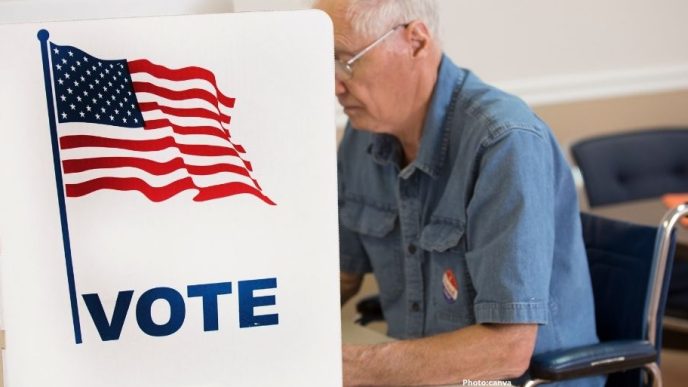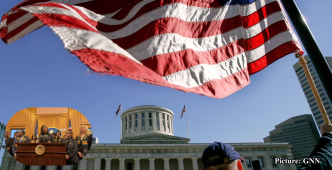

Ohio voters are casting their ballots in primary elections that will determine candidates for the November midterm elections, a critical moment that may influence the Republican Party’s control of Congress.
On Tuesday, Ohio voters are participating in primary elections, a significant step in the lead-up to the November midterm elections. The outcomes in Ohio, a historically pivotal state in national politics, could play a crucial role in determining whether the Republican Party retains its grip on Congress for the final two years of Donald Trump’s presidency.
High-Profile Senate Race
The most closely monitored contest in this primary is the special election for the U.S. Senate seat. Incumbent Democrat Sherrod Brown, a three-term senator, is attempting to reclaim his position from Republican Jon Husted. Brown, who previously lost his bid for re-election in 2024, is vying to serve the remaining two years of the term originally won by JD Vance in 2022. Vance vacated the seat following his election as vice president last year, thereby opening the door for both Brown and Husted to compete for this influential legislative position.
Republican Primaries and Challenges to Democratic Incumbents
In northwest Ohio, Republicans are tasked with choosing their nominee to challenge Democratic Representative Marcy Kaptur. Kaptur, who holds the distinction of being the longest-serving woman in congressional history, represents a district centered around Toledo that has undergone significant redistricting. The new maps, approved by a state commission last year, have rendered her district increasingly conservative, raising questions about her prospects for re-election and marking her as one of the most vulnerable Democrats in the nation.
Additionally, voters in Ohio will select candidates for the governorship, where Republican Mike DeWine is unable to seek re-election due to term limits. Leading the GOP race is Vivek Ramaswamy, a biotech entrepreneur and former presidential candidate. He faces former state health department director Amy Acton, who is the leading contender among Democrats in this high-stakes gubernatorial race.
Shifting Political Landscape
Ohio, once considered a quintessential swing state, has increasingly leaned Republican over the past two decades. The state was a key player in the 2004 presidential election, contributing to Republican George W. Bush’s victory. However, it swung back to favor Democrat Barack Obama in both of his presidential campaigns, reflecting its historically competitive nature.
Since Trump’s ascent to the presidency, the political landscape in Ohio has shifted further to the right. In the 2024 presidential election, Trump secured Ohio by a margin of 12 percentage points, a sharp contrast to the state’s earlier competitive status. That same year, Senator Brown lost his bid for a fourth term to Republican Bernie Moreno, a defeat that significantly bolstered the GOP’s control in the Senate.
Despite the current Republican dominance, there are signs of potential Democratic resurgence. Trump’s approval ratings have dipped, particularly regarding his handling of the economy, which could provide Democrats with an opportunity to regain ground. Brown’s supporters believe he has a viable path back to the Senate, particularly in a political climate where Democrats are eyeing vulnerable House incumbents as potential targets in the upcoming elections.
Competitive Primary Contests
Both Brown and Husted are widely expected to win their respective primaries, as is Acton in the gubernatorial contest. Ramaswamy has garnered endorsements from Trump and the state Republican Party, but he faces a challenge from Casey Putsch, an internet personality and auto racing engineer who is also vying for the Republican nomination.
The race to unseat Kaptur is anticipated to be the most competitive primary in the state. Republican candidates in Ohio’s ninth congressional district include former state house representative Derek Merrin, who narrowly lost to Kaptur in 2024 by fewer than 2,400 votes; Madison Sheahan, a former deputy director of U.S. Immigration and Customs Enforcement; and Josh Williams, a current state house representative. This contest is particularly significant, as it reflects the broader strategic efforts by Republicans to capitalize on perceived vulnerabilities among Democratic incumbents.
Implications of the Primaries
The winners of the Ohio primaries will advance to the general election scheduled for November 3, where voters across the nation will elect all 435 members of the House of Representatives and 33 senators. The results in Ohio are anticipated to serve as a bellwether for national political trends, providing insights into voter sentiment as the nation heads toward a pivotal election cycle.
With high stakes on the line and voter engagement critical, Ohio’s primary elections on Tuesday represent a decisive moment in the political landscape. Candidates in this battleground state are not only vying for positions that will influence governance in Ohio but also shaping the broader narrative as both parties prepare for the upcoming midterms. Given Ohio’s reputation as a microcosm of national political dynamics, the outcomes of these races may well resonate beyond state lines, affecting strategies and campaign approaches across the country.