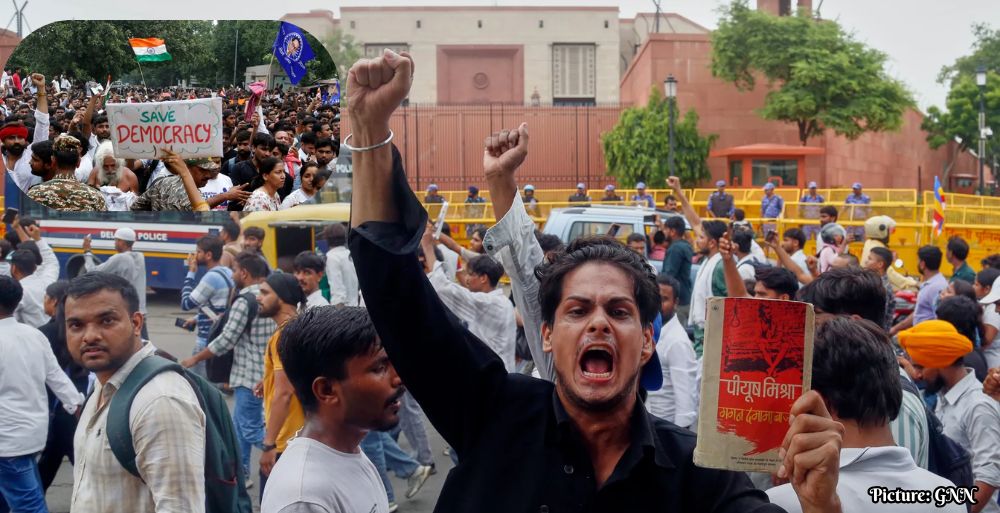
In a significant display of youth activism, tens of thousands of protesters across India are demanding accountability in the education sector, focusing on the resignation of Education Minister Dharmendra Pradhan, amid growing discontent over systemic issues.
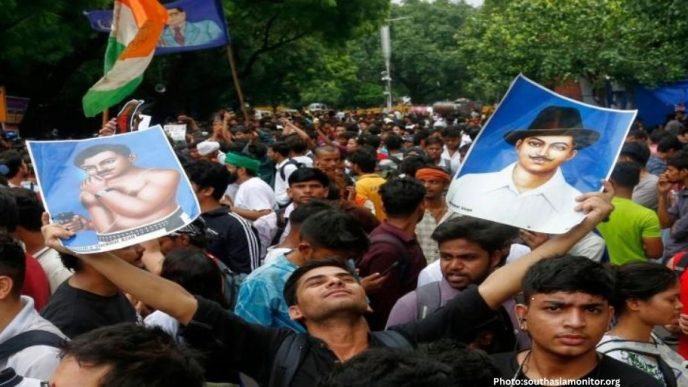
New Delhi, India – On July 20, 2023, a substantial wave of protests initiated by the Cockroach Janta Party (CJP) unfolded in the capital, with tens of thousands of young demonstrators calling for the resignation of Education Minister Dharmendra Pradhan. The movement, which began as a satirical online initiative, has swiftly evolved into a serious political force, galvanizing youth discontent over high unemployment rates and perceived failures in the education system.
The CJP, led by 30-year-old Abhijeet Dipke, a political communications strategist and former student at Boston University, has gained remarkable traction since its inception just a few months ago. Initially a playful commentary on political issues, the group’s name and message have resonated with many young Indians feeling disillusioned by their prospects. Following an overwhelming response to a Google form signup, the movement escalated, culminating in a public march that drew thousands to the streets of Delhi, alongside candle-lit vigils in cities such as Mumbai, Bengaluru, and Goa.
Background of the Protests
The protests gained additional notoriety due to the involvement of Sonam Wangchuk, a prominent engineer and activist who began a hunger strike on June 28 in solidarity with the CJP. His protest took place at Jantar Mantar, a historic site in Delhi known for its association with civic demonstrations. On July 15, Wangchuk was forcibly hospitalized after his health deteriorated, prompting outrage among CJP supporters and amplifying the urgency of the movement’s demands.
Wangchuk’s commitment to the cause has further drawn attention to the CJP, which has emerged as a critical voice against systemic inadequacies in India’s education sector. Supporters have rallied around Wangchuk, calling for his immediate release and expressing solidarity through various forms of protest.
Significance of the ‘Cockroach’ Moniker
The name “Cockroach Janta Party” stems from a controversial remark made by India’s Chief Justice Surya Kant, who, during a court hearing in May, likened unemployed youth pursuing careers in journalism and activism to cockroaches. Although he later clarified that his comments were directed specifically at individuals with fraudulent degrees, the term has since been embraced by the movement as a symbol of resilience and defiance against the status quo.
Participants have taken to the streets dressed as cockroaches, engaging in clean-up drives and protests, effectively transforming a derogatory term into a badge of honor. This creative form of protest has captured media attention and further galvanized public support.
Demands of the Movement
The CJP’s primary grievances revolve around issues within India’s education system, particularly concerning the National Eligibility cum Entrance Test (NEET), which serves as a gateway for medical college admissions. In May 2023, nearly 2.28 million candidates sat for the exam, which was subsequently canceled amid allegations of a question leak. The controversy surrounding the NEET has been devastating for many students, some of whom reportedly faced severe distress, leading to tragic outcomes, including at least 20 reported suicides.
In light of these events, the CJP’s demands include an overhaul of the education system, enhanced accountability for exam integrity, and, notably, the resignation of Education Minister Pradhan. Following Wangchuk’s hospitalization, Dipke escalated the movement’s rhetoric, calling for Prime Minister Narendra Modi to step down as well, reflecting growing frustration with the current administration’s handling of youth issues.
Political Reactions and Implications
The protests have not only captured the attention of the public but have also drawn responses from various political factions. Congress party president Mallikarjun Kharge condemned the police’s treatment of students, describing it as an “attack on democracy.” Mahua Moitra, a Member of Parliament from the All India Trinamool Congress, participated in the protests, emphasizing the need for respect towards the demonstrators. Additionally, Samajwadi Party leader Akhilesh Yadav has voiced support for the protesters, advocating for their right to be treated with dignity.
Opposition leader Rahul Gandhi has also criticized Prime Minister Modi’s silence on the protests, urging him to address the students’ grievances and apologize for the government’s actions against them. As the CJP continues to mobilize support and draw attention to the precarious situation of Indian youth, the movement represents a significant moment of political engagement among the younger generation in India.
While the future of the CJP and its demands remains uncertain, the protests mark one of the largest demonstrations against Modi’s government in recent years, highlighting a critical juncture for youth activism and political accountability in India.