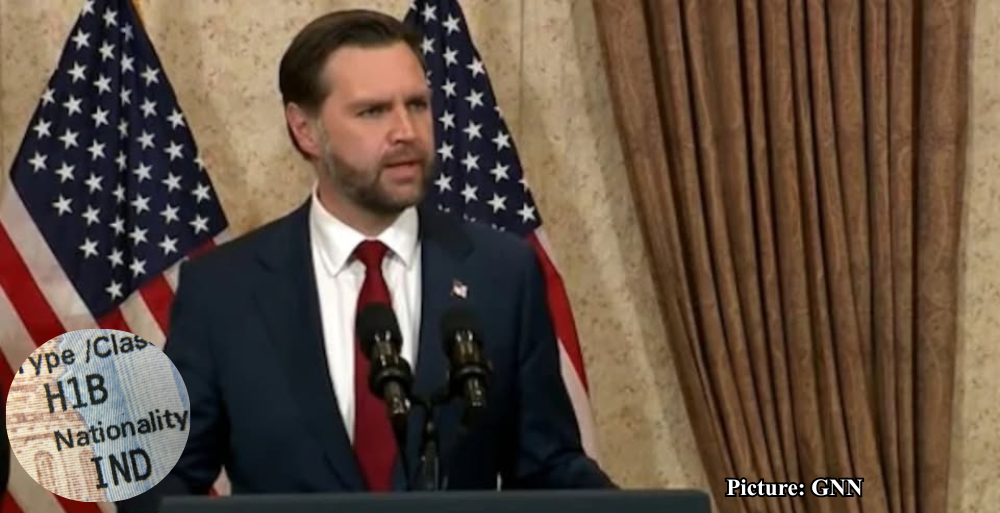
A proposed bill titled ‘End H-1B Visa Abuse Act of 2026’ seeks to impose significant restrictions on the H-1B visa program, introducing a three-year halt on new applications and raising salary thresholds, primarily impacting Indian professionals.
On April 23, 2026, a group of Republican lawmakers in the United States introduced the ‘End H-1B Visa Abuse Act of 2026,’ a legislative proposal that aims to substantially reform the H-1B visa program, which has long served as a pathway for skilled foreign workers, particularly from India, to gain employment in the U.S. This bill emerges against a backdrop of increasing concerns regarding American job displacement and the perceived abuse of the visa system by employers. The proposed changes could represent a pivotal shift in U.S. immigration policy.
Key Provisions of the Bill
The proposed legislation introduces a series of stringent measures designed to limit the issuance of H-1B visas. Among the most significant changes are a three-year suspension of new visa applications, a reduction in the annual cap for H-1B visas, and an increase in the minimum salary requirement for applicants, anticipated to rise to $200,000 annually. Furthermore, the bill seeks to prohibit dependents from accompanying H-1B visa holders and restrict their pathway to permanent residency in the United States.
Historical Context of the H-1B Visa Program
The H-1B visa program was established in 1990 as part of the Immigration Act, designed to allow U.S. companies to employ foreign workers in specialty occupations that require theoretical or technical expertise. Initially, the program aimed to fill critical gaps in labor markets, especially in sectors like technology, healthcare, and engineering, where there is a persistent demand for skilled professionals. Over the years, the program has sparked heated debates about its impact on American jobs and wages.
Currently, the annual cap for H-1B visas is set at 65,000, with an additional 20,000 visas available for applicants with advanced degrees from U.S. institutions. However, demand has consistently outpaced supply, leading to a lottery system that many stakeholders consider inadequate and fraught with complexities. In 2023, for instance, over 300,000 applications were submitted for 85,000 available visas, highlighting the fierce competition for these coveted positions.
Political Landscape and Reactions
The introduction of the ‘End H-1B Visa Abuse Act of 2026’ reflects a broader trend among Republican lawmakers to tighten immigration policies, particularly regarding work visas. Supporters of the bill argue that it is crucial to protect American jobs and wages from foreign competition. Representative John Smith, a co-sponsor of the bill, stated, “This legislation is about prioritizing American workers and ensuring that high-skilled jobs are filled by those who can contribute most effectively to our economy.”
Conversely, critics of the bill argue that such measures could exacerbate labor shortages in critical sectors, particularly in technology and healthcare, where skilled workers are in high demand. Many experts warn that the proposed salary threshold could deter potential applicants, particularly from countries like India, which has historically supplied the majority of H-1B visa holders. In fact, as of 2023, approximately 75% of H-1B visa holders were Indian nationals, making any changes to the program particularly impactful for this demographic.
Advocacy groups representing immigrant workers have voiced strong opposition to the proposed legislation. They contend that the bill is an overreach that undermines the contributions of foreign workers to the U.S. economy. “This legislation does not just affect individuals seeking to work in the U.S.; it impacts the entire tech ecosystem that relies on global talent,” remarked Maria Garcia, a spokesperson for an immigrant rights organization.
Future Implications
The implications of this proposed bill extend beyond immediate changes to visa policy and could signal a significant shift in the U.S. approach to immigration and labor. If enacted, the legislation could create long-term effects on the economy, particularly in innovation-driven sectors that rely heavily on skilled labor. Furthermore, the geopolitical relationship between the United States and India may be tested as both nations navigate the complexities of trade, technology, and labor exchanges.
As discussions surrounding the bill evolve, various stakeholders—including business leaders, technology executives, and policy advocates—will be monitoring developments closely. The outcome of this legislation could reshape the future of work visas in the U.S., influencing not only the opportunities available to foreign professionals but also the dynamics of the labor market overall.
In conclusion, the ‘End H-1B Visa Abuse Act of 2026’ could represent a transformative moment for immigration policy in the United States. As lawmakers deliberate on the bill, the balance between protecting American jobs and fostering an inclusive, competitive labor market remains a contentious point of debate, with far-reaching implications for the economy and international relations.