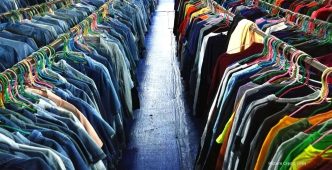

As India’s youth navigate a challenging job market, many are turning to the secondhand clothing sector as a viable economic alternative, creating a flourishing thrift economy driven by creativity and resourcefulness.
NEW DELHI — In a rapidly changing economic landscape, young people in India are increasingly turning to the secondhand clothing market as a means of income, with many experiencing both the challenges and rewards of entrepreneurship. The trend has emerged prominently amid rising unemployment rates and a growing cost of living.
Astha Chhetri, a 26-year-old entrepreneur, exemplifies this shift. What began as a side hustle while she worked at a call center has transformed into her full-time career. “I was not enjoying my job, neither mentally nor financially,” Chhetri stated. “I wanted to build something of my own.” Today, she dedicates her mornings to managing her online clothing store and her evenings to photographing and marketing items on social media.
The secondhand clothing market in India is estimated to be worth ₹33,000 crore (approximately £2.5 billion), with a significant customer base consisting of students and young professionals seeking distinctive, affordable fashion. As 21-year-old Ananya Khan shared, “I love browsing Instagram for unique hoodies and tees. I usually spend ₹800-₹1,500 per item.” This enthusiasm for thrifted clothing reflects the dual pressures of a shrinking job market and rising living costs.
Economic Context and Market Dynamics
The growing thrift economy is a response to broader economic challenges. According to the Periodic Labour Force Survey, approximately 10% of individuals aged 15 to 29 were unemployed as of 2025. With formal job opportunities scarce, many young people are turning to the informal economy, where thrift and resale businesses offer low startup costs, flexible hours, and the potential for immediate cash flow.
Vishu Roy, a 22-year-old thrift store owner near Sarojini Nagar market in South Delhi, began his business with modest savings. “I started with just ₹5,000-₹10,000 in savings from part-time work and family help,” he explained. Recognizing the resale potential of old clothes, he transitioned from online sales to establishing a physical store. Roy dedicates six to seven hours daily to managing his social media presence, emphasizing the importance of consistent engagement: “If you stop posting, you disappear. Consistency is everything in this business.”
The reliance on social media platforms is a double-edged sword. While they provide access to a wider audience, fluctuations in platform algorithms can severely impact sales. Chhetri stated, “Around 70% of my sales come from Instagram. If reach drops, sales drop too. One bad week on the algorithm can hurt the whole month.” Roy echoes this sentiment, noting that engagement is crucial to maintaining visibility and income.
Challenges in the Thrift Economy
Despite the vibrancy of the thrift market, participants face significant challenges. Many resellers, like Abhin Bougia, 22, from Jammu, started with minimal capital and have encountered various obstacles, from fake buyers to payment scams. Bougia recounted, “We started from nothing… once I made ₹35,000 in a single day, but sometimes clothes take months to sell. If it doesn’t move, you are stuck with dead stock.” This unpredictability adds a layer of anxiety to their entrepreneurial ventures.
Experts note that the informal nature of the thrift economy reflects broader weaknesses in India’s labor market. Arup Mitra, an economics professor at South Asian University in New Delhi, commented, “This is not a gainful activity. Young people turn to such ventures only when other productive avenues are unavailable.” The secondhand clothing market, while empowering for some, underscores the pressing issue of unemployment among India’s youth.
Environmental Concerns and Motivations
While the resale of secondhand clothing is often portrayed as an eco-friendly movement, many sellers acknowledge that environmental considerations are secondary to style and affordability. Chhetri remarked, “People buy for style, not the planet,” while Roy emphasized that his focus lies in curating vintage fashion, with sustainability being a later consideration.
As these young entrepreneurs navigate their businesses, they continue to adapt to the evolving market. Chhetri prepares shipments for international customers, Bougia edits photos for upcoming sales, and Roy responds to customer inquiries. Each day presents new challenges and uncertainties, yet they remain committed to their passions.
In conclusion, as India’s young population increasingly engages in the secondhand clothing market, they are not only reshaping their economic futures but also contributing to a dynamic and evolving thrift economy that reflects the complexities of contemporary life in India.