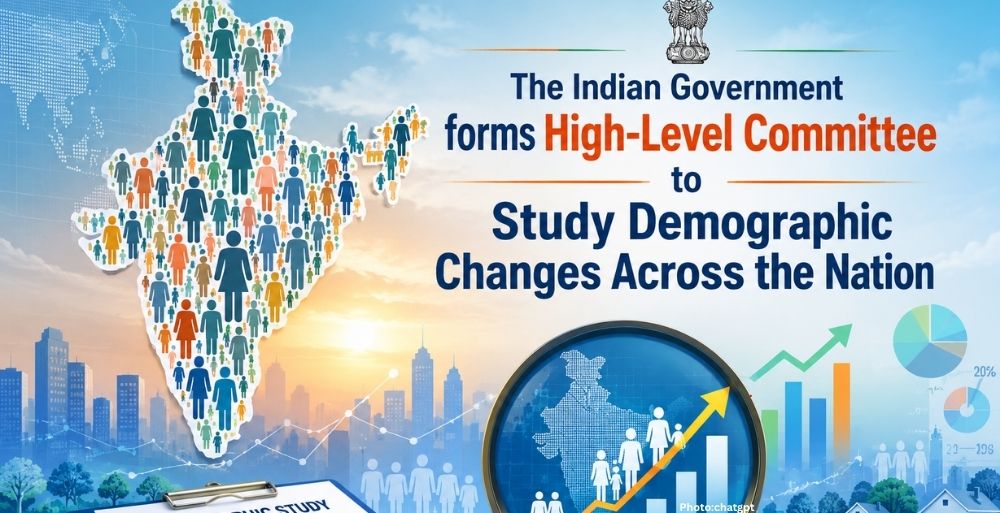
The Indian government has formed a high-level committee to study demographic changes across the nation, a move that reflects ongoing concerns about national security and social cohesion, igniting debate over the implications for human rights and community relations.
NEW DELHI – In a move that underscores the Indian government’s ongoing concerns regarding demographic dynamics, a high-level committee has been established to assess and provide recommendations on the implications of population changes within the country. This initiative, announced by Prime Minister Narendra Modi during his Independence Day address in 2025, has sparked significant discourse regarding its potential impact on social cohesion and human rights.
Prime Minister Modi characterized illegal immigration as a “premeditated conspiracy” aimed at altering India’s demographic landscape, framing the issue as a critical challenge to national integrity and security. Home Minister Amit Shah has echoed this sentiment, labeling “unnatural demographic change” as a significant threat to the future of the nation. Shah emphasized that such changes not only affect sovereignty but also have far-reaching implications for law and order, social structure, and the preservation of tribal societies.
The committee, chaired by retired Supreme Court Justice P.P. Naolekar, is tasked with examining patterns of abnormal population shifts among different religious and social communities. Its mandate includes recommending solutions to address these changes in a timely manner, with a particular focus on the custody and deportation of individuals identified as illegal infiltrators.
Understanding the Broader Context of Demographic Governance
This initiative comes at a time when the management of population dynamics is increasingly recognized as a vital aspect of governance globally. A recent referendum in Switzerland, which rejected a proposal to limit the country’s population to 10 million, illustrates the contentious nature of immigration and its effects on national sovereignty worldwide. As nations grapple with these complex issues, the implications of uncontrolled migration have become a focal point of both policy discussions and political rhetoric.
Justice Naolekar’s committee will not only focus on the implications of demographic changes for national security but also their impact on social structures. Critics of the government’s approach argue that emphasizing security risks could lead to a disproportionate focus on certain communities, raising concerns about communal profiling, particularly against Muslims. The fear that this could result in systemic human rights violations and a possible increase in social tensions is prevalent among advocates for civil liberties.
Addressing the Challenges of Population Dynamics
India is currently facing significant demographic challenges that extend beyond issues of illegal immigration. The country’s rising life expectancy and declining birth rates are reshaping its demographic profile, raising alarms about the potential loss of its demographic dividend. Experts warn that unless there are substantial improvements in education, healthcare, and job creation, India could face long-term socio-economic repercussions.
Moreover, the historical context of migration in India cannot be overlooked. The Partition of 1947 led to the creation of three independent nations from a culturally and geographically intertwined subcontinent, resulting in complex patterns of voluntary and involuntary migration that continue to influence demographic trends today. Understanding this history is essential for developing effective and sensitive approaches to demographic governance.
Potential Implications of the Committee’s Work
As the committee begins its deliberations, the implications of its findings will be closely scrutinized by various stakeholders, including civil rights organizations, political analysts, and the general public. The challenge will be to navigate the delicate balance between ensuring national security and safeguarding human rights, particularly for marginalized communities. Critics express concern that an overly security-driven approach could lead to a demographic deadlock, where vulnerable populations are left without protections or avenues for recourse.
Furthermore, the government’s assertion that managing demographic changes is crucial for effective governance must be weighed against the potential risks to social harmony. Critics argue that prioritizing security over inclusivity could undermine the very fabric of Indian society, which is characterized by its rich diversity and pluralism.
In conclusion, the formation of this committee signals a significant shift in how the Indian government is approaching demographic governance in light of national security concerns. While the necessity for such measures may be debated, the potential consequences for social cohesion and human rights must remain at the forefront of discussions as the committee works to develop its recommendations. The dialogue surrounding demographic changes in India is likely to evolve significantly in the coming years, influencing policy and public sentiment in profound ways.