
The House of Representatives passed a bill on Thursday that provides over $1 billion in aid to Ukraine and imposes sanctions on key sectors of the Russian economy, signaling a clear break from President Trump’s approach to the ongoing conflict.
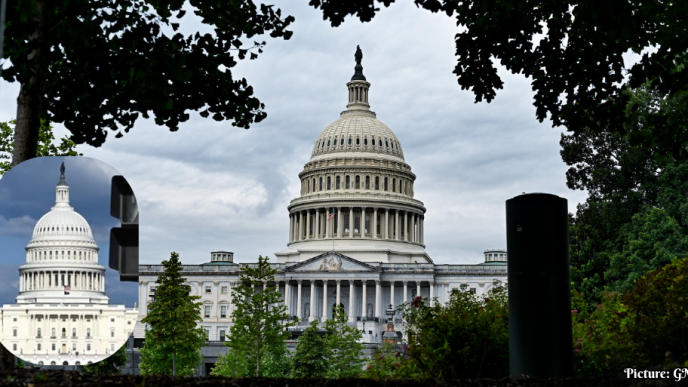
WASHINGTON — In a significant legislative move, the House of Representatives passed a bill on Thursday aimed at aiding Ukraine amid its ongoing conflict with Russia and imposing sanctions on critical sectors of the Russian economy. The bill, which garnered a vote of 226-195, reflects growing impatience among lawmakers with the current administration’s approach to the war and represents the House’s second notable foreign policy divergence from President Donald Trump within a week.
The legislation, introduced by Rep. Gregory Meeks, D-N.Y., proposes more than $1 billion in security and reconstruction aid for Ukraine, alongside an additional $8 billion in defense loans. This funding is intended to bolster Ukraine’s military capabilities as it continues to face challenges from Russian forces.
Legislative Context and Political Dynamics
The passage of the bill was facilitated by a discharge petition that successfully gathered 218 signatures, allowing House members to circumvent party leadership and push the measure forward. This legislative tool, which has seen limited success in recent years, has been utilized in this Congress to address other pressing issues, including the release of government files related to Jeffrey Epstein and the extension of healthcare subsidies tied to the Affordable Care Act.
During the floor debate, Rep. Meeks emphasized the importance of supporting Ukraine in negotiating from a position of strength. He stated, “We all want this war to end. The question is how. Will we abandon Ukraine and force it into a terrible deal? That is what Vladimir Putin is counting on.” His remarks encapsulate the urgency felt by many lawmakers regarding the need for continued U.S. support for Ukraine.
Despite this support, the bill faced staunch opposition from a majority of Republicans. House Financial Services Committee Chairman Rep. French Hill, R-Ark., expressed concerns that the bill was flawed and outdated, arguing that it called for less funding than previously agreed upon in this year’s defense policy. He warned that some provisions could inadvertently reduce defense spending among NATO allies.
Rep. Brian Mast, R-Fla., echoed these sentiments, describing the bill as a “cudgel to fight against President Trump” and labeling it as unserious. Conversely, Rep. Don Bacon, R-Neb., broke ranks with his party to support the measure, framing the vote as a moral choice between standing with good or evil.
Ultimately, the bill saw bipartisan support, with 18 Republicans, 207 Democrats, and one independent voting in favor. Notably, Democratic Rep. Ilhan Omar joined 194 Republicans in opposing the measure.
Next Steps and Senate Prospects
Proponents of the bill remain optimistic that its passage in the House will exert pressure on the Senate to follow suit, although they acknowledge the likelihood of challenges ahead. Rep. Brian Fitzpatrick, R-Pa., who voted in favor, stated, “It’s probably not going to get 60 votes in the Senate, but it’s going to hopefully force the Senate to address the issue.” He further emphasized that the vote sends a message of solidarity to Ukrainian soldiers and to President Putin regarding U.S. commitment.
As the conflict continues, the U.S. has committed approximately $195 billion in response to the war in Ukraine, with roughly a quarter of that amount dedicated to replenishing U.S. military stockpiles. The last major legislative effort to enhance support for Ukraine was approved in April 2024, although subsequent appropriations have included modest aid.
Republican Leadership’s Opposition
Republican leaders, including House Majority Leader Steve Scalise, R-La., urged party members to oppose the legislation, citing ongoing negotiations with the White House as a basis for their stance. Scalise described the negotiations as complex but expressed optimism that they could yield positive results, cautioning that the passage of this bill could hinder those efforts.
The war in Ukraine, now extending beyond four years, has escalated recently, with both sides launching long-range missile strikes. U.S.-led peace initiatives have stalled as key differences remain unresolved, further complicated by rising tensions in the Middle East. Ukrainian President Volodymyr Zelenskyy has previously accepted a ceasefire condition proposed by Trump, which was ultimately rejected by Putin.
Current Senate discussions on Ukraine revolve around a bill that would impose significant tariffs and secondary sanctions on countries purchasing Russian oil, gas, and other exports, which are essential for financing Russia’s military operations. However, this bill has yet to advance through the legislative process.