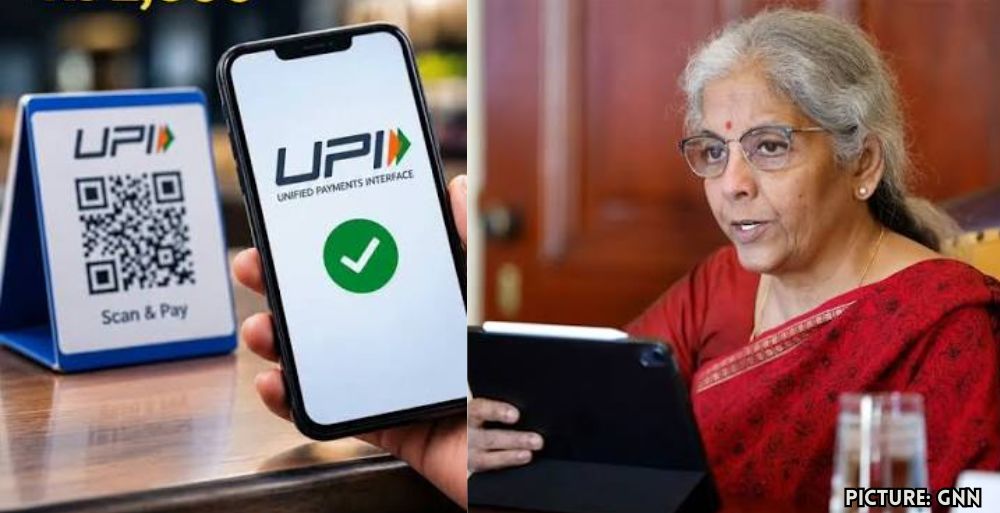
The Indian government announced the introduction of a Merchant Discount Rate (MDR) for Unified Payments Interface (UPI) transactions exceeding Rs 2,000, marking a significant policy shift amid rapid growth in digital payments.
The Indian government unveiled a new Merchant Discount Rate (MDR) regime for Unified Payments Interface (UPI) transactions on September 15, 2023. This development follows a notification issued a day earlier, which prohibits banks and payment service providers from charging fees on UPI transactions up to Rs 2,000. However, transactions above this threshold will incur an MDR of 0.4%, with certain exceptions, impacting a substantial number of UPI users across the nation.
As of now, over 550 million people utilize UPI, which has become a cornerstone of digital payments in India. The introduction of MDR for transactions above Rs 2,000 raises questions about how this fee will affect consumers and the broader UPI ecosystem.
Understanding Merchant Discount Rate (MDR)
MDR is a fee that merchants are required to pay banks and payment service providers for processing digital payments. This fee is essential for maintaining the payments infrastructure, which includes costs related to cloud storage, the payment application, and customer support features. For context, credit cards typically incur an MDR ranging from 1% to 3% of the transaction value, while debit cards generally see fees up to 0.9%.
Since January 2020, UPI has functioned under a zero-MDR regime, allowing consumers to make transactions without incurring additional fees. It is important to note that the newly introduced fee will not apply to person-to-person (P2P) payments, meaning that individuals transferring amounts over Rs 2,000 to friends or family will not be charged.
Implications for Consumers
The introduction of MDR for larger transactions could have significant implications for UPI users. Small merchants, in particular, may choose to pass on these costs to consumers, similar to practices observed with credit card transactions. The government has advised banks to ensure that merchants do not transfer additional MDR costs to consumers, but the effectiveness of this directive remains to be seen.
A poll conducted by LocalCircles, involving over 20,000 respondents, indicated that consumer behavior could shift dramatically if fees are imposed on UPI payments over Rs 3,000. Only 12% of participants stated they would continue using UPI if merchants applied transaction fees, and this percentage further declined to just 2% if consumers were required to cover the MDR.
Government’s Justification for MDR
The government’s rationale for implementing charges on select UPI transactions stems from several factors. The Ministry of Finance has articulated that the rapid growth of UPI necessitates continuous upgrades in cybersecurity, fraud prevention, and overall infrastructure. These enhancements are critical to maintaining the integrity and reliability of the digital payments ecosystem.
Moreover, the government aims to foster market expansion and competition by encouraging more companies to enter the payments space, which requires a sustainable revenue model. The current reliance on subsidies is deemed unsustainable for the future growth of UPI. As such, the government has indicated that a balanced framework is necessary to ensure UPI remains robust and inclusive.
Historical Context and Legislative Changes
The recent announcement follows the passage of the Taxation and Other Laws (Amendment) Bill, 2026, which amended the Payment and Settlement Systems Act, 2007. This legislative change removed previous exemptions from bank charges for electronic payments under Section 269SU of the Income-tax Act, which applied to businesses with a turnover exceeding Rs 50 crore.
Specifically, Section 10A of the Payment and Settlement Systems Act had previously stated that no bank or system provider could impose charges on payments made through electronic means, including UPI and RuPay debit cards. The amendment now opens the door for MDR fees to be applied to UPI and RuPay payments made to large merchants, such as major e-commerce platforms.
Financial Sustainability of UPI
With over 55 crore people utilizing UPI and 703 entities facilitating its transactions, the costs associated with maintaining the digital payments infrastructure are substantial. Estimates suggest that these costs could reach as high as Rs 20,000 crore annually. The Standing Committee on Finance has previously noted that the absence of an MDR makes the UPI ecosystem financially unsustainable in the long term.
In light of these financial pressures, the government has outlined three key reasons for the introduction of charges on selected UPI transactions: the necessity for ongoing cybersecurity upgrades, the need for a self-sustaining revenue model to encourage market competition, and the recognition that reliance on subsidies is not a viable long-term strategy.
Industry insiders have expressed concerns regarding the rising costs associated with securing the payments network, with an increasing focus on fraud prevention and cybersecurity, particularly in light of emerging artificial intelligence technologies. It has been reported that security-related expenditures account for over 20% of the total operational costs of running a UPI platform, a figure that may escalate as new security measures are deployed.