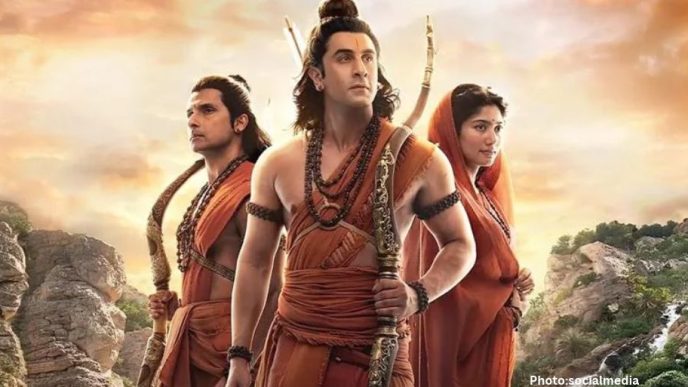

A major film adaptation of the Ramayana, featuring Bollywood star Ranbir Kapoor, is set to release in India, reigniting discussions about the epic’s cultural and political relevance in the country.
A major film adaptation of the Ramayana, one of the most revered epics in Hinduism, is poised to capture the attention of audiences in India and abroad. Titled Ramayana: Rise of a Legend, the film features Bollywood actor Ranbir Kapoor and is scheduled for release on November 9, 2023, just two days before Diwali, one of India’s largest and most significant festivals.
This ambitious project has a staggering budget of $420 million, making it the most expensive film in Indian cinema history, as reported by industry experts. The film premiered in Los Angeles the previous week and has been dubbed into nearly 40 languages, reflecting its global aspirations. Director Nitesh Tiwari noted that artificial intelligence was employed to synchronize the lip movements of characters with the translated scripts, showcasing the film’s technological advancements.
Understanding the Ramayana
The Ramayana, traditionally attributed to the ancient poet Valmiki, chronicles the tale of Prince Ram, who is exiled for 14 years and embarks on a quest to rescue his wife Sita after she is abducted by the demon king Ravana. Accompanied by his brother Lakshman and the monkey god Hanuman, Ram’s journey is both a physical and moral odyssey. The epic has been retold and reinterpreted for centuries across South and Southeast Asia, with significant variations in language and cultural context.
Ram is widely revered by Hindus as an incarnation of the god Vishnu, and his story has become an integral part of Hindu identity and tradition. The Ramayana is not merely a narrative but a cultural artifact that has influenced art, literature, and religious practices in various regions. Its themes of duty, righteousness, and the struggle between good and evil resonate deeply within Hindu philosophy.
The Political Landscape
In contemporary India, the Ramayana has taken on a significant political dimension, particularly in relation to the Hindu nationalist movement. The epic is closely associated with efforts to construct a temple dedicated to Ram in Ayodhya, a city in Uttar Pradesh that many Hindus regard as his birthplace. The site of the proposed temple was previously occupied by a 16th-century mosque built by Mughal emperor Babur, leading to a contentious dispute over its historical and religious significance.
The dispute became a flashpoint in the late 1980s and early 1990s, as Hindu nationalists rallied for the temple’s construction. The demolition of the mosque in 1992 by a Hindu mob resulted in nationwide religious riots, claiming the lives of approximately 2,000 people, predominantly Muslims. This incident marked a turning point in Indian politics, bringing Hindu nationalism into the political mainstream.
In 2019, the Supreme Court of India ruled in favor of Hindu claimants, awarding the disputed site for the construction of a temple, further solidifying the Ramayana’s role in India’s sociopolitical discourse. Prime Minister Narendra Modi inaugurated the grand temple in 2024, symbolizing a culmination of decades of political struggle and the intertwining of religion with governance.
Television and Cultural Impact
Among the numerous adaptations of the Ramayana, a television series broadcast by the state-run Doordarshan in the late 1980s stands out as particularly influential. At a time when visual depictions of the epic were scarce, the series attracted millions of viewers each week, taking on a devotional character for many. Scholars have argued that the popularity of the series contributed to the strengthening of the then-emerging Hindu nationalist movement.
The Bharatiya Janata Party (BJP), which championed the Ayodhya campaign, saw its parliamentary representation increase dramatically, from just two seats in 1984 to 120 in 1991, as the Ramayana debate garnered national attention. This evolution underscores the significant role that cultural narratives can play in shaping political fortunes.
Global Reach and Influence
The Ramayana’s influence extends far beyond India, inspiring a myriad of retellings across South and Southeast Asia in languages such as Tamil, Bengali, Thai, Khmer, and Indonesian. Its characters and narratives are integral to traditional dance, theatre, and shadow-puppet performances in countries including Thailand, Cambodia, and Indonesia. The epic also plays a vital role in Hindu festivals, particularly during Dussehra, which commemorates Ram’s victory over Ravana, and Diwali, which celebrates his return to Ayodhya after his exile.
These cultural observances further illustrate the Ramayana’s enduring significance in shaping Hindu identity and community. In many ways, the epic transcends its religious origins to become a shared cultural touchstone across diverse communities.
As Ramayana: Rise of a Legend prepares for its release, it not only represents a monumental achievement in Indian filmmaking but also serves as a catalyst for discussions about the epic’s profound cultural and political implications in contemporary society. The film’s anticipated success may further influence how the Ramayana is perceived both domestically and internationally, potentially impacting ongoing dialogues surrounding Hindu identity and nationalism in India.