Late one night in May 2024, a flight from Mumbai touched down at Paris’s Charles de Gaulle Airport, carrying a small delegation of Indian filmmakers. Their connecting flight to Nice was due to depart in less than an hour, yet the immigration queues crawled along, and the group resigned themselves to missing it.
Then a uniformed French official appeared. His eyes settled on Ashutosh Gowariker, and he asked in a lilting French accent, “‘Lagaan’… ‘Swades’… ‘Jodhaa Akbar’?” The director, ever modest, simply nodded. Beaming, the officer shook the Oscar-nominated filmmaker’s hand, then parted the queues and escorted the bewildered delegation through immigration, in time for their flight.
I was there to witness it, one more reminder of the extraordinary reach, and the quiet, unstoppable magic, of Indian cinema.
Today in a world drowning in the roar of guided missiles and the cold arithmetic of hard power, some forces move quietly and last far longer. Armies hold territory for a specific period. A song, once loved, holds hearts for generations after generations. India has understood this, perhaps without ever planning to. For the ancient civilization, its most enduring gift to humanity is not a weapon, a treaty or a trade route. It is its soft power – spirituality, cultural heritage, and the arts. Indian cinema: a river of color, music, and emotions has flowed across every border ever drawn and won hearts and minds for decades.
The secret of this reach lies in what Indian cinema chooses to care about. Its stories are rarely about one country’s politics but about lovers separated by wealth or circumstance, sons choosing duty over desire, daughters refusing to surrender the dignity of their family, mothers sacrificing everything, fathers doing the heavy lifting, and a people who rise in the face of all odds.
These are not just Indian stories. They are universal, told with an emotional openness that audiences from Beijing to Boston, Lima to London, Mombasa to Melbourne, and Tehran to Tashkent recognized at once. Then there is the music. Indian songs and compositions are played in homes that have never seen India, yet felt they know her. A melody does not need a translator. It needs only a heart willing to listen.
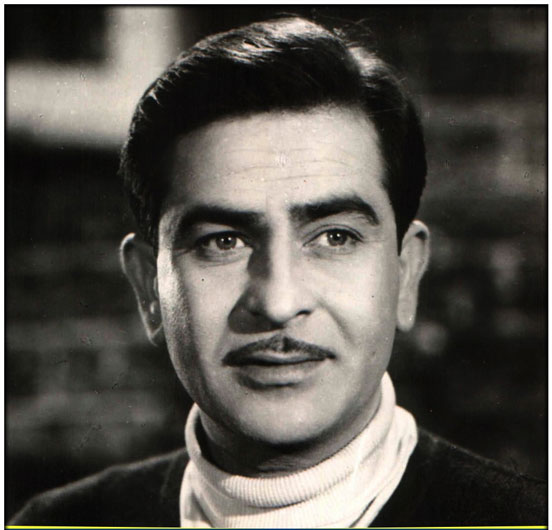
At the heart of this miracle stood our film stars, giants who carried India on their shoulders without ever knowing it. Raj Kapoor is the first name from Indian cinema that went global. With ‘Awara’ and ‘Shree 420’, he gave the world the image of the tramp with a good heart and a bruised pride, a poor man whose dream felt universal. The Soviet Union embraced him with extraordinary warmth, and audiences from Russia to the Middle East, from Iran to the shores of Israel, found their own hopes in his. He made the world sing, all at once. A song about Japanese shoes, English pants, a Russian hat, and an Indian heart became a small anthem of shared humanity.
He was not alone. Mehboob Khan’s ‘Mother India’ gave world cinema one of its most unforgettable portraits of endurance, and the film reached the final five at the Academy Awards. Satyajit Ray’s quiet masterpiece ‘Pather Panchali’ won a special prize at Cannes in 1956 and taught the West that Indian cinema could be profound as well as popular. Filmmakers Chetan Anand, Bimal Roy, Rajbans Khanna, Kwaja Ahmed Abbas, Mrinal Sen, Adoor Gopalakrishnan, Shaji N Karun and Goutam Ghose also earned fame in Cannes, a continuing reminder that India is a nation of great storytellers.
Our filmmakers and stars are our ambassadors, practising cultural diplomacy long before the term was ever coined. In our own time, first Kabir Bedi and Persis Khambatta and then Shah Rukh Khan and Aishwarya Rai Bachchan became a symbol of aspiration for millions who have never set foot on Indian soil. Film producers Ismail Merchant and Ashok Amritraj and filmmakers Shekhar Kapur, Mira Nair and Gurinder Chaddha transformed India’s image abroad with their body of work.
Today that influence is multiplying. Streaming has dissolved the old limits of distribution, and Indian technical talent now shapes visual effects for the biggest films in the world. The Oscar for Best Original Song awarded to Naatu Naatu from ‘RRR’ in 2023, the Academy Award for ‘The Elephant Whisperers’, the Grand Prix won at Cannes in 2024 by Payal Kapadia’s ‘All We Imagine as Light’, and Aditya Dhar’s ‘Dhurandhar’ as Netflix’s most-watched non-English film globally showed that Indian storytellers always knew their audiences and the world’s festivals and distributors had finally caught up. For India to stand there as a confident civilization presenting its stories is a fitting tribute to everyone who built this legacy, from the silent-era pioneers to the hundreds of thousands of behind-the-scenes technicians who remain hidden in the credits.
Now it is Indian cinema’s global moment.
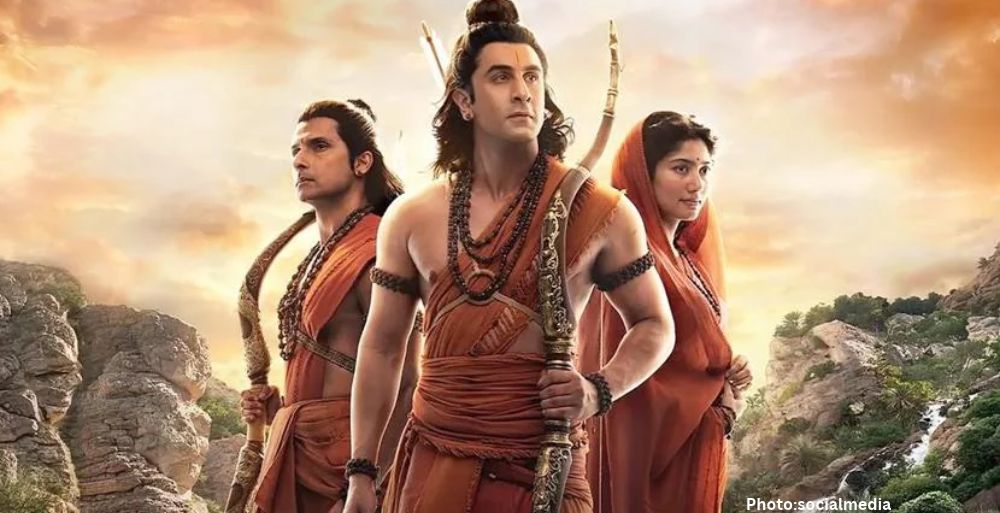
No project captures India’s cinematic ambition better than Namit Malhotra’s ‘Ramayana’ being distributed globally by Sony Pictures. Few stories are older or more beloved. For thousands of years, the tale of Rama, Sita, Hanuman and Ravana has shaped the moral imagination of billions, travelling from India across Southeast Asia, where its characters live on in dance, shadow puppetry and temple carvings from Indonesia to Thailand.
Malhotra, who has spoken of setting out more than a decade ago to bring this epic to the big screen, has approached the task with the discipline of someone who understands tradition, economics and technology. He has built the film as a two-part saga directed by Nitesh Tiwari, with music by multiple Oscar winners A R Rahman and Hans Zimmer. Ranbir Kapoor plays Rama, Sai Pallavi plays Sita, and Yash plays Ravana, supported by a large ensemble that includes Sunny Deol as Hanuman. It is built for the biggest formats in cinema, including IMAX.
Equally significant is how it is being released. Rather than treating the world as an afterthought, the makers have planned a truly global rollout. ‘Ramayana: Part One’, after a sensational premiere at the Academy Theatre in Los Angeles, reaches international audiences on Friday, November 6, 2026, with India celebrating its release just before Diwali, which commemorates Rama’s own homecoming. The timing could hardly be more poetic. A story about light defeating darkness and about duty honored at great cost lights up 59,000 screens in over 100 countries exactly as the lamps are lit for the festival of lights. Part Two follows at Diwali 2027.
Earlier generations of Indian cinema travelled the world almost by accident, carried by the charm of a song or the face of a star. Ramayana travels by design, with the confidence of a civilization that knows what it has to offer. The ‘Ramayana’ has the potential to do what Raj Kapoor’s films did for the postwar world and what Shah Rukh Khan and Aishwarya did for the globalized one: create admiration for Indians and expand brand India far beyond our borders.
Indian cinema’s international march began with a tramp singing on a Moscow screen, and now with an epic of gods and kings lighting up IMAX theatres across continents, the journey has never really been about borders. It has been about belonging. Ramayana is a fitting way to say it, in song, in color, in tears and in joy.
He can be reached at [email protected])