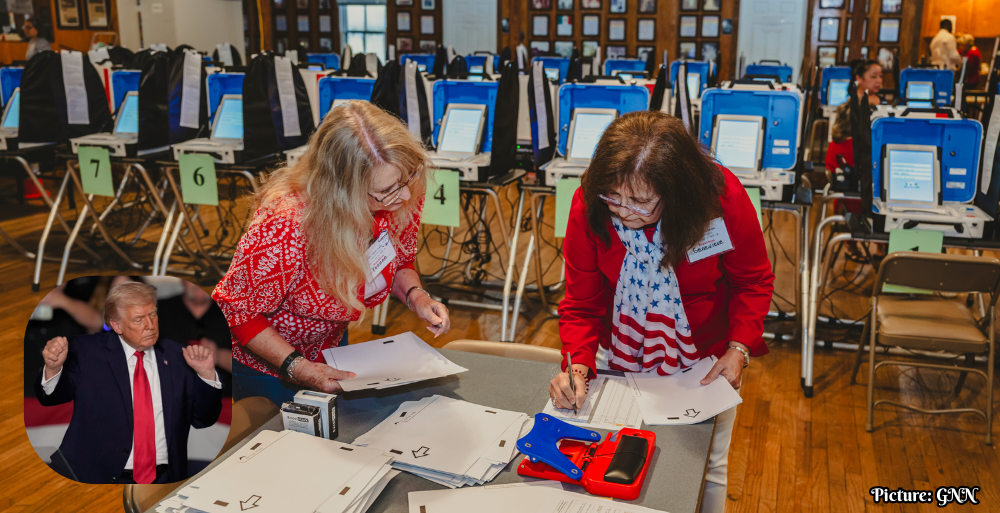
The 2026 midterm elections are poised to be significantly influenced by President Trump’s grip on the Republican Party, heightened enthusiasm among Democratic voters, strategic redistricting efforts, and contrasting financial resources between the two major parties.
As the United States gears up for the 2026 midterm elections scheduled for November 8, the political landscape is being shaped by several interrelated factors that will determine the future balance of power in Congress and state legislatures. These elections will not only affect control of the House of Representatives and the Senate but will also have profound implications for numerous gubernatorial races across the nation.
Historically, midterm elections serve as a referendum on the incumbent president’s performance. Currently, President Donald Trump’s approval ratings have dipped to a second-term low of approximately 38%, a significant drop that is impacting perceptions of his party’s prospects. Contributing factors include ongoing international conflicts, particularly in the Middle East, and economic challenges that have altered voter sentiment, shifting a once-strong advantage for Trump into a liability.
Democratic Voter Enthusiasm
Despite the challenges posed by Trump’s declining approval ratings, Democratic leaders are expressing optimism as they prepare for the upcoming elections. Recent primary turnout suggests a heightened level of enthusiasm among Democratic voters. For instance, in the recent gubernatorial primaries in Georgia, nearly 150,000 more Democrats participated than Republicans, indicating a potentially favorable environment for the Democratic Party as it heads into the general election.
This enthusiasm has manifested in a series of special elections, which have typically served as bellwethers for broader electoral trends. However, while Democrats may be energized, they still face significant hurdles, including persistent branding issues and internal divisions that could jeopardize their electoral chances in November.
Redistricting and Structural Advantages
While Democrats are rallying their base, Republicans have secured a notable structural advantage through strategic redistricting efforts. Following a succession of favorable rulings from state and federal courts, Republicans have drawn congressional maps that lean more favorably toward their candidates. This mid-decade redistricting has become a contentious issue, with Democrats accusing Republicans of undermining fair representation through gerrymandering.
The implications of recent Supreme Court decisions that have narrowed the Voting Rights Act have been significant. These rulings have empowered Republican-led states to expedite redistricting efforts without facing the same level of scrutiny as in previous years. For example, a newly gerrymandered map in Virginia was recently invalidated by the state’s Supreme Court, which eliminated potential Democratic gains in four districts, highlighting the precarious nature of electoral dynamics in battleground states.
Trump’s Influence Over the Republican Party
President Trump’s influence over the Republican Party remains a critical consideration in the upcoming midterms. Even with his popularity waning among independent and Democratic voters, Trump continues to dominate Republican primaries. His endorsement of Texas Attorney General Ken Paxton in a high-stakes primary runoff against incumbent Senator John Cornyn illustrates his ongoing control over the party’s base. If Paxton succeeds, he would become the second Trump-backed candidate to oust a sitting senator this election cycle, following the defeat of Senator Bill Cassidy in Louisiana.
Trump’s ability to shape primary outcomes has led to the removal of several incumbents viewed as insufficiently loyal to his agenda. This trend has been particularly evident in states like Indiana, where Trump-backed challengers successfully unseated five Republican state senators who opposed redistricting efforts favoring the Republican Party.
Financial Disparities in Campaigning
Financial resources are a critical component of any electoral campaign, and current fundraising trends reveal a stark disparity between the two parties. Democratic candidates have outperformed their Republican counterparts in fundraising for key Senate races, with figures such as James Talarico, the Democratic nominee for Senate in Texas, emerging as one of the party’s leading fundraisers. Despite this, the Republican Party holds a substantial financial edge, with an estimated $600 million more in resources available for campaign activities as of March 2026.
This financial advantage can be attributed to several factors, including the Democratic National Committee’s struggles to raise funds and the substantial war chest amassed by Trump’s super PAC, which has exceeded $356 million. Additionally, Republicans are likely to benefit from significant contributions from high-net-worth individuals in emerging industries such as cryptocurrency and artificial intelligence, which are expected to bolster their campaign efforts as the elections approach.
Conclusion: Implications for the Future
As the 2026 midterm elections draw closer, the interplay of Trump’s influence, Democratic enthusiasm, strategic redistricting, and financial disparities will play a pivotal role in shaping the electoral landscape. While Democrats are hopeful for favorable outcomes based on recent trends in voter engagement, the structural advantages secured by Republicans through redistricting and their substantial financial backing could present formidable challenges. The results of these elections will not only have immediate implications for control of Congress but will also set the stage for the political dynamics leading into the 2028 presidential election cycle, marking a crucial moment in American political history.