WASHINGTON — Public health advocates and legal watchdog groups are raising alarms over a newly proposed regulation from the Environmental Protection Agency (EPA) that would dismantle federal requirements forcing state agencies to publicly disclose air pollution permits for “minor” emission sources. If finalized, the rule would make public notice and public comment periods voluntary for state and local regulators reviewing permits for industrial facilities, including the rapidly expanding network of data centers powering the artificial intelligence sector. Environmental attorneys warn that shifting disclosure decisions to state authorities could allow high-emitting technology infrastructure projects to receive air quality approvals behind closed doors without community knowledge or judicial recourse.
WASHINGTON — The Environmental Protection Agency has formally closed the public comment period on a proposed administrative rule change that could alter decades of federal transparency obligations under the Clean Air Act. The proposed rule targets the Minor New Source Review (NSR) program, fundamentally shifting how state regulators handle public disclosure when industrial developers seek permits to release air pollutants.
Under existing federal regulations established more than 50 years ago, state environmental agencies are mandated to provide public notification and a minimum 30-day public comment period before issuing construction permits for minor sources of air pollution. The Trump administration’s proposed overhaul would eliminate that federal baseline requirement. Instead, it delegates full discretion to state and local air quality control boards to decide whether, when, and how public participation should occur within their jurisdictions.
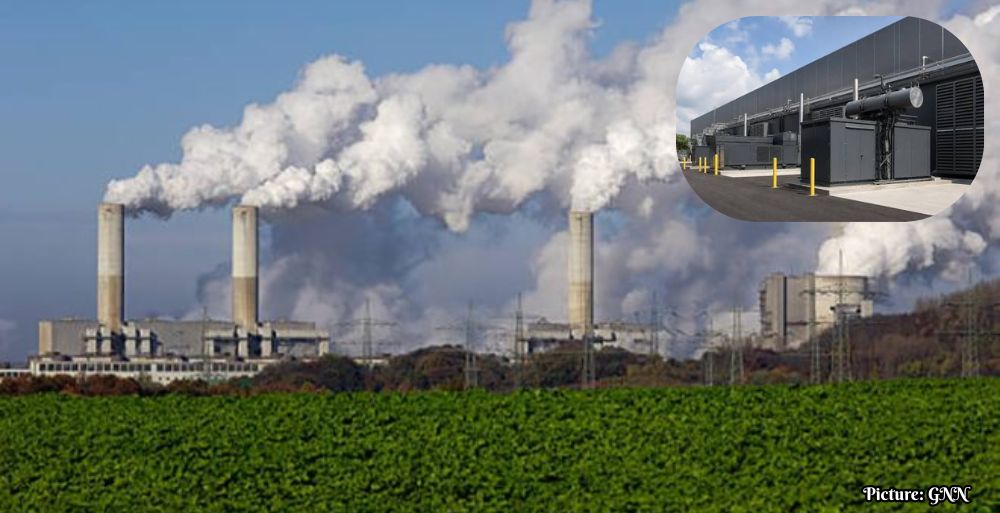
While the regulatory language applies broadly to minor industrial facilities nationwide, environmental law specialists emphasize that the primary beneficiary of the policy shift will be the data center industry. Amid an unprecedented national surge in computing facilities designed to supply the computational capacity required for artificial intelligence applications, technology developers are installing tens of thousands of heavy-duty diesel generators and industrial gas turbines across the country to serve as backup power or primary off-grid generation.
Without mandatory federal notice requirements, public health experts contend that local residents could be left entirely unaware of major pollution sources being constructed near their neighborhoods.
The Mechanics of “Minor Source” Regulatory Permitting
The Clean Air Act differentiates between major stationary sources of pollution—such as utility-scale coal plants, massive chemical refineries, and large natural gas facilities—and “minor” sources. Major sources generate emissions exceeding specific federal thresholds, triggering direct regulatory oversight, rigorous environmental reviews, and mandated technology installations enforced by the EPA.
By contrast, the EPA delegates the administration of minor pollution permits to state authorities. To qualify as a “minor” source, a company must demonstrate that it will implement sufficient pollution control measures to ensure its projected emissions remain below major source thresholds, thereby avoiding immediate federal oversight. These minor permits are designed to ensure that industrial operations still abide by national health standards for six criteria air pollutants regulated under the Clean Air Act: ground-level ozone, particulate matter, carbon monoxide, lead, sulfur dioxide, and nitrogen dioxide.
Data centers produce substantial quantities of nitrogen oxide (NOx)—a chemical compound that reacts with sunlight to form ground-level ozone—as well as carbon monoxide, fine particulate soot, and hazardous heavy metals. Despite the high collective volume of these emissions, technology companies frequently avoid major source review through a practice known in regulatory law as synthetic minor permitting.
Rather than submitting a single comprehensive air permit application for a massive data center complex containing dozens of emergency generators, developers frequently segment permit requests. By submitting individual applications for each generator or turbine array, companies keep each submission below major source thresholds. This strategy allows multimillion-dollar computing centers to be reviewed under state-level minor source programs, avoiding lengthy, expensive, and legally vulnerable federal EPA reviews.
“Some of the largest polluting sources in the Midwest, including data centers, steel plants, and fossil fuel-fired power plants, are being allowed to emit harmful air pollutants under so-called ‘minor source’ permits,” said Jessica O’Donnell, a senior attorney at the Environmental Law and Policy Center, highlighting the growing reliance on these provisions. “The public deserves to weigh in on such permits to ensure these industrial sources are given appropriate emissions limits and stick to them”.
Regulatory Subsidies and Economic Competition Among States
Under the Clean Air Act, public disclosure mechanisms have long functioned as a key tool for environmental watchdog organizations, legal aid clinics, and investigative journalists. Public notices allow independent experts to analyze complex modeling data, verify whether projected emissions comply with federal limits, and identify math or modeling errors before permits are granted. Past litigation brought by environmental law clinics has revealed numerous instances where minor source permits failed to include legally required pollution controls or underreported potential emissions.
Joe Goffman, a former assistant administrator for the EPA’s Office of Air and Radiation under the Biden administration who co-authored technical comments opposing the rule on behalf of the Environmental Protection Network, warned that the Clean Air Act was constructed to guarantee a uniform public right.
“The Clean Air Act is supposed to offer an ironclad promise to give the entire U.S. public a voice on these issues,” Goffman observed, describing the structural impact of the rule change. “The administration is basically saying: ‘You all may have thought this was an ironclad promise, but it no longer is'”.
Goffman pointed out that because many state political establishments actively compete against one another to attract lucrative big tech data centers—offering massive tax abatements, subsidized infrastructure, and land incentives—most state economic development agencies will be reluctant to enforce voluntary public disclosure rules.
By eliminating the federal requirement for notice, the EPA effectively allows state governments to offer secrecy as a competitive advantage. Goffman characterized this administrative flexibility as a form of “regulatory subsidy” intended to shield tech firms from public scrutiny, prolonged legal battles, and community pushback.
This dynamic is especially acute as the administration seeks to accelerate the deployment of “islanded” data center facilities—large-scale computational centers that rely on dedicated, on-site natural gas turbines or diesel arrays rather than drawing power directly from the regional electrical grid. Because islanded systems operate independently of the public grid, their local air pollution footprint can be significantly higher than standard grid-connected facilities.
Federal Permitting Goals vs. Transparency Advocates
The EPA has defended the proposed rule as a necessary administrative modernization aimed at cutting bureaucracy and empowering local regulatory bodies. In its official regulatory filing published in the Federal Register, the agency asserted that the revision is designed to streamline development across key industrial sectors.
The proposal is “intended to reduce administrative burden and responsibly speed up permitting, supporting American economic development and energy dominance,” the agency wrote, adding that the framework puts state agencies “most familiar with local issues in the driver’s seat”.
In a formal statement addressing criticism from public health groups, an EPA spokesperson emphasized that the administrative shift does not weaken environmental compliance standards. “The proposal does not alter emission standards or weaken environmental protections,” the agency stated, arguing that facilities will still be legally required to meet applicable ambient air quality thresholds regardless of public notice requirements.
However, regulatory veterans contend that separating environmental limits from public oversight severely undermines enforcement capacity. Data consistently demonstrates that environmental compliance is significantly higher in regions where community groups and public watchdogs actively monitor permit applications and air monitoring records.
“This proposal continues efforts by the current administration to turn its back on the fundamental EPA principle of transparency,” said Mike Koerber, a former deputy director of the EPA’s Office of Air Quality Planning and Standards. Koerber noted that without public participation, state regulators face little external pressure to rigorously challenge corporate assumptions regarding projected emission totals.
With the public comment window officially closed, the EPA is evaluating administrative feedback before issuing a final rule. A coalition of national environmental organizations, public health advocacy groups, and legal aid clinics has already signaled intentions to file legal challenges in federal appellate court the moment the rule is finalized, setting up a major legal test over the constitutional and statutory limits of federal administrative discretion under the Clean Air Act.