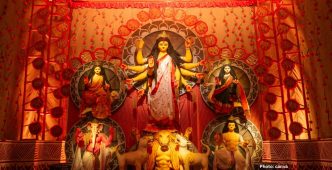
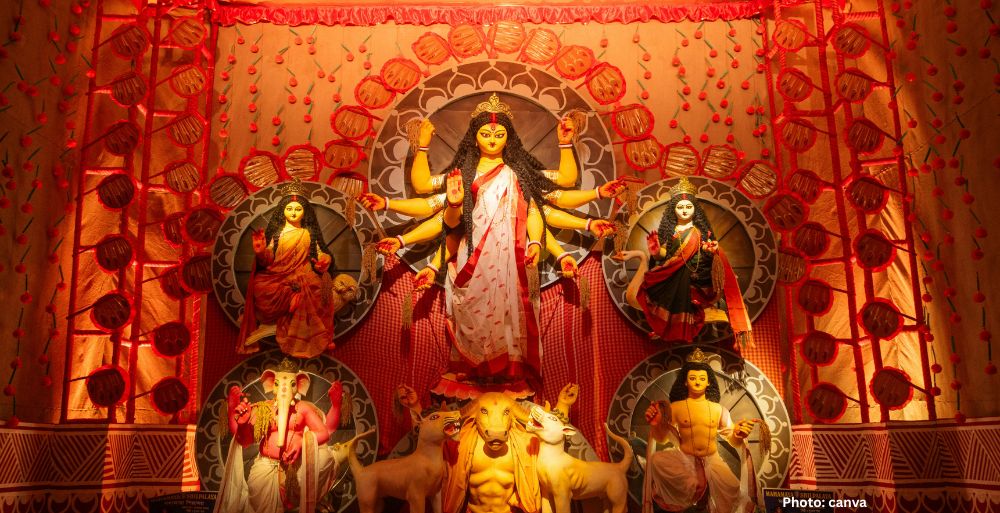
Thousands gathered in Times Square for the Durga Puja celebration, a cultural and spiritual event marking the traditions of Bengal.
NEW YORK — Thousands of individuals from across the East Coast descended upon Times Square on October 10 and 11, 2026, to participate in the annual Durga Puja celebration, an event that has become a focal point for the Bengali community in the United States. Organized by the Times Square Durga Puja Festival Association, this year’s festival, themed “Mahamilan 2026,” was supported by partners including Asha Home Square and Asha Restaurant.
Now in its second year, the festival offered a blend of religious observance and cultural expression, drawing approximately 75,000 attendees over the two days, according to Biswajit Saha, the festival’s founder. The event commenced with Mahalaya, a day of prayers and rituals that marks the beginning of Devi Paksha, a significant period in the Hindu lunar calendar devoted to honoring the goddess Durga.
“It was amazing to see people traveling from Washington, D.C., Connecticut, New Jersey, Philadelphia, Massachusetts, and even Rhode Island to attend the opening day,” Saha told News India Times. Visitors began arriving as early as 8:00 AM for morning prayers, bringing offerings of traditional khichadi prasad, a dish made of rice and lentils.
Cultural Performances and Rituals
The festivities included a variety of performances and religious ceremonies. The Mahalaya morning featured a recitation of the Chandi Path by Satyam Roychowdhury, alongside a Bhagavad Gita recitation performed by children and teenagers under the direction of Sutapa Chowdhury. Additionally, the Sangeet Sadhana Academy, led by Malabika Chatterjee, showcased musical talents.
Special guests on the first day included Dr. Prince Mario-Max Schaumburg-Lippe, an Austrian-German television host and actor, and his mother Dr. Antonia Prinzessin zu Schaumburg-Lippe. India’s Consul General in New York, Binaya Srikanta Pradhan, attended with his family, while diplomats from various countries and corporate representatives also participated. A video message from the Chief Minister of West Bengal was shared, as well as a message from New York City Mayor Mamdani, who was unable to attend.
Observances on the Second Day
Despite inclement weather on October 11, the second day of the festival attracted a large crowd. The observances included Maha Ashtami, Maha Navami, and Bijoya Dashami, traditional ceremonies featuring pushpanjali (floral offerings), the distribution of shantijal (blessed water), and farewell rituals related to the immersion of the Goddess. The popular Sindoor Khela ceremony, where participants apply vermilion powder in celebration, saw significant engagement from attendees.
The cultural program on Sunday showcased a solo dance performance by Sudeshna Saha and a stage presentation titled “Spring in Vrindavan,” choreographed by Tania Chandra and performed by the visiting Tatha artist group from Connecticut. Other highlights included a musical performance by Sabita Das, and a piece titled “Joy Maa Durga,” directed by Manjeya Smriti, presented by the Bangladesh Academy of Fine Arts. The Nrityanjali group’s Dhunuchi Naach, featuring dancers with lighted incense burners, captivated the audience.
Recognizing Community Contributions
The festival committee recognized several individuals for their contributions to the community, honoring Dr. Mridul Pathak, Ashok Rakshit, Mini Awan, and Joyprakash Biswas for their distinguished careers. Additionally, six community organizations that have played pivotal roles in sustaining Durga Puja celebrations in the United States for over 50 years were acknowledged. These include Bay Area Prabasi Inc. of California; the Bengali Association of Greater Chicago; the Bengali Cultural Society of Ohio; the East Coast Durga Puja Association of New York; Kallol of New Jersey; and Pragati of Pennsylvania.
“These organizations have been instrumental in preserving Bengali traditions and culture for future generations,” Saha remarked, emphasizing the collaborative efforts involved in organizing the festival. He credited the success of the event to association president Shashadhar Howlader, secretary Nirupama Saha, treasurer Samyabrata Dasgupta, and a dedicated team of thirty-five volunteers, which included students from institutions such as Columbia University and New York University.
Literature and Cultural Contributions
A special literature and culture magazine titled Sharadiya 2026, edited by Saha, was published in conjunction with the festival. This edition features contributions from writers based in Bangladesh, West Bengal, India, and the United States, highlighting the literary and cultural dialogue among these communities.
The festival concluded with an emotional farewell, honoring the goddess Durga and marking the end of the celebrations. As the community came together to reflect on the significance of the event, the Durga Puja festival in Times Square reaffirmed its role as a vital cultural touchstone for Bengalis and others in New York City.