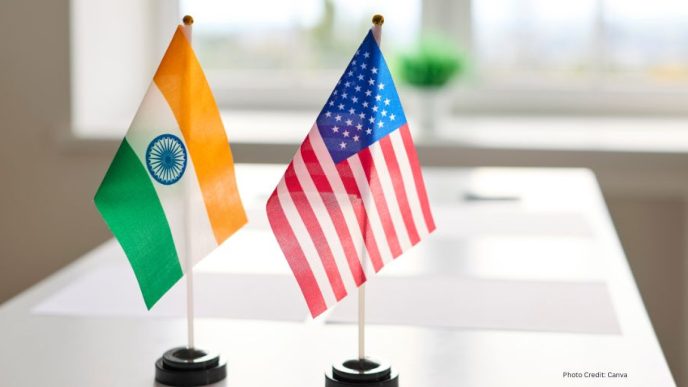

The Department of Homeland Security’s new rule halting automatic extensions of employment authorization documents raises significant concerns for immigrant communities, particularly those from India, as 63 lawmakers urge expedited green card processing.
Washington — The Department of Homeland Security (DHS) has enacted a controversial rule that terminates automatic extensions of employment authorization documents (EADs) for certain immigrant categories, notably affecting Indian H-4 visa holders and individuals awaiting employment-based green cards. This final rule, which was published in the Federal Register on October 14, formalizes an interim regulation first introduced on October 30, 2025.
Under the prior policy, eligible applicants could work for up to 540 days while their EAD renewal applications were pending, allowing them to maintain employment without interruption. The new regulation, however, eliminates this provision, potentially forcing affected workers to halt their employment if their current EADs expire before their renewal applications are processed.
Policy Objectives and Impacts
DHS officials have stated that the intent behind the new policy is to “enhance benefit integrity and prioritize the proper vetting and screening of aliens before granting a new period of employment authorization.” While these goals may resonate with some stakeholders, the immediate implications for affected individuals and families are severe, especially for the Indian community. Indian nationals represent a significant portion of the employment-based immigration backlog, primarily due to country-specific caps that limit green card issuances.
The repercussions of the regulation are profound. For families impacted by these changes, the elimination of automatic work permit extensions could lead to sudden job losses, disruptions in household income, and heightened uncertainty about their employment status. Importantly, the regulation does not affect certain employment authorization extensions available to international students under the STEM Optional Practical Training program or the H-1B cap-gap provisions, which provide some relief for that demographic.
Congressional Response and Broader Implications
In reaction to the new rule, a bipartisan coalition of 63 members of Congress, spearheaded by Representatives Yvette Clarke and Raul Grijalva, has called on U.S. Citizenship and Immigration Services (USCIS) to expedite the processing of pending green card applications. The lawmakers articulated concerns that many immigrants lawfully residing in the United States face disruptions in health insurance coverage and other critical hardships while awaiting decisions on their applications.
This appeal underscores ongoing challenges related to the lengthy backlogs in employment-based immigration, which disproportionately affect Indian applicants and their families. The congressional push for reform comes amid broader discussions regarding the state of U.S. immigration policy, its efficacy, and its implications for foreign nationals who contribute significantly to the U.S. economy.
Legal Challenges and H-1B Visa Fees
Compounding the complexities of the current immigration landscape is the unresolved legal dispute surrounding a proposed $100,000 fee for certain H-1B visa applications, a measure put forward during the Trump administration. On September 30, U.S. District Judge Haywood S. Gilliam Jr. of the Northern District of California vacated policies implementing this fee, asserting that they lacked proper legal grounding. Following this ruling, the administration promptly appealed the decision to the U.S. Court of Appeals for the Ninth Circuit on October 9.
A joint case management statement in this matter is due in district court on October 20, with a case management conference scheduled for October 27. Given that Indian nationals comprise the largest share of H-1B visa beneficiaries, changes to the program are of particular significance for Indian technology professionals and the U.S. companies that employ them. The outcome of this litigation could have far-reaching consequences for the future of the H-1B visa program and its impact on the U.S. labor market.
Future Considerations and Community Impact
The convergence of the cessation of automatic work permit extensions, the congressional appeals regarding green card processing delays, and ongoing legal challenges surrounding H-1B visa fees paints a picture of uncertainty for foreign professionals and their families in the United States. These developments may lead to serious ramifications for thousands of immigrants, particularly those from India, who play vital roles across various sectors of the U.S. economy.
As the immigration policy landscape continues to evolve, advocates for immigrant rights will likely intensify their efforts to address these concerns. The implications of these regulations extend beyond individual families; they reflect broader questions about the United States’ commitment to a fair and efficient immigration process that recognizes the contributions of immigrants to the nation’s workforce and economy. The need for comprehensive immigration reform remains urgent, as policymakers grapple with the balance between national security, economic needs, and humanitarian considerations.