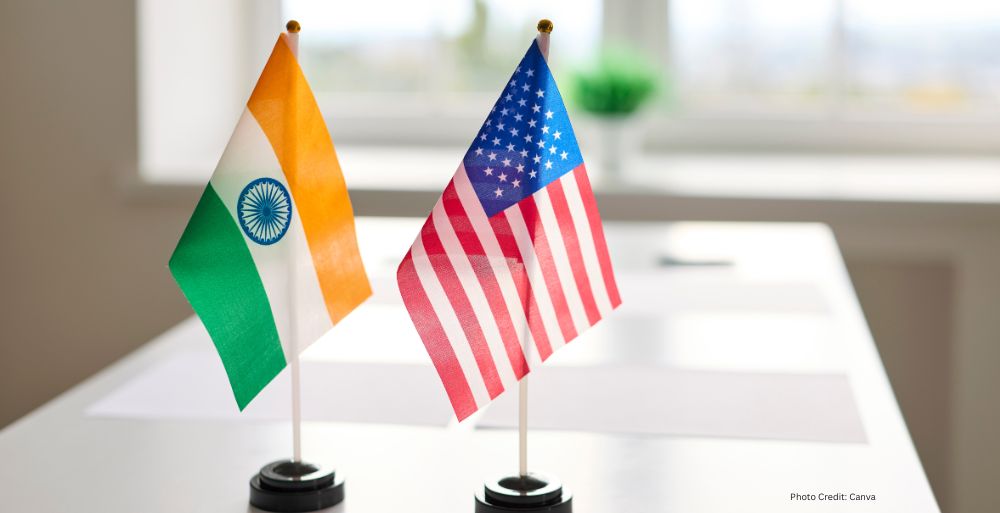
The U.S. aims to more than double its trade with India, reaching over $500 billion by 2029, as both nations seek to enhance economic ties across multiple sectors.
The United States has set an ambitious target to increase bilateral trade with India to over $500 billion within the next three years, a move seen as part of a broader strategy to strengthen economic relations between the two nations. U.S. Ambassador to India, Sergio Gor, made the announcement during the Freedom 250 reception in Mumbai on October 20, 2023.
Ambassador Gor noted that the current level of bilateral trade has already reached a record high of approximately $240 billion, creating a robust foundation for further economic collaboration. He emphasized that President Donald Trump’s directive was clear: to achieve tangible results rather than engage in mere dialogue. “In their recent discussions, President Trump and Prime Minister Modi reaffirmed that commitment,” Gor stated. “Today, our bilateral trade has shattered records, reaching over $240 billion. We have an ambitious goal. We are laser-focused on driving that number past $500 billion in the next three years.”
Strategic Sectors of Expansion
The proposed trade expansion is expected to encompass a variety of strategic sectors, including semiconductors, critical minerals, energy, defense, and advanced artificial intelligence. Ambassador Gor characterized the partnership as not just transactional but as a multifaceted collaboration extending from deep-sea infrastructure to commercial space exploration. “The US-India partnership does not move in a flat line; it climbs,” he explained. “It begins in the ocean depths with critical data infrastructure. It rises through our factories, labs, and research hubs, and it extends into deep space through commercial exploration.”
At the Freedom 250 event, Gor reflected on the historical relationship between the two nations, suggesting that the next 250 years could yield even more remarkable developments than those of the past. He also highlighted Mumbai’s significance as a hub for American businesses, noting that over 500 major American companies, including technology giants like Google, Meta, and IBM, have established operations in the city.
Economic Confidence
According to Gor, American institutional investors represent the largest single block of foreign capital in Indian equities traded on Mumbai’s stock exchanges, reflecting a substantial vote of confidence in India’s economic trajectory. “That is not an accident. That is a massive vote of confidence in India’s economic trajectory,” he remarked, underscoring that the current level of investment and cooperation was not built overnight.
Secretary of State Marco Rubio, who is in India for a three-day visit from October 20-22, also underscored the importance of the bilateral relationship. He described the strategic alignment between the U.S. and India as “extraordinary.” Rubio acknowledged that while the two countries may not always see eye to eye on every issue, their shared interests provide a foundation for significant collaboration on global matters. “No two nations on Earth will ever be perfectly aligned on every issue, and there will be times and points of disagreement,” he stated. “But on the core issues that matter, the core issues that define the national interests of both India and the United States, the alignment between our countries is extraordinary.”
Demographic and Economic Weight
Rubio elaborated on the potential of the partnership, citing the demographic and economic weight of both countries. India is approaching a population of 1.5 billion, while the U.S. holds the title of the world’s largest economy. He argued that closer cooperation could enable both nations to significantly influence the trajectory of global affairs in the 21st century. Furthermore, Rubio advocated for more frequent engagements between Washington and New Delhi, branding India as one of America’s most important geopolitical partners.
Trade Negotiations
The ambitious trade goals emerge amid ongoing negotiations for an interim trade agreement between India and the U.S. In February, the two nations announced a framework aimed at enhancing market access and reducing trade barriers. According to India’s Commerce Ministry, this proposed agreement encompasses various sectors, including textiles, leather, engineering goods, and pharmaceuticals. However, several tariff concessions are still dependent on the successful conclusion of the agreement, with final terms yet to be determined.
Official data from the Ministry of Commerce and Industry indicates that India’s merchandise exports to the U.S. reached approximately $87.31 billion in the 2025-26 financial year, while imports stood at a significantly lower figure. The pursuit of a more balanced trade relationship is likely to be a key focus as both nations move forward with negotiations.