
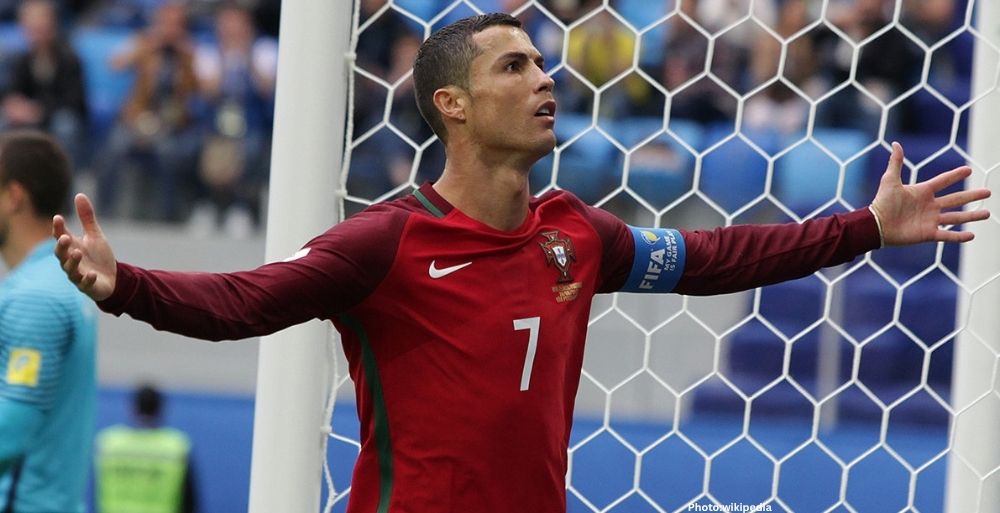
Cristiano Ronaldo leads the list of the world’s highest-paid athletes for the 2025–26 season, earning an estimated $300 million, significantly more than his closest competitor, Canelo Álvarez, who earned $170 million.
The financial landscape of professional sports is increasingly dominated by a select group of elite athletes, with earnings reaching unprecedented levels. According to a recent report by Forbes, Cristiano Ronaldo has emerged as the highest-paid athlete for the 2025–26 season, amassing an estimated $300 million in total earnings. This figure not only places him well above his competitors but makes him the only athlete to surpass the $200 million mark in this period.
Breakdown of Earnings
Ronaldo’s earnings for the season are divided into two primary categories: $235 million generated from on-field activities, primarily through his contract with the Saudi Pro League, and an impressive $65 million from off-field ventures such as endorsements and sponsorships. This substantial income positions him approximately $130 million ahead of his closest rival, Mexican boxer Canelo Álvarez, who earned $170 million, with the vast majority of his income—$160 million—coming from his in-ring performances.
In third place is Argentine soccer star Lionel Messi, who earned a total of $140 million for the season. Messi’s earnings reflect a balanced approach, as they are evenly split between on-field and off-field income. Notably, Messi made headlines in 2023 when he turned down a staggering $1 billion offer from a Saudi soccer league, opting instead to join Inter Miami in Major League Soccer. This decision underscores his desire to continue his career in a competitive environment while also expanding his brand in the U.S.
Sports Representation in Earnings
The analysis of the top earners highlights a significant representation from two sports: soccer and basketball. Each sport includes three athletes among the top ten, with Ronaldo, Messi, and Karim Benzema representing soccer, while LeBron James, Stephen Curry, and Kevin Durant represent basketball. The remaining four positions are occupied by athletes from boxing, baseball, golf, and Formula 1, illustrating the diverse landscape of professional sports.
By nationality, the United States leads the representation with three athletes from the NBA, while other countries represented include Portugal, Mexico, Argentina, Japan, Spain, France, and the United Kingdom. It is important to note that all athletes in the top ten are male, raising important discussions about gender equity in sports earnings and the visibility of female athletes in professional sports.
Diverse Income Sources and Trends
The income sources for these athletes reveal significant variability depending on their sport. Soccer and basketball athletes typically combine substantial salaries with extensive endorsement portfolios, whereas athletes in sports such as boxing and golf tend to rely more heavily on prize money and competition-related income. For example, baseball player Shohei Ohtani earned an estimated $127.6 million in the 2025–26 season, yet only $2.6 million of that came from on-field performance. This discrepancy is largely due to his record $700 million contract with the Los Angeles Dodgers, which is structured to defer payments until 2034. As a result, Ohtani’s current earnings are primarily derived from lucrative endorsements.
Similarly, LeBron James reflects a broader trend where a substantial portion of his income, approximately 62% of his total earnings of $137.8 million, comes from off-field deals. This trend highlights the increasing monetization opportunities available to athletes beyond direct competition.
Comparative Analysis of Earnings
In contrast, several athletes on the list, including Karim Benzema, Canelo Álvarez, and Jon Rahm, earned nearly all of their income from competition-related activities. Benzema’s earnings were comprised of 96% on-field income, while Álvarez and Rahm earned 94% and 91%, respectively, from their respective sports. Messi, who maintains a balanced income profile, sees a 50-50 split between his salary and commercial income, illustrating his blend of competitive and market-driven financial success.
Collectively, the earnings of the ten highest-paid athletes for the 2025–26 season exceed $1.4 billion, highlighting the immense financial clout of elite sports figures. Such concentration of wealth among a small group of athletes raises critical questions about income disparity in sports and the broader implications for emerging athletes and leagues.
Implications for the Future
The evolving landscape of athlete earnings reflects not only individual achievements but also the increasing commercial viability of sports on a global scale. This dynamic environment fosters competition among athletes, sponsors, and leagues, driving innovation in marketing and endorsement strategies. As the financial stakes continue to rise, the potential for emerging athletes to achieve similar levels of success may depend on their ability to navigate this complex ecosystem effectively. The trends observed in the 2025–26 earnings report suggest that the nexus of sports, business, and media will continue to shape the future of professional athletics.