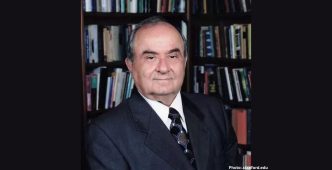

Ted Weschler, a prominent investor at Berkshire Hathaway, transformed a modest retirement account into a fortune worth over $264 million by employing disciplined investing strategies and a focus on long-term growth.
Ted Weschler, a key investment executive at Berkshire Hathaway, has garnered attention for his remarkable financial journey, where he successfully turned a modest initial investment of less than $100,000 into a staggering $264 million over the course of nearly three decades. Weschler’s investment practices provide valuable lessons in the realms of consistent investing, the benefits of compound growth, and strategic decision-making.
Background of Weschler’s Investment Journey
The details of Weschler’s financial ascent were brought to light through an investigative report by ProPublica in June 2021. The report analyzed federal tax returns and revealed the extraordinary growth of Weschler’s individual retirement account (IRA). This examination was part of ProPublica’s broader “Secret IRS Files” series, which scrutinized how affluent individuals leverage the tax code to accumulate wealth, often in ways that deviate from the intended purpose of retirement accounts meant to support average working families.
Weschler’s journey began in 1984 when he opened his first retirement account at the age of 22, while working as a junior financial analyst earning a salary of $22,000. By 1989, through diligent contributions and maximizing employer matching programs, he had grown his retirement account to approximately $70,000. This early financial discipline laid the groundwork for his future successes.
Investment Philosophy and Strategies
In the years that followed, Weschler transitioned his retirement savings into a self-directed IRA, granting him greater control over his investment choices. Despite facing a significant setback in 1990, when his account value plummeted by 52%, he viewed this experience as an opportunity for learning rather than a defeat. Weschler famously referred to these losses as “unmonetized lessons,” underscoring his belief in the importance of resilience in investing.
Weschler’s investment philosophy is characterized by thorough research and concentrated investments in undervalued stocks. In 2000, he launched a hedge fund, further refining his focus on a limited number of companies and often holding his investments for extended periods. His strategic approach, which emphasizes understanding the fundamentals of businesses, their competitive advantages, and the quality of their management, allowed him to achieve an impressive average annual return of 22% after fees from 2000 to 2011.
One of Weschler’s pivotal decisions came in 2012 when he converted his traditional IRA into a Roth IRA, incurring a tax payment of $28 million. This move illustrates his commitment to long-term financial planning and the desire to protect his gains from future taxation, demonstrating a sophisticated understanding of tax-efficient investing.
Connecting with Warren Buffett
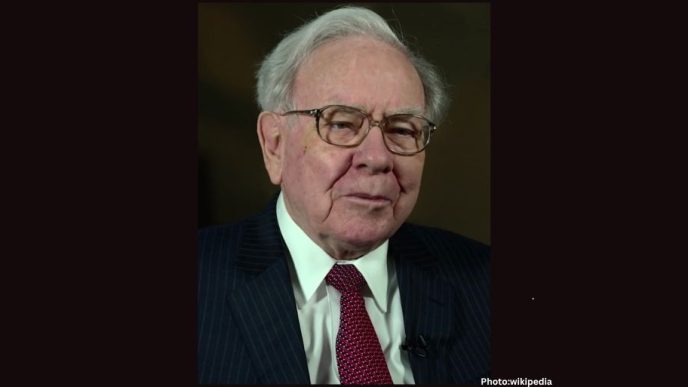
Weschler’s connection with Warren Buffett, the legendary CEO of Berkshire Hathaway, began through a unique opportunity. In 2010 and 2011, he paid a total of $5 million at charity auctions for the chance to have lunch with Buffett. These meetings left a lasting impression on Buffett, leading to Weschler’s employment at Berkshire Hathaway in 2012 as an investment manager. In this role, Weschler has focused on identifying large-cap companies that align with the stringent investment criteria established by Berkshire Hathaway.
Advice for Young Investors
In light of his experiences, Weschler offers several key pieces of advice for young investors. He emphasizes the importance of simplicity and consistency in investing, noting that even a conservative investment in an S&P 500 index fund would have yielded approximately $1.6 million by 2021, had he chosen that route for his initial retirement account.
Weschler’s core recommendations for retirement savers include:
- Start investing early to maximize growth potential.
- Take full advantage of employer matching contributions when available.
- Conduct thorough research and due diligence before making investment decisions.
- Invest fully in equities to benefit from long-term market growth.
- Avoid distractions from market noise and focus on long-term goals.
He particularly advocates for index funds as a practical option for investors who may not have the time or inclination to deeply analyze individual stocks.
Concluding Remarks
Ted Weschler’s extraordinary financial success illustrates the potential of disciplined, long-term investing combined with informed decision-making. While replicating his specific results may be challenging, the foundational principles he espouses—starting early, investing consistently, and learning from setbacks—serve as valuable guidelines for anyone seeking to build wealth through retirement accounts. His story underscores the transformative power of strategic investing, particularly in a landscape where the wealth gap continues to widen.