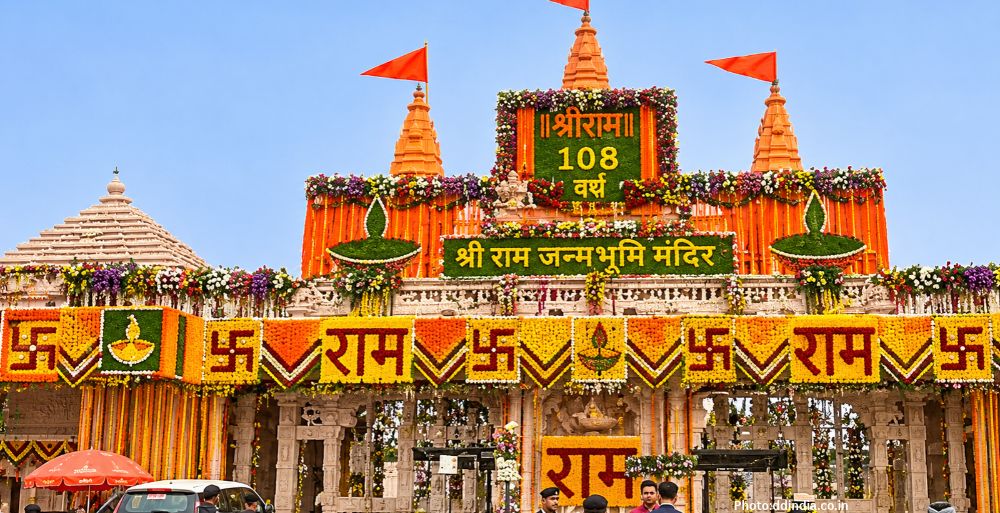
The city of Ayodhya celebrated its 10th Deepotsav festival, illuminating over 30 lakh diyas along the Saryu River, commemorating Lord Ram’s return after defeating Ravana, while spotlighting the city’s cultural significance and economic transformation.
NEW DELHI: The historic city of Ayodhya was transformed into a radiant spectacle on Saturday as it celebrated the 10th edition of the Deepotsav festival, an annual event honoring the return of Lord Ram after his victory over the demon king Ravana. This year, the festival marked a significant milestone with over 30 lakh (3 million) earthen lamps (diyas) lighting up 56 ghats along the banks of the Saryu River, creating a breathtaking visual display that attracted thousands of visitors.
The Deepotsav festival is deeply rooted in Hindu tradition, symbolizing the mythical welcome extended to Lord Ram by the citizens of Ayodhya during the Treta Yuga, an era depicted in the ancient epic, the Ramayana. The lighting of diyas represents the triumph of light over darkness and the victory of good over evil—an enduring theme that resonates profoundly within India’s cultural landscape.
Distinguished Guests and Ceremonial Rituals
The celebrations were graced by several prominent dignitaries, including Vice President Jagdeep Dhankhar, Uttar Pradesh Governor Anandiben Patel, and Chief Minister Yogi Adityanath. The festivities commenced with traditional prayers and rituals dedicated to Lord Ram and Goddess Janaki, underscoring the event’s spiritual significance. Following the rituals, Chief Minister Adityanath delivered an address at Ram Katha Park, where he emphasized the festival’s role in reaffirming Ayodhya’s historical and cultural identity.
In his speech, Adityanath highlighted the festival as a representation of Ayodhya’s transformative journey, reflecting on the extensive struggle surrounding the Ram Janmabhoomi movement. He paid homage to the sacrifices made by kar sevaks (volunteers) and saints who have played a pivotal role in establishing the Ram temple, which is central to the identity of Ayodhya today. This cultural revival, he argued, is crucial in shaping modern India.
Infrastructure Development and Economic Impact
Chief Minister Adityanath also pointed to significant advancements in Ayodhya under Prime Minister Narendra Modi’s leadership, including the inauguration of the Ram temple and the development of key infrastructure projects, such as the new international airport named after Maharishi Valmiki. He noted that these developments are essential for enhancing Ayodhya’s status as a major pilgrimage and tourist destination, which in turn contributes to both spiritual fulfillment and economic growth.
Governor Anandiben Patel echoed the Chief Minister’s sentiments, indicating that Ayodhya’s burgeoning popularity as a pilgrimage site has created substantial economic opportunities for local residents. She highlighted that the increasing flow of visitors has led to job creation across various sectors, including hospitality, transportation, food services, handicrafts, and other local enterprises. This economic boost is viewed as vital for the sustainable development of the region.
Security Measures and Community Participation
As the chief guest of the celebrations, Vice President Dhankhar was welcomed warmly by Chief Minister Adityanath, who commended Dhankhar’s remarkable journey from a farming family in Tamil Nadu to one of the highest constitutional offices in India. The event not only showcased the spiritual essence of the Deepotsav but also exemplified the unity and community spirit of Ayodhya’s residents.
In preparation for the grand festivities, thousands of volunteers actively participated in arranging the diyas along the riverfront, emphasizing the community’s involvement in this significant celebration. To ensure the safety and security of the large crowds, more than 2,500 police personnel and specialized security teams were deployed, reflecting the importance of maintaining order during such a substantial public gathering.
The Deepotsav festival serves as both a religious observance and a cultural exhibition for Ayodhya, reinforcing its identity as a crucial center of spiritual heritage. The grand display of lights along the Saryu River during this annual event not only honors the ancient narrative of Lord Ram but also symbolizes the ongoing evolution of Ayodhya as a pivotal location for both spiritual and economic growth.
As Ayodhya continues to attract visitors from across India and beyond, the implications of such events extend beyond mere celebration; they represent a reconnection with cultural roots and an opportunity for local residents to engage with and benefit from the influx of tourism. The Deepotsav festival stands as a vibrant testament to the city’s enduring legacy and its promising future, embodying the intertwined narratives of faith, culture, and community development.
The spectacle of lights not only captivates the hearts and minds of those who attend but also serves as a reminder of the rich historical context of Ayodhya. The annual celebration has evolved over the years, becoming a focal point for both religious devotion and tourism, and is instrumental in showcasing the city’s potential for further growth as a significant pilgrimage destination in India.