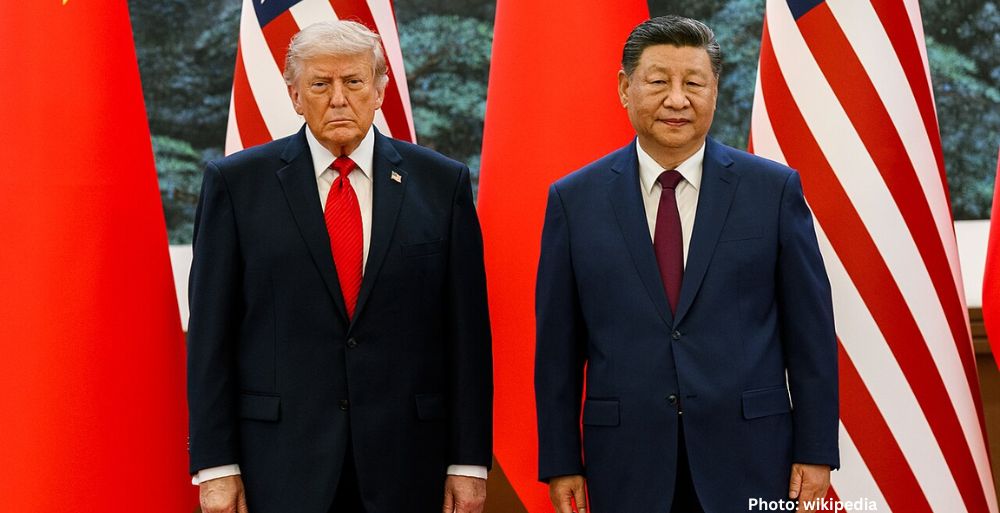
September 25, 2026 — Asia Society Policy Institute (ASPI) experts weigh in on their takeaways from this week’s state visit to the U.S. by Chinese President Xi Jinping and the summit between Xi and U.S. President Donald Trump.
Members of the media interested in interviewing any of our experts should email [email protected].
Daniel Russel — Distinguished Fellow, ASPI; Former Assistant Secretary of State for East Asian and Pacific Affairs
It was a disappointment. We can be glad that they showed they want to keep the relationship from going over a cliff. But the two presidents are making nice while the two countries remain locked in a bitter competition over trade, tech, Taiwan, defense, rare earths and industrial policy.
What bothered me was the imbalance between spectacle and substance: theatrical pageantry, but only about 90 minutes of substantive talks. Which, on the whole, is fine with Beijing. In its eyes, the flattering images of deference by Trump demonstrates China’s stature and Xi’s standing.
I’ve been calling it “diplotainment.” Pandas are cute, but what the U.S. needs are rare earth magnets.
I do think there is a danger in papering over the real problems. Dialogue is useful; pretending the underlying conflicts have been resolved is not.
On trade, the real test is whether tariff cuts, agricultural purchases and Boeing orders actually happen. On rare earths, it is whether shipments increase. On Taiwan, watch what happens to the delayed arms package. On Iran, there is zero chance of Xi joining a U.S. maximum-pressure campaign. On AI, the technology is racing ahead while the two governments are taking six months just to get their dialogue started.
And on the direction of relations going forward, Xi repeatedly referenced “constructive strategic stability” — the diplomatic framework that the two leaders agreed upon in May. Trump, however, never mentioned it.
Pageantry and protocol don’t add up to progress, and summit announcements have not been a very good predictor of performance.
Wendy Cutler — Senior Vice President, ASPI; Former Acting Deputy U.S. Trade Representative
With regard to trade outcomes, only a two-month extension of the trade truce reached in Busan last fall has thus far been announced. The duration of the extension is much shorter than China was bargaining, but conveniently it gets both sides past the next two possible summit meetings this year.
From the United States’ perspective, the short time period could provide Washington needed leverage to press China to live up to its commitments under the truce, particularly with respect to critical minerals and magnets. That said, U.S. leverage against China is minimal as long as Beijing dominates the critical minerals sector. Even with the extra two months, we should continue to expect that both sides will continue to test each side by announcing new punitive economic measures against each other.
An announcement is expected on tariff cutting for a basket of $60 billion of non-sensitive goods. The two sides may cite progress and announce those sectors that are the focus of their work, including agriculture which is politically important to Trump. Alternatively, they may surprise all by actually listing the specific products (with HS codes) whose tariffs would be reduced to the MFN level. While welcome, this outcome is marginal.
Two additional developments are worth watching in this space: whether both sides indicate the continuation of this tariff cutting exercise and actually broaden to more products; and whether the Board of Trade has any other mandates, including addressing non-tariff measure concerns blocking access to the Chinese market.
While Trump has dangled his interest in attracting more Chinese investment to the U.S., no apparent progress has been made on the Board of Investment. This signifies the political sensitivities around this matter, as well as the lack of consensus, even within the U.S. government on whether and under what terms Chinese investment could occur.
But notably absent from these discussions is excess capacity, specifically the explosion of Chinese exports around the world. While high U.S. tariffs have diverted Chinese goods to third country markets, reducing our bilateral trade flows, the U.S. is indirectly receiving Chinese imports through third countries. Washington has chosen to press third countries to address these concerns, rather than dealing with Beijing directly, even though this export surge presents an enormous threat to the global economy.
Neil Thomas — Senior Fellow on Chinese Politics, Center for China Analysis
Xi Jinping got what he wanted from the summit: the optics of equality with the U.S. president, the image of global leadership for audiences back home, and stability in U.S.-China relations without Beijing making any meaningful policy concessions.
The bright spot was AI. Xi raised the possibility of the United States and China working together to prevent AI from being misused or maliciously used. That suggests Beijing may be open to some form of superpower coordination on one of the world’s most dangerous emerging risks. But Trump’s emphasis on accelerating AI development may leave limited scope for progress in the near term.
Lyle Morris — Senior Fellow on Foreign Policy and National Security, Center for China Analysis
The summit was rich on symbolism but light on substance. Presidents Trump and Xi succeeded in establishing a floor under the relationship but did not achieve major breakthroughs. Beijing and Washington remain deeply divided over Taiwan, technology, and regional security. But what brings them together is a common goal of averting conflict and establishing boundaries for competition.
What stood out to me from the Chinese readout was the phrase “坚持反对‘台独’的正确立场,” or “to maintain the correct position of opposing ‘Taiwan independence.’” This seems to be a subtle shift in language from Beijing: the combination of “坚持” (maintain), “反对” (oppose), and “正确立场” (correct position).
Beijing is trying to suggest that opposition is already an established U.S. position that Washington should “maintain,” which it is not. It is incumbent on Washington to re-state the long-standing U.S. policy on Taiwan and refute this framing.
The next step for relations is to empower working groups on trade and technology, strengthen military-to-military communications, and establish reliable crisis-management mechanisms. We will wait and see if any of this comes to fruition.
Lizzi C. Lee — Fellow on Chinese Economy, Center for China Analysis
The bad but expected news is that there is no breakthrough, let alone a grand bargain, on AI governance. The good news is we might be looking at the beginnings of a very narrow modus vivendi.
First, neither side is willing to be slowed down by the other side in the broader AI competition. Competition across the AI stack — chips, models, and downstream deployment — will only intensify. Export controls are Beijing’s grievance. Xi’s line that the two countries should “play to their respective strengths rather than guard against each other” makes clear Beijing still sees U.S. technology restrictions as part of the problem hindering meaningful cooperation on AI, as safety testing requires vast compute, which China doesn’t have access to.
Where there is overlap and a potential opening is narrowly carved out around misuse, disastrous incidents, and maintaining human control. Even if modest, carving out critical, urgent risk management from the tech competition is essential — Xi explicitly acknowledged that competition will continue while arguing there are still reasons to cooperate on AI; Trump likewise supported continued dialogue.
But the critical part comes next. Bessent and He Lifeng had already discussed an incident-notification mechanism, though we don’t know what it will look like, and another AI dialogue could come in roughly two months in Shenzhen. I would place more value on the summit outcome if this leadership-level willingness gets institutionalized by then somehow. For example, if we have more concrete details on the threshold of an incident, designate personnel for the communication channel, and create a roadmap for the notification process. That takes intensive negotiation and preparation; I hope it won’t be as rushed and last-minute as this time.